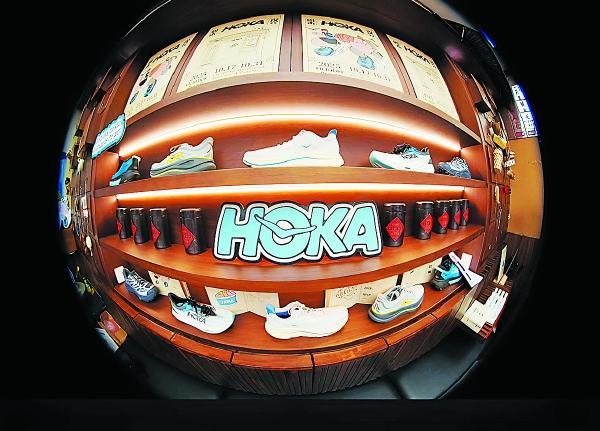
厚底缓震

Search documents
多品牌抢占市场 跑圈新贵HOKA还能“狂奔”多久
Bei Jing Shang Bao· 2025-10-30 01:54
Core Viewpoint - HOKA, a key brand under Deckers Brands, is experiencing a slowdown in growth despite maintaining double-digit increases in sales and net profit, attributed to market saturation and increased competition [1][3][9]. Financial Performance - Deckers Brands reported net sales of $1.431 billion for Q2 of fiscal year 2026, a year-on-year increase of 9.1%, with net profit reaching $268 million, up 10.74% [3]. - HOKA's net sales for the same period were $634 million, reflecting an 11% growth, while UGG sales were $759 million, up 10.1% [3]. - The company anticipates total net sales of approximately $5.35 billion for the fiscal year 2026, with HOKA's growth expected to be in the low double digits of 10%-15% [3]. Brand Growth and Market Position - HOKA's sales growth has been significant over the past years, with a 23.6% increase in fiscal year 2025, reaching $2.233 billion, and a 27.9% increase in fiscal year 2024 [4]. - HOKA currently contributes 45% to Deckers Brands' total sales, closely following UGG's 51% share [5]. Market Dynamics - The running shoe market is becoming increasingly competitive, with brands like Nike, Adidas, and domestic players such as Anta and Xtep entering the mid-to-high-end segments [10][12]. - The demand for professional running shoes has surged due to the growth of mass participation events like marathons, benefiting brands like HOKA that have established a strong reputation in niche markets [9][11]. Consumer Trends - The rise of consumer spending on sports brands is driven by a shift towards a more active lifestyle and the popularity of running events, which has expanded the customer base for brands like HOKA [5][8]. - HOKA's marketing strategy focuses on appealing to urban consumers who prioritize health and quality of life, leveraging social media and KOL marketing to enhance brand image [8]. Challenges Ahead - HOKA's growth rate has slowed from over 50% to around 11%, reflecting a natural deceleration as the brand matures and faces intensified competition [9][10]. - The brand must innovate and enhance its market positioning to sustain growth, particularly in the high-end consumer segment [13].