去中国稀土战略

Search documents
日本吹了15年的深海稀土神话,为什么成为每吨倒贴3000美元的尴尬局面?
Sou Hu Cai Jing· 2025-12-03 04:54
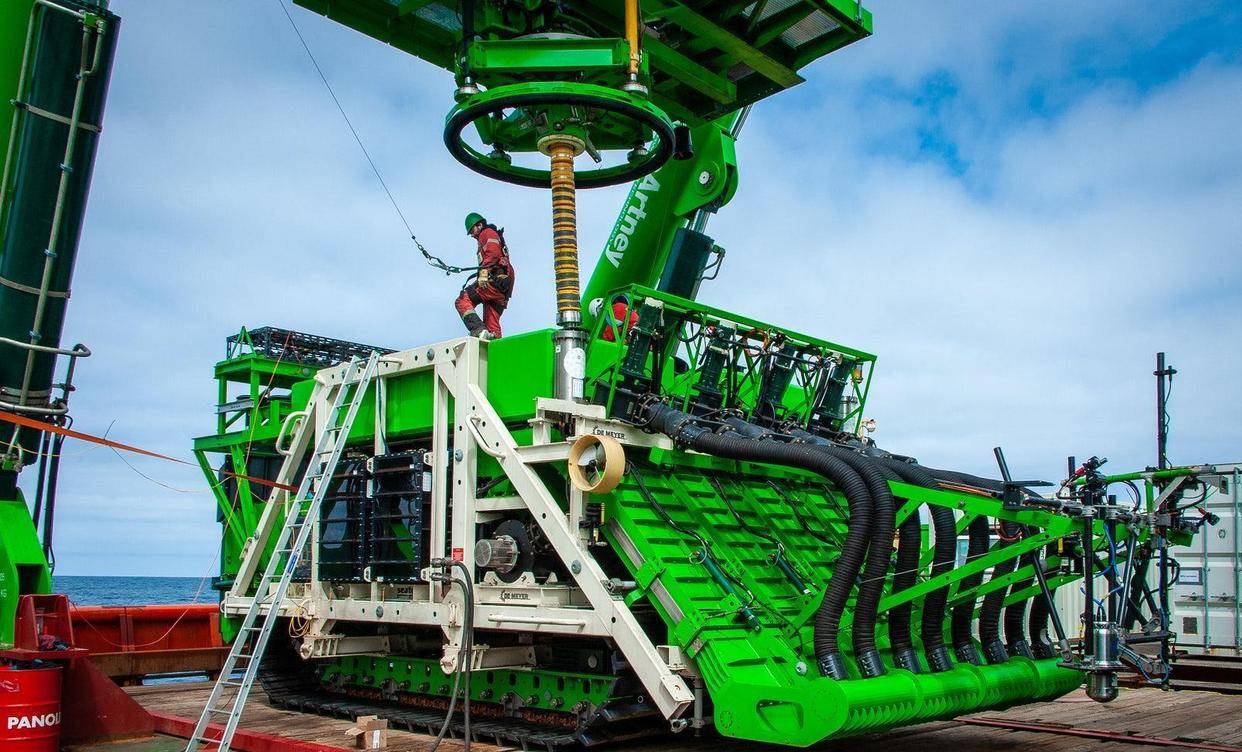
Core Viewpoint - Japan's deep-sea rare earth mining plan is facing significant economic challenges despite claims of superior resource quality compared to China, with high extraction costs leading to substantial financial losses [1][3][5]. Group 1: Resource Quality and Extraction Challenges - Japan's rare earth purity is claimed to be 20 times that of China, with reserves estimated to last for hundreds of years [1]. - The South Bird Island area contains approximately 16 million tons of rare earth resources, with heavy rare earth elements like dysprosium and terbium being 20 to 35 times more abundant than in southern China [3]. - The extraction process is extremely difficult, with mining occurring at depths of 5,500 meters, where water pressure is equivalent to 550 atmospheres, and equipment lifespan is significantly reduced [3]. Group 2: Economic Viability and Market Dynamics - The cost of extracting one ton of deep-sea rare earth is estimated at $15,000, while the current market price is only $12,000, resulting in a loss of $3,000 per ton [1][3]. - Japan plans to start trial mining in 2026, aiming to extract 70 kilograms of rare earth from 35 tons of mud, but the extracted materials will still need to be sent to China for refining, where 93% of global refining capacity is controlled [5]. - Japan's attempts to establish recycling technologies have not met demand, with annual recovery rates falling short of 1.2% of the required amount [5]. Group 3: Strategic and Political Implications - Japan's deep-sea mining initiative is described as a "political project," aimed at ensuring national security rather than profitability [7]. - Despite efforts to reduce reliance on China, Japan's dependency on Chinese rare earths has increased from 82% in 2009 to 83% in 2025, highlighting the ineffectiveness of previous strategies [9]. - The Japanese government acknowledges that even with significant investment, the current technology can only process 20,000 tons of mud annually, far below the target of 1 million tons by 2028 [7].