双边框架协议有效性

Search documents
美高院推翻“对等关税”,接下来会发生什么?
Hua Er Jie Jian Wen· 2026-02-21 08:54
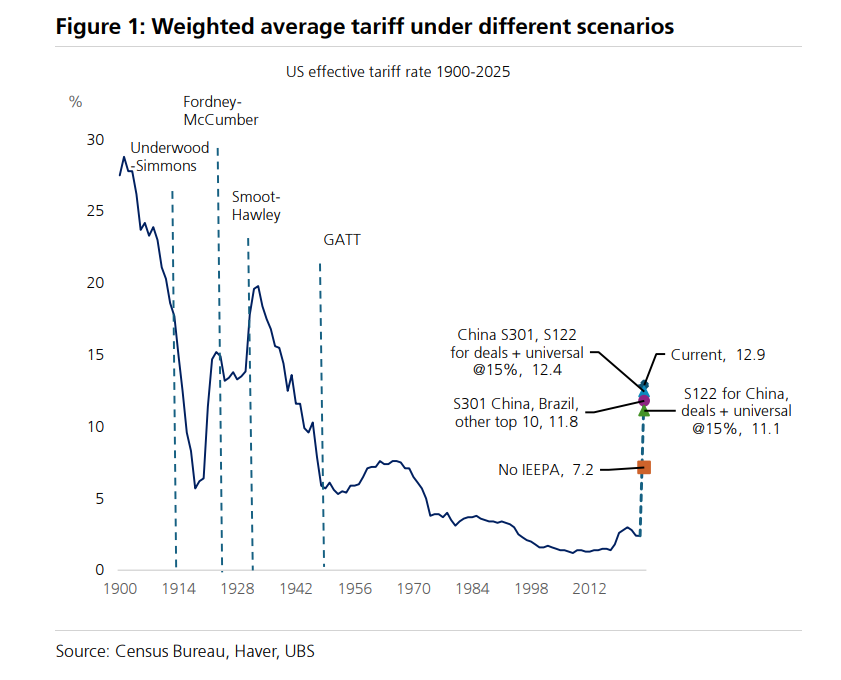
Core Viewpoint - The U.S. Supreme Court ruled that the Trump administration's use of the International Emergency Economic Powers Act (IEEPA) to impose tariffs on imported goods was illegal, shifting market focus from "are tariffs still in place" to "refunds, legal adjustments, and the validity of trade framework agreements" [1][2]. Summary by Relevant Sections Tariff Legality and Implications - The Supreme Court determined that IEEPA does not authorize the president to impose tariffs under a "state of emergency," undermining the legal foundation of the tariff system established by the Trump administration [2][3]. - The ruling does not affect all tariffs, as many can be restructured using other trade authorizations [3]. Potential Tariff Restructuring - Two potential plans for restructuring tariffs were identified: - **Plan A**: The government may choose not to replace the rejected tariffs, potentially reducing the current weighted average tariff rate (WATR) from 12.9% to 7.2%, which could lead to a 0.2% increase in GDP and a 30 basis point decrease in PCE inflation in the short term [3]. - **Plan B**: The government is expected to implement a "Plan B" due to the importance of existing tariffs in its policy agenda, suggesting that alternative options will be pursued [3]. New Tariff Implementation - The Trump administration announced a 10% global tariff under Section 122, which can be implemented without a negotiation period and applies to all imports, but is limited to a maximum of 150 days [8][11]. - This 10% tariff is viewed as a transitional measure, with the expectation that the administration will push forward with Section 301 investigations to establish a differentiated tariff system later [9]. Refunds and Legal Challenges - The market is particularly concerned about the potential need for refunds on tariffs collected under IEEPA, with estimates suggesting that up to $175 billion may need to be refunded if the tariffs are deemed illegal [10][12]. - Nearly 1,000 companies have filed cases in the Court of International Trade (CIT) to secure refund eligibility, indicating a complex legal landscape ahead [12]. Impact on Trade Agreements - The Supreme Court's ruling introduces uncertainty regarding previously established bilateral framework agreements with countries like the UK, EU, and Japan, as these agreements may not hold if they are tied to the now-invalidated IEEPA tariffs [13]. - The Trump administration's stance is that while some agreements may be retained, others may not, depending on the compliance of trade partners [13]. Market Implications - The ruling could lead to a significant increase in tariff revenue, with projections indicating that tariff income could reach $264 billion by 2025, raising concerns about potential "reversal risks" [14]. - The uncertainty surrounding refunds and future revenue may increase existing deficit pressures, impacting interest rates and the yield curve [15]. - The decision is expected to contribute to a weaker dollar due to heightened policy uncertainty [16]. - The overall risk appetite in the market remains unchanged, with the ruling potentially providing a marginal improvement in the business decision-making environment [17].