关税重构

Search documents
美高院推翻“对等关税” 接下来会发生什么?
智通财经网· 2026-02-21 11:55
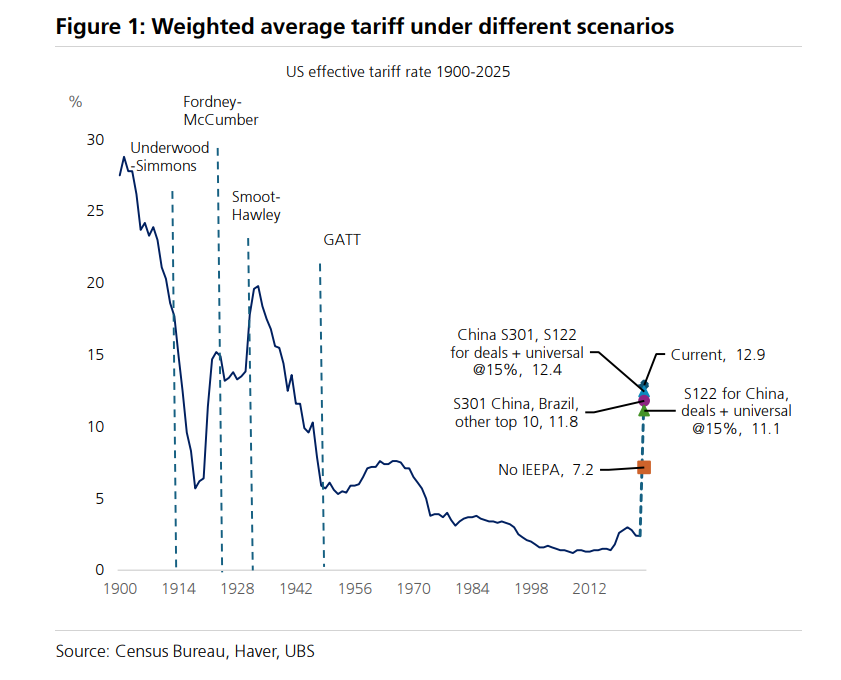
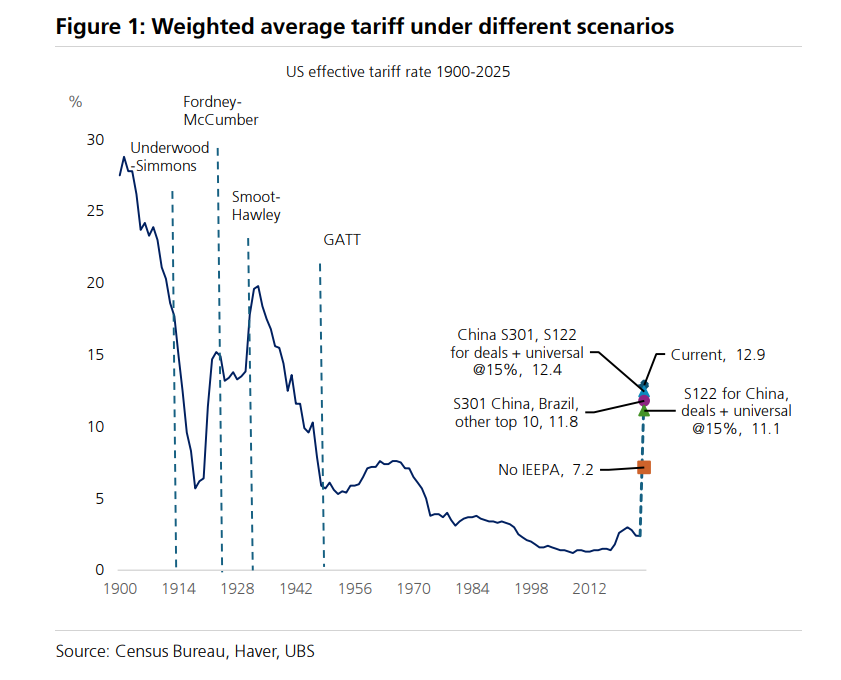
Core Viewpoint - The U.S. Supreme Court ruled that the Trump administration's use of the International Emergency Economic Powers Act (IEEPA) to impose tariffs on imported goods was illegal, shifting market focus from "are tariffs still in place?" to "what about refunds, how to change legal provisions, and do trade framework agreements still count?" [1] Group 1: Legal Implications of the Ruling - The Supreme Court determined that the IEEPA does not authorize the President to impose tariffs under the guise of a "national emergency," undermining the legal foundation of the tariff system established by the Trump administration [2][3] - Existing tariffs under Section 232 (national security tariffs), Section 301 (trade remedy tariffs), and Section 201 (safeguard measures) remain unaffected by this ruling [3] Group 2: Potential Tariff Adjustments - The government has two potential paths: 1. Not replacing the rejected tariffs, which could lower the current estimated weighted average tariff rate (WATR) from 12.9% to 7.2%, potentially increasing GDP growth by 0.2% and reducing PCE inflation by 30 basis points in the short term [3] 2. Implementing a "Plan B" to maintain tariffs as a key policy agenda, utilizing other trade authorizations [3][4] Group 3: New Tariff Measures - The Trump administration announced a 10% global tariff under Section 122, which can be implemented without a negotiation period and applies to all imports, but is limited to a maximum of 150 days [7][8] - This Section 122 tariff is viewed as a transitional measure, as it lacks the flexibility of the IEEPA to apply differentiated tariffs based on specific countries [8] Group 4: Refunds and Legal Challenges - The market is concerned about the potential need for refunds on tariffs collected under IEEPA, with estimates suggesting that up to $175 billion may need to be refunded if the tariffs are deemed illegal [9][11] - Nearly 1,000 companies have filed cases in the Court of International Trade (CIT) to secure refund eligibility, but the process for determining the scope and timing of refunds remains uncertain [11] Group 5: Impact on Trade Agreements - The ruling does not clarify the status of existing bilateral framework agreements with countries like the UK, EU, and Japan, which may be affected if the IEEPA tariffs are invalidated [12] - The Trump administration's approach to Section 122 may replace some of the tariff rates established under these agreements, but the enforceability of these agreements remains in question [12] Group 6: Market Implications - The ruling could lead to a significant increase in tariff revenue, with projections indicating that tariff income could reach $264 billion by 2025, raising concerns about potential revenue retraction if IEEPA-related income is contested [13] - The uncertainty surrounding refunds and future tariff revenues may increase existing deficit pressures, influencing interest rates and the yield curve [14] - The ruling is expected to contribute to a weaker dollar due to heightened policy uncertainty, reinforcing the view of a soft dollar outlook [15][16] - The overall risk appetite for assets may remain stable or improve marginally, as the less flexible alternative tools may reduce volatility in tariff policies [17]

美高院推翻“对等关税”,接下来会发生什么?
Hua Er Jie Jian Wen· 2026-02-21 08:54
Core Viewpoint - The U.S. Supreme Court ruled that the Trump administration's use of the International Emergency Economic Powers Act (IEEPA) to impose tariffs on imported goods was illegal, shifting market focus from "are tariffs still in place" to "refunds, legal adjustments, and the validity of trade framework agreements" [1][2]. Summary by Relevant Sections Tariff Legality and Implications - The Supreme Court determined that IEEPA does not authorize the president to impose tariffs under a "state of emergency," undermining the legal foundation of the tariff system established by the Trump administration [2][3]. - The ruling does not affect all tariffs, as many can be restructured using other trade authorizations [3]. Potential Tariff Restructuring - Two potential plans for restructuring tariffs were identified: - **Plan A**: The government may choose not to replace the rejected tariffs, potentially reducing the current weighted average tariff rate (WATR) from 12.9% to 7.2%, which could lead to a 0.2% increase in GDP and a 30 basis point decrease in PCE inflation in the short term [3]. - **Plan B**: The government is expected to implement a "Plan B" due to the importance of existing tariffs in its policy agenda, suggesting that alternative options will be pursued [3]. New Tariff Implementation - The Trump administration announced a 10% global tariff under Section 122, which can be implemented without a negotiation period and applies to all imports, but is limited to a maximum of 150 days [8][11]. - This 10% tariff is viewed as a transitional measure, with the expectation that the administration will push forward with Section 301 investigations to establish a differentiated tariff system later [9]. Refunds and Legal Challenges - The market is particularly concerned about the potential need for refunds on tariffs collected under IEEPA, with estimates suggesting that up to $175 billion may need to be refunded if the tariffs are deemed illegal [10][12]. - Nearly 1,000 companies have filed cases in the Court of International Trade (CIT) to secure refund eligibility, indicating a complex legal landscape ahead [12]. Impact on Trade Agreements - The Supreme Court's ruling introduces uncertainty regarding previously established bilateral framework agreements with countries like the UK, EU, and Japan, as these agreements may not hold if they are tied to the now-invalidated IEEPA tariffs [13]. - The Trump administration's stance is that while some agreements may be retained, others may not, depending on the compliance of trade partners [13]. Market Implications - The ruling could lead to a significant increase in tariff revenue, with projections indicating that tariff income could reach $264 billion by 2025, raising concerns about potential "reversal risks" [14]. - The uncertainty surrounding refunds and future revenue may increase existing deficit pressures, impacting interest rates and the yield curve [15]. - The decision is expected to contribute to a weaker dollar due to heightened policy uncertainty [16]. - The overall risk appetite in the market remains unchanged, with the ruling potentially providing a marginal improvement in the business decision-making environment [17].
9月24号特讯!川普突然通告全球:正式实施征收欧盟汽车15%关税,引爆国际舆论场
Sou Hu Cai Jing· 2025-09-25 02:48
9 月 24 号(华盛顿时间),美国政府发了联邦公告,正式落地了 7 月底跟欧盟谈好的框架协议:从 8 月 1 号开始,对欧盟来的 汽车和零部件统一收 15% 的关税,同时给部分药品、飞机及零部件之类的免了税,或者降了税。这事儿看着挺微妙 —— 之前 更高的汽车关税是降下来到 15% 了,但 "统一门槛" 也把原本免税或者低税的细项都拉到了同一个水平,企业得重新算账本。 说是缓和吧,也在加压;给市场定了调,可美国手里还攥着谈判的筹码。问题就来了:这笔看着像 "止血" 的交易,真能解决 跨大西洋的结构性摩擦吗? 一、关税 "统一价",到底冲着啥来? 从节奏上看,这就是 "先落地、再算账" 的路子:7 月 27 号两边刚公布框架,9 月 24 号美国就正式登记入册了,而且条款还得 从 8 月 1 号开始算,给企业留的合规准备时间几乎被压到没了。 对欧洲车企来说,最确定的是税率终于明了,最不确定的是利润要变少了。德系车的股价在消息出来前后跟着波动,挺情绪化 的;行业里也有人提醒,15% 虽然比之前 27.5% 的 "高压线" 低,但车企本来就费钱、库存周转又慢,价格想传下去没那么容 易,销量和利润之间会出现 "剪刀 ...