反恐战争

Search documents
美国从巅峰滑落,最大祸首或早已出现?不是奥巴马,不是特朗普
Sou Hu Cai Jing· 2026-02-13 09:24
Group 1 - The article reflects on Trump's rare self-criticism regarding his personnel appointments amidst poor economic data, declining polls, and public discontent, highlighting that this is the worst start for a new U.S. president in 20 years [1] - Despite a 13.3% recovery in the stock market since last April, the underlying economic issues remain unresolved, including high prices and housing costs [1][3] - Trump's anxiety over midterm elections led to the issuance of 230 executive orders, surpassing any president in the last 20 years, yet these measures failed to gain widespread public support [3] Group 2 - The article attributes the current economic and political turmoil in the U.S. to decisions made during George W. Bush's presidency, particularly his tax cuts for the wealthy, military interventions, and lack of regulation [5][7] - The financial burden of the wars in Iraq and Afghanistan is estimated to exceed $8 trillion when considering long-term costs, which is comparable to the projected federal revenue for 2026 [10] - Bush's administration is criticized for fostering a culture of neglect towards economic fundamentals, leading to the 2008 financial crisis, which resulted in a significant loss of wealth for the middle class and a spike in unemployment [18][20]

《环球时报》【悦读(一)】:三本书起底美国霸凌拉美真相
Huan Qiu Shi Bao· 2026-01-13 22:54
Core Viewpoint - The recent large-scale military attack by the U.S. on Venezuela and the capture of President Maduro has sparked strong international condemnation, revealing the underlying political logic of U.S. actions in Latin America and its historical role as a hegemon [1]. Group 1: Historical Context - The book "The Collected Speeches of American Presidents" illustrates how the U.S. has intervened in Western Hemisphere affairs under the guise of being an "international police" force, using ideals of freedom and democracy to justify military actions [2]. - The "Monroe Doctrine," articulated by President James Monroe in 1823, established that the Americas should not be considered for colonization by European powers, marking the beginning of U.S. foreign policy aimed at limiting European influence in the region [2][3]. Group 2: Evolution of U.S. Policy - By the end of the 19th century, the U.S. had become the world's largest economy, leading to a shift in the interpretation of the Monroe Doctrine, emphasizing U.S. influence over the entire Americas and justifying military intervention when necessary [3]. - Theodore Roosevelt's 1904 annual message introduced the concept of "international police powers," stating that the U.S. would intervene in cases of governmental incapacity in the Western Hemisphere, which resonates with the current U.S. actions in Venezuela [4]. Group 3: Ideological Justifications - Roosevelt's speeches reflect a belief that the U.S. must not be a passive observer in global affairs, suggesting that failure to act could lead to greater powers dominating the world [5]. - The establishment of "American-style peace" post-World War II was not only due to military and economic strength but also the promotion of ideals like freedom and democracy, which served as justifications for U.S. military actions [6]. Group 4: Contemporary Analysis - "The Open Veins of Latin America" by Eduardo Galeano critiques the historical exploitation of Latin America, arguing that a structure of modern-day plunder has led to persistent poverty and underdevelopment in the region [7]. - The book has been influential in academic discussions and has been widely translated, highlighting the ongoing relevance of its themes in understanding U.S.-Latin America relations [8]. Group 5: Recent Scholarly Work - "America's Backyard: From Monroe Doctrine to the War on Terror" by Grace Livingstone reveals the darker aspects of U.S. involvement in Latin America, including support for military coups and interventions under the pretext of combating terrorism [9]. - The book discusses the failures of U.S. drug policies and their environmental impacts, as well as the economic interests that drive U.S. actions in the region [9].
24年前的几声轰然巨响,永远改变了美国
Zhong Guo Xin Wen Wang· 2025-09-11 01:15
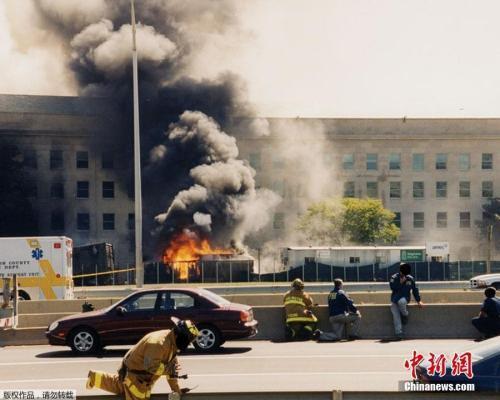
Core Viewpoint - The events of September 11, 2001, marked a significant turning point in American history, leading to profound changes in both domestic and international landscapes [1][2]. Group 1: Impact on Individuals - Nearly 3,000 lives were lost during the attacks, and the psychological and physical impacts of the event continue to affect many individuals, with an increase in diagnosed mental health issues each year on the anniversary [7][9]. - The number of deaths related to diseases caused by dust and smoke from the Twin Towers' collapse has reached twice the number of fatalities from the attacks themselves, with over 360 first responders having died from related illnesses by September 2024 [7][9]. Group 2: Broader Societal Changes - The U.S. initiated wars in the Middle East under the banner of counter-terrorism, resulting in significant turmoil and suffering in countries like Afghanistan, Iraq, Syria, and Libya, with millions displaced and countless casualties [9][10]. - The financial burden of these wars has reportedly caused substantial damage to the U.S. itself, with experts noting that resources could have been better allocated to more constructive projects [10]. Group 3: Ongoing Challenges - The long-term effects of the "War on Terror" have not led to global peace or security, as terrorism continues to spread [15]. - The U.S. faces increasing internal divisions, with deepening conflicts between federal and state governments, political polarization, and social issues such as gun violence and racial discrimination [16][18].
美媒爆“特朗普政府准备将数千名非法居留的外国人转移至关塔那摩”,白宫否认
Huan Qiu Wang· 2025-06-12 03:28
Group 1 - The Trump administration is reportedly preparing to transfer thousands of undocumented immigrants to the Guantanamo Bay military base in Cuba, with the action potentially starting as early as this week [1][3] - The individuals to be transferred come from various countries, including hundreds from European nations such as the UK, Italy, France, Germany, Lithuania, Poland, and Ukraine [3] - Preparatory work by U.S. officials includes health assessments for 9,000 individuals to determine their suitability for transfer to Guantanamo [3] Group 2 - The U.S. government plans to expand the existing immigration detention center at Guantanamo Bay to accommodate up to 30,000 undocumented immigrants, marking a significant shift in its immigration policy [4] - The Cuban government has expressed strong opposition to the U.S. decision, criticizing it as a violation of human dignity and international law [4]