反比例价差策略

Search documents
比例价差策略的构建及应用案例分析
Qi Huo Ri Bao Wang· 2025-12-01 00:55
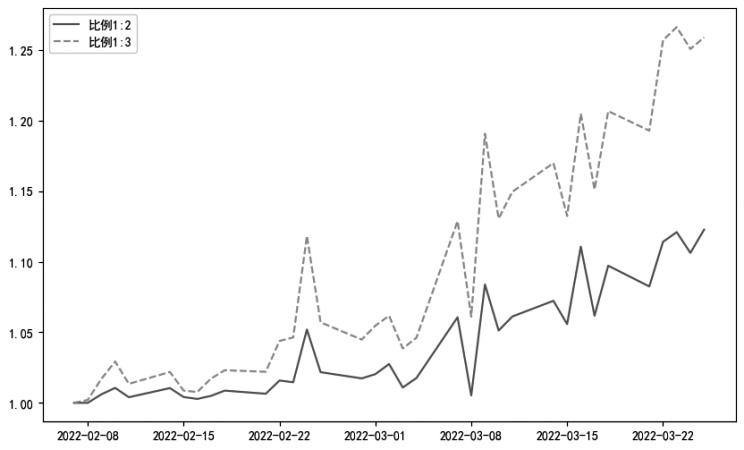
Core Insights - The article discusses the appeal of options trading in the financial derivatives market, particularly focusing on the ratio spread strategy, which allows investors to adapt to various market conditions through the buying and selling of options contracts with different strike prices and quantities [1] Group 1: Characteristics of Ratio Spread Strategy - The ratio spread strategy is centered on constructing an investment portfolio with specific risk exposures by buying and selling different quantities of options contracts [2] - There are two main types of ratio spreads: the long ratio spread, which involves buying one at-the-money option and selling multiple out-of-the-money options, and the short ratio spread, which involves selling one at-the-money option and buying multiple out-of-the-money options [2] - The long ratio spread can generate stable returns in moderately rising markets, while the short ratio spread has greater profit potential in volatile markets [2][3] Group 2: Key Parameters in Strategy Construction - Two critical parameters in constructing ratio spreads are the selection of strike price intervals, which should align with the historical volatility of the underlying asset, and the dynamic adjustment of contract quantities based on market conditions [3] - The long ratio spread is effective in stable markets, while the short ratio spread can yield excess returns during significant market trends [3] Group 3: Suitable Market Conditions for Ratio Spread Strategies - The effectiveness of ratio spread strategies largely depends on accurate market condition assessments, with different strategies suited for trending or range-bound markets [4] - In trending markets, the short ratio spread can capture profits from clear directional movements, especially when volatility is rising [4] - Conversely, in range-bound markets, the long ratio spread can provide income from selling options while hedging directional risks [4] Group 4: Empirical Analysis of Ratio Spread Strategies - An empirical analysis of soybean meal options illustrates the performance of ratio spread strategies under different market conditions, comparing them to single-leg options strategies [5][6] - In rapidly rising or falling markets, the short ratio spread demonstrated strong profitability, as evidenced by a specific case in early 2022 where a constructed spread yielded significant returns [6][8] - For more moderate trends, the long ratio spread was shown to be a better choice, providing a balance of risk and reward during a period of declining prices [9][11] Group 5: Conclusion on Ratio Spread Strategies - The ratio spread strategy offers a balanced approach to managing costs and returns, adaptable to various market environments, with advantages in risk control and return stability compared to single-leg options strategies [11] - Successful implementation of these strategies requires strict discipline, ongoing market analysis, and a robust risk management framework [11]