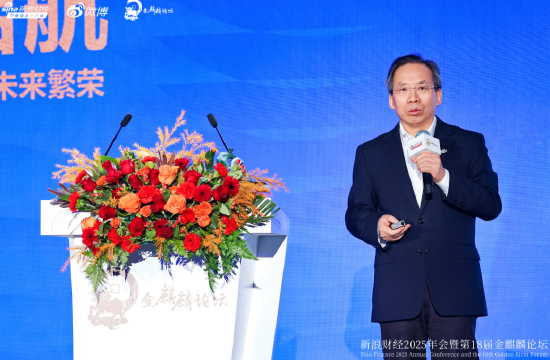
发展范式

Search documents
刘尚希:AI“抢饭碗”或成现实?社会必须为每个人的基本生活“兜底”!
新浪财经· 2026-01-15 09:32
Core Viewpoint - The article emphasizes the concept of "common prosperity" as a new development paradigm for China, highlighting the need for a shift from material wealth distribution to human development and capability enhancement [3][4][6]. Group 1: Common Prosperity as a New Paradigm - Common prosperity is framed as a theoretical challenge that requires a transformation in development paradigms, focusing on human capabilities rather than just material wealth [3][6]. - The article argues that reducing income disparity is essential for expanding domestic demand, linking it to the enhancement of individual capabilities and opportunities [3][4]. Group 2: Human-Centric Development - The central government has shifted its focus towards investing in people alongside material investments, reflecting a deeper understanding of development that prioritizes human needs [4][6]. - The article stresses that addressing disparities in knowledge, skills, and opportunities is crucial for achieving common prosperity, as these disparities are often systemic and not merely individual [3][6]. Group 3: Efficiency and Fairness - The relationship between efficiency and fairness is re-evaluated, proposing a "fusion theory" that suggests enhancing human capabilities can simultaneously improve efficiency and promote fairness [7][8]. - The article highlights the importance of setting fair expectations for distribution, emphasizing that perceived opportunities for wealth distribution are as significant as actual outcomes [8][9]. Group 4: Ensuring Basic Fairness - To ensure basic fairness, the article identifies four essential areas: nutrition, education, health, and housing, which need to be addressed to prevent widening disparities [9][10]. - It argues that while acknowledging existing disparities, the focus should be on encouraging innovation and rewarding creative contributions rather than merely labor [9][10]. Group 5: Challenges in Achieving Common Prosperity - The article outlines three major challenges in addressing the farmer issue, which is pivotal for achieving common prosperity: the dual market economy, social identity barriers, and the dual ownership system [10][11]. - It emphasizes the need for a paradigm shift from wealth accumulation to knowledge accumulation, advocating for a combination of investments in both material and human capital [11][12].

刘尚希最新演讲:在多劳多得基础上要鼓励创新竞争,提倡创新者多得
Xin Lang Cai Jing· 2026-01-15 03:01
Group 1 - The core theme of the forum is "New Growth Paradigm and Shared Prosperity" focusing on the concept of common prosperity as a new development paradigm for China [1][11] - Common prosperity is viewed as a theoretical challenge that requires a shift in development paradigms, emphasizing human development over mere material wealth [3][14] - The discussion highlights the need to reduce income disparities and expand domestic demand, linking these goals to the enhancement of individual capabilities and addressing systemic issues [3][4][14] Group 2 - The concept of common prosperity challenges traditional development paradigms, suggesting that wealth accumulation should be linked to knowledge and capability enhancement rather than just material wealth [5][16] - The relationship between efficiency and equity is explored, proposing a new integration that enhances both aspects through human development [6][17] - The need for a bottom-line fairness approach is emphasized, advocating for a focus on basic needs such as nutrition, education, health, and housing to prevent widening disparities [19][20] Group 3 - The forum addresses the dual structure of the economy, particularly the urban-rural divide, and the need for reforms to bridge this gap [8][20] - The challenges faced by farmers, who constitute a significant portion of the population, are identified as critical to achieving common prosperity [20] - The discussion includes the necessity of transforming the ownership structure from a focus on property rights to one centered on usage rights, particularly in the context of digitalization and economic financialization [20][21]