古籍保护利用

Search documents
二十余部馆藏珍贵古籍原件限时展出
Xin Lang Cai Jing· 2026-01-13 18:48
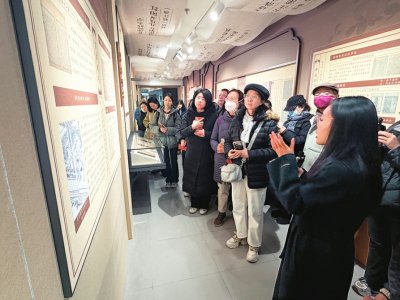
Core Viewpoint - The exhibition "Washing Wind and Classic Texts: Treasures of Ancient Books Collection" at Chengdu Library showcases the beauty and cultural significance of ancient texts, marking a significant event in the context of the newly implemented Sichuan Provincial Regulations on the Protection and Utilization of Ancient Books [4][7]. Group 1: Exhibition Overview - The exhibition features over 20 rare ancient books, including early editions and distinctive versions, highlighting the rich history of Chinese publishing technology [5][6]. - It is organized into three main sections: "Falling Paper and Cloud Smoke," "Book Affairs in Jin City," and "Seals and Treasures," each presenting different aspects of ancient books and their preservation [4][5]. Group 2: Cultural Significance - The "Book Affairs in Jin City" section focuses on the local narrative of Chengdu, showcasing literature and documents related to the city's history and culture, breaking away from traditional chronological or material classifications [5][6]. - The exhibition includes significant works such as the earliest local chronicle "Huayang Guozhi" and other texts that reflect the social and cultural life of Chengdu in the Qing Dynasty [6]. Group 3: Legal and Institutional Context - The exhibition is the first in Sichuan to focus on the protection and utilization of ancient books following the implementation of the Sichuan Provincial Regulations, which emphasize the importance of utilizing ancient texts alongside their preservation [7][8]. - The regulations encourage technological innovation in the restoration of ancient books, highlighting the need for research in restoration techniques and the protection of intellectual property related to digital resources and cultural products [7][8]. Group 4: Future Plans - Chengdu Library plans to prioritize the restoration of precious ancient books based on survey results and aims to digitize these texts for broader access and intelligent use [8].

中国首部古籍保护利用地方性法规施行 50万册民族古籍获依法保护
Xin Hua She· 2026-01-02 14:06
Core Viewpoint - The implementation of the "Sichuan Province Ancient Books Protection and Utilization Regulations" marks the first local legislation in China specifically aimed at the protection and utilization of ancient books, emphasizing the importance of minority ancient texts and their protection requirements [1][2]. Group 1: Legislative Framework - The regulations define the protection objects as literature produced before 1911 and classical texts from 1912 to 1949 that hold historical, artistic, or academic value [1]. - The Sichuan Provincial People's Congress has made specific arrangements for the protection and utilization of ancient books, highlighting the legal status of minority ancient texts [1]. Group 2: Implementation and Initiatives - The Sichuan Provincial Ethnic and Religious Affairs Commission plans to introduce non-destructive testing, AI image recognition, and new restoration materials, alongside building a digital resource library for minority ancient texts [2]. - Experts will be organized to translate, annotate, and popularize important minority ancient texts, with the aim of publishing accessible literature and developing cultural products [2]. Group 3: Collection and Preservation - The regulations establish a collection system for ancient books, including woodblock printing, which is now legally protected [2]. - The Dege Printing House in Garze Tibetan Autonomous Prefecture has preserved over 320,000 woodblock archives since the 11th century, covering various aspects of traditional culture [2]. Group 4: Financial Support and Projects - During the 14th Five-Year Plan period, Sichuan's provincial finance has invested over 60 million yuan in nearly 200 projects related to ancient book surveys, restoration, and utilization, successfully rescuing over 40,000 precious ancient books [2].
保护利用有法可依 古籍既要“出阁”还要出圈
Xin Lang Cai Jing· 2025-12-25 22:29
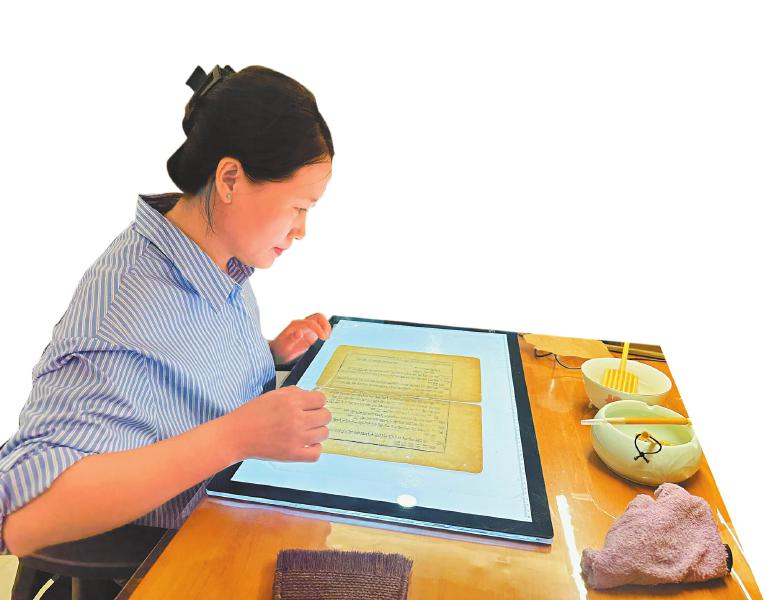
Core Viewpoint - The implementation of the "Sichuan Provincial Regulations on the Protection and Utilization of Ancient Books" marks a significant step in establishing a legal framework for the protection and utilization of ancient books in Sichuan, making it the first local regulation of its kind in China [2][4]. Group 1: Legislative Highlights - The scope of ancient books has been expanded to include those produced between 1912 and 1949 that possess historical, artistic, and academic value [2][4]. - A new system for collecting ancient book woodblock prints has been proposed, integrating them into the protection framework to preserve the original state of historical documents [2][4]. - The regulation addresses the issue of "multiple management" by clarifying the roles and responsibilities of leading departments and government agencies in ancient book work [4]. Group 2: Resource and Investment - Sichuan is a major province for ancient books, with approximately 230,000 volumes of Han literature and around 500,000 volumes of minority literature, ranking among the top in the country [3]. - During the 14th Five-Year Plan period, over 60 million yuan has been invested in ancient book projects, completing nearly 200 projects related to surveying, restoration, and utilization [3]. Group 3: Talent Development - The Sichuan Western Literature Restoration Center plans to establish a mentor group composed of restoration masters and collaborate with universities to create targeted training programs [4]. - A "teacher-student" model will be deepened to ensure a structured pathway for talent development in ancient book restoration [4]. Group 4: Future Initiatives - The provincial government aims to create a collaborative framework involving various stakeholders, including universities and research institutions, to enhance the study and publication of ancient books [5]. - Plans include the development of a knowledge graph for ancient books, making them more accessible and interactive for the public [5].
推进智能化利用 让古籍“一键可读”
Xin Lang Cai Jing· 2025-12-25 18:26
Core Viewpoint - The "Sichuan Province Ancient Book Protection and Utilization Regulations" will be implemented on January 1, 2026, marking the first local legislation in China for the protection and utilization of ancient books [1] Group 1: Protection and Utilization of Ancient Books - Sichuan is a major province for ancient books, with approximately 230,000 volumes of Han literature and 500,000 volumes of ethnic literature, ranking among the top in the country [1] - The regulations outline protection targets and actions, including preventive, rescue, and graded protection, as well as original site protection [2] - The legislation encourages the use of advanced technology in the development of ancient book protection, including research on restoration materials and techniques, and the application of technological achievements in various aspects of ancient book management [2] Group 2: Promotion of Effective Utilization - The regulations aim to explore the value of ancient books, support and standardize their interpretation, and encourage private collection activities while establishing a protection and utilization mechanism [2] - There will be a focus on integrating ancient book resources with culture, tourism, and educational research, promoting the development of themed cultural tourism and in-depth educational tours [2] - A mid-to-long-term plan will be developed to systematically advance the rescue, protection, research, and publication of ancient books, with a focus on key cultural themes [3] Group 3: Digitalization and Knowledge Sharing - The Sichuan government plans to accelerate digital construction to empower the protection and utilization of ancient books [3] - The Sichuan Provincial Library aims to explore new paths for the active utilization of ancient books through digitalization, research, and promotion [3] - The initiative includes the creation of a knowledge graph for ancient books, allowing for easy access and engagement from the public, transforming ancient book protection from a niche interest to widespread participation [3]
千年典籍如何保护利用?四川率先为古籍立法
Xin Lang Cai Jing· 2025-12-25 18:25
Core Points - The Sichuan Provincial People's Congress has introduced the "Sichuan Provincial Regulations on the Protection and Utilization of Ancient Books," marking the first local legislation in China dedicated to ancient book protection [3][4] - The regulations aim to clarify definitions and departmental responsibilities, enhance protection levels, leverage technology in preservation, and promote effective utilization of ancient books [4][5] Group 1: Legislative Background - The initiative follows a national directive encouraging local regulations for ancient book protection, with Sichuan being the first province to implement such legislation [3] - The regulations were developed after extensive research and are seen as a model for other provinces to follow [3][5] Group 2: Key Features of the Regulations - The regulations consist of 34 articles focusing on various aspects of ancient book protection, including preventive measures, rescue operations, and safety protocols [4] - A significant innovation is the establishment of a woodblock printing collection system, integrating this traditional method into the scope of ancient book protection [5] Group 3: Implementation Strategies - The provincial government plans to create a comprehensive talent training system to support ancient book protection efforts, emphasizing interdisciplinary education and practical training [6] - Modern technology will be utilized in the preservation process, including non-destructive testing and AI image recognition, to enhance the management of ancient books [6]

《四川省古籍保护利用条例》将于明年1月起施行
Zhong Guo Xin Wen Wang· 2025-12-25 11:53
Core Viewpoint - The "Sichuan Province Ancient Books Protection and Utilization Regulations" will officially take effect on January 1, 2026, marking the first local legislation in China dedicated to the protection and utilization of ancient books, positioning Sichuan as a leader in this area [1][3]. Group 1: Legislative Framework - The regulations consist of 34 articles, defining the protection objects as literature produced before 1911 and classical texts from 1912 to 1949 that hold historical, artistic, or academic value [3]. - The regulations emphasize preventive protection, requiring state-owned ancient book collections to enhance protective measures, including the establishment of specialized storage facilities and the use of monitoring systems [3][4]. Group 2: Technological Integration - The regulations encourage technological research related to ancient book restoration, promoting standardized management and documentation of the restoration process [4]. - There is a focus on advancing key technologies and equipment for the protection and utilization of ancient books, facilitating the application of technological achievements in various aspects such as inventory, preservation, and research [4]. Group 3: Cultural and Educational Integration - The regulations aim to promote the effective utilization of ancient books by integrating them with culture, tourism, and educational activities, supporting the establishment of research bases and the development of themed cultural tourism products [4]. - Sichuan Provincial Library, as a leading public library and ancient book protection institution, has developed a comprehensive restoration system and aims to enhance the "active utilization" of ancient books post-regulation implementation [5].
让古籍“活起来” 四川将出台全国首部地方性法规
Mei Ri Jing Ji Xin Wen· 2025-05-27 14:06
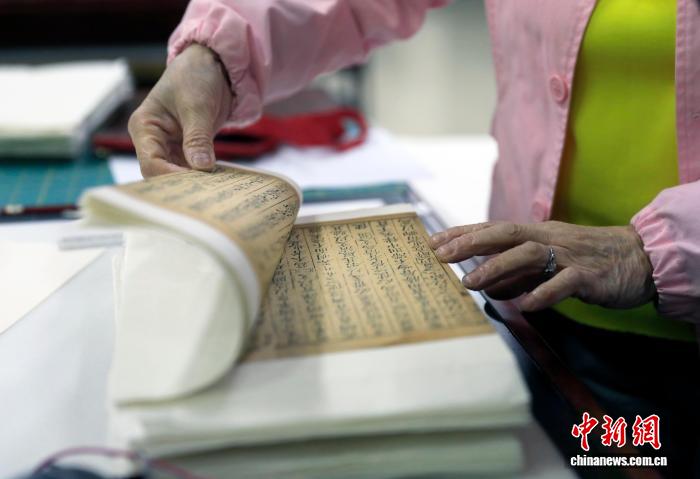
Core Viewpoint - The article discusses the establishment of a local legislative framework in Sichuan Province aimed at the protection and utilization of ancient books, highlighting the need for legal support to address existing challenges in the field [1][2]. Group 1: Legislative Framework - The draft regulation titled "Sichuan Province Ancient Book Protection and Utilization Regulation (Draft)" is being reviewed, marking it as the first local law in China specifically for ancient books [1][2]. - The draft consists of 33 articles covering legislative basis, basic principles, applicable objects, responsible entities, protection and utilization measures, and legal responsibilities [2]. Group 2: Challenges in Ancient Book Protection - Despite progress in ancient book work, issues such as inadequate institutional mechanisms, insufficient funding, and a lack of professional talent persist [2][3]. - The dual nature of ancient books as both cultural relics and literature necessitates a comprehensive legal framework, as existing laws are fragmented across various regulations [2]. Group 3: Protection and Utilization Measures - The draft emphasizes the need for improved storage conditions and timely rescue and restoration of precious and endangered ancient books [3][4]. - It encourages fair treatment of both state-owned and private ancient book collections, aiming to stimulate public interest and participation in ancient book protection [3]. Group 4: Talent Development - The draft proposes the establishment of a talent cultivation and evaluation mechanism, promoting collaboration between educational institutions and ancient book collection units to foster professional talent [4]. - It also suggests that the evaluation of professional titles for ancient book specialists should focus on practical achievements to enhance workforce vitality [4]. Group 5: Definition and Scope of Ancient Books - Ancient books are defined as documents primarily produced before 1912 and those from 1912 to 1949 with classical binding forms, with provisions for other historically valuable documents to be protected under this regulation [5].