可扩展架构

Search documents
24个月,从写第一行代码到破产:一位架构师在47个“死亡”项目里,看到的共同陷阱
3 6 Ke· 2025-10-15 10:32
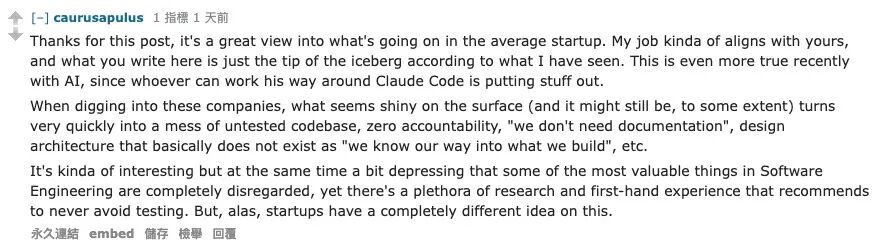
Core Insights - Many startups fail not due to market competition or running out of money, but because their products cannot scale due to accumulated technical debt and chaotic architecture [1][2] - A common pattern of failure emerges over time, with startups experiencing initial success followed by a gradual decline in performance and increasing technical issues [3][4][5][6][7] Technical Debt and Scaling Issues - A significant number of startups face a "scaling crisis" where their codebase and technology stack become unmanageable, leading to an inability to scale their products [2] - Approximately 89% of the startups reviewed had no database indexing, causing slow application performance due to scanning through 100,000 records for each request [8] - About 76% of companies over-provisioned cloud resources, with an average utilization rate of only 13%, leading to unnecessary monthly costs between $3,000 and $15,000 [8] - Nearly 70% of systems had critical authentication vulnerabilities, and 91% of teams lacked any automated testing, making deployments risky [8] Financial Implications - The estimated total loss for a startup due to poor code maintenance and rebuilding efforts can range from $2 million to $3 million, factoring in wasted developer time and lost revenue during reconstruction [8] Awareness and Timing - Many founders only realize the extent of their technical issues between 18 to 24 months into their startup journey, often after securing funding without understanding the impending scalability problems [9] Recommendations for Avoiding Technical Debt - To prevent these issues, it is advised to invest time in architecture design early on, ideally within the first two weeks, to ensure scalability from the outset [10] - Key considerations include anticipating user growth, implementing automated testing from day one, and choosing stable technology stacks [10] - External architecture reviews should be conducted early to identify potential pitfalls before they become critical [10] Industry Perspectives - Despite the seemingly basic nature of the issues identified, many industry professionals acknowledge their prevalence, especially in the context of rapid product launches driven by AI tools [11][12] - The reliance on AI-generated code can exacerbate technical debt, as it often lacks the necessary quality assurance and architectural design [18]