
吴文化

Search documents
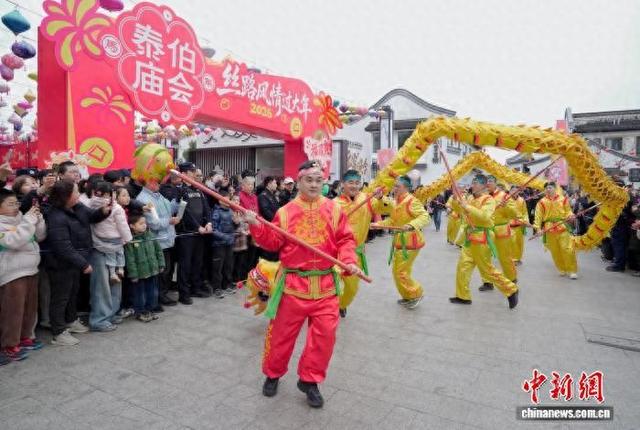
“江南开春第一庙会”热闹开场 电影《泰伯》同步公映
Xin Lang Cai Jing· 2026-02-25 12:50
Core Insights - The 2026 Taibo Temple Fair and Wu Culture Development and Consumption Promotion event commenced in Meili Ancient Town, Wuxi, with the theme "Wu Wind, Xi Language: Spring in Meili," aiming to integrate the living heritage of Wu culture with cultural tourism consumption [1][3] Group 1: Event Overview - The Taibo Temple Fair is recognized as "the first temple fair in Jiangnan to mark the beginning of spring" and features a scenario play titled "A Thousand Years of Wu Rhythm Unending," showcasing historical figures and the evolution of Wu culture from Wuxi to the world [3] - The event emphasizes the historical significance of Meili Ancient Town as the birthplace of Wu culture, promoting the cultural IP of the Taibo Temple Fair and enhancing international communication of Wu culture [3] Group 2: Cultural and Charitable Initiatives - The film "Taibo" was premiered alongside a charity initiative, aiming to convey the "benevolent" spirit of Taibo through artistic representation, with activities including charity screenings and the distribution of public viewing tickets [5] - A series of experiential activities titled "Follow 'Taibo' to Explore Meili" was launched, combining cultural experiences with tourism, including exploring historical sites, enjoying scenic views, and participating in local festivities [5] Group 3: Economic and Cultural Development - The event introduced the "High-tech Wu Area: Smart Travel" map and initiated a short video collection activity to promote cultural tourism, focusing on community benefits and consumer engagement [5] - A total of 2 million yuan in consumer vouchers for supermarkets and restaurants were announced to stimulate cultural consumption, alongside plans for non-heritage performances and lantern festivals [5] - A strategic cooperation framework was signed with Qishan County, Shaanxi Province, to enhance cultural and economic exchanges and deepen the integration of cultural tourism industries between the two regions [5]

热气腾腾的中国年|无锡:从泰伯奔吴到鲲鹏飞天,让千年吴文化“潮”起来
Xin Lang Cai Jing· 2026-02-12 14:21
Core Viewpoint - The article highlights the vibrant cultural and tourism activities planned for the 2026 Spring Festival in Xinwu District, Wuxi, focusing on the integration of traditional Wu culture with modern innovations to create a rich festive experience for residents and visitors [1]. Group 1: Cultural Activities - A series of traditional celebrations will be revitalized through innovative formats, including over ten events such as New Year blessings, Tai Bo Temple Fair, and intangible cultural heritage exhibitions, centered around themes like "Virtue Transmission and New Wu Rhythm" [2]. - The Tai Bo Temple Fair will feature a live-streamed opening ceremony and a theme of "Running to Wu," celebrating the historical journey of Tai Bo over 3,000 years ago [2]. - The Meili Ancient Town will present a spectacular visual show called "Kunpeng Flying to the Sky," combining advanced light technology and immersive performance art to create a unique aesthetic experience [2][3]. Group 2: Online and Offline Integration - Xinwu District is exploring innovative forms of cultural tourism activities through an "online + offline" integration approach, allowing more citizens to enjoy the festive atmosphere [4]. - The cultural center will launch an online garden party via a WeChat mini-program, enabling residents to participate in various activities such as knowledge quizzes and riddles from home [4]. Group 3: Community Engagement - Various streets have organized numerous New Year activities, including intangible cultural heritage experiences, parent-child reading sessions, and performances, fostering community warmth [5]. - Specific events include a "Non-Heritage Celebrating the New Year" theme at Shuo Fang Street Library and a "Horse Welcoming Spring" exhibition at Wang Zhuang Street [5]. Group 4: Consumer Promotion - To enhance the festive experience, Xinwu District will offer 500 free tickets daily for grade A scenic spots during the Spring Festival and a "1 yuan + unlimited access" promotion for hotel guests [6]. - Commercial complexes are integrating festive themes into their consumer markets, with events like retro-themed activities at 1969 Creative Workshop and various promotions at local shopping centers [7]. - The Wuxi Grand Theatre will host a series of high-quality performances during the festival, expected to attract over 10,000 attendees and generate approximately 2 million yuan in cultural consumption [7].
“十四五”期间吴中区规上文化企业营收超300亿元
Su Zhou Ri Bao· 2026-01-16 02:24
Core Insights - The "纹章九州" exhibition at the Wu Culture Museum showcases over 370 valuable artifacts, highlighting the evolution of Chinese decorative patterns from the Neolithic era to the Ming and Qing dynasties, attracting a large audience and reflecting the cultural achievements of the Wu Zhong District during the 14th Five-Year Plan period [1][2] - The Wu Culture Museum, as Suzhou's first museum dedicated to Wu culture, has received significant accolades, including "National First-Class Museum" and "Most Innovative Museum in China," since its opening in 2020, emphasizing its role in cultural transmission and public engagement [1] - The Wu Zhong District has seen a substantial increase in cultural enterprises, with the number rising to 132 and total revenue exceeding 30 billion yuan, marking growth rates of 89% and 140% respectively compared to the end of the 13th Five-Year Plan [2] Cultural Development - The successful hosting of the fifth Grand Canal Cultural Tourism Expo has amplified the cultural significance of the Grand Canal, while the publication of "宝带桥志" and the inclusion of the Baodai Bridge in the first batch of provincial water heritage listings have revitalized this ancient structure [2] - Archaeological discoveries at the Tangbei site during the 14th Five-Year Plan have filled gaps in the understanding of Suzhou's civilization, providing important evidence for the origins of Wu and Yue cultures [2] - The establishment of cultural landmarks, including the integration of ancient bridges, canals, and museums, reflects the governance wisdom of Wu Zhong in revitalizing cultural heritage [2][3]
凤飞吴越,钟鸣太湖:说无锡鸿山遗址|访古
Jing Ji Guan Cha Bao· 2025-08-06 00:31
Group 1 - The article discusses the significance of the Hongshan archaeological site in Wuxi, which is a major discovery related to the culture of the State of Yue during the Warring States period [2][3] - The Hongshan site has yielded a wealth of artifacts, including over 2,300 items such as pottery, jade, and glassware, indicating a high level of craftsmanship and cultural development [3][4] - The excavation of the Qiu Cheng Dun tomb revealed a large burial site with a complex structure and a significant number of burial goods, highlighting the social stratification of the time [4][5] Group 2 - The burial customs at Hongshan, including the construction of mounds and the types of artifacts found, reflect unique practices in the Wu-Yue region, differing from those in other parts of China [6][8] - The artifacts include a large collection of musical instruments, which are crucial for understanding the musical traditions and cultural exchanges between the Wu and Yue states [11][12] - Recent research has clarified the historical context of the Hongshan site, suggesting it served as a burial ground for both Wu and Yue nobility, thus representing a blend of cultural influences [13][16]