呼吸道合胞病毒预防与治疗

Search documents
进口单抗最高超3000一针!呼吸道合胞病毒进入高发期,国内外药企竞相布局
Bei Jing Shang Bao· 2025-10-13 12:13
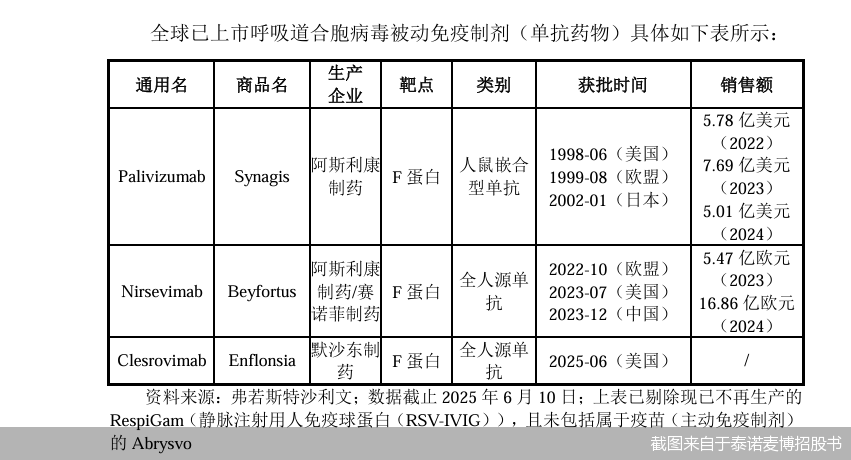
Core Insights - The Respiratory Syncytial Virus (RSV) is experiencing a surge in infections, particularly among infants and the elderly, leading to increased public health concerns and discussions on social media [1][3] - Currently, there are limited treatment options for RSV, with only one monoclonal antibody, Nirsevimab, approved for use in China, while several other pharmaceutical companies are actively developing RSV-related therapies [1][5] Industry Overview - RSV is a leading cause of respiratory infections in children under five globally, with no specific antiviral treatments available, primarily relying on symptomatic care [1][4] - The global market for passive immunization against RSV in infants is projected to grow significantly, with an estimated compound annual growth rate (CAGR) of 78.4% from 2024 to 2028, reaching approximately 2.99 billion yuan [5] Drug Development - Three RSV preventive drugs have been approved globally: Palivizumab, Nirsevimab, and Clesrovimab, with Nirsevimab being the only one currently available in China [5][6] - Nirsevimab is priced at over 3,000 yuan for children weighing over 5 kg, with two formulations available based on weight [6] - Domestic companies like TaenoMabo are developing their own RSV treatments, such as TNM001, which is currently in clinical trials [7][8] Market Demand - The demand for effective RSV prevention and treatment is expected to rise due to the increasing population of infants and the aging population in China, highlighting a significant market opportunity [8] - Companies are encouraged to focus on innovation and differentiation in drug development to meet diverse patient needs and improve drug accessibility [8]