
哈克文化

Search documents
远古文明的回响
Xin Lang Cai Jing· 2026-02-26 20:43
Group 1 - The Hake site is an important archaeological site in the Hulunbuir grassland area, providing significant academic value for studying prehistoric culture and the development of ancient nomadic tribes in northern China [1][2] - The term "Hake" in Mongolian refers to "a mound on a low-lying meadow," which vividly describes the prehistoric natural environment of the region [1] - Archaeological discoveries at the Hake site began in 1985, with formal excavations conducted from 2003 to 2010, revealing the cultural aspects of prehistoric humans in the Hulunbuir area [1] Group 2 - The emergence of Hake culture is a significant event in the fields of human history and archaeology, further tracing the origins of Chinese civilization beyond the Yellow River basin [2] - Hake culture provides valuable evidence for the complex social formation in northern China, contributing to the academic consensus of a diverse and unified Chinese civilization [2]
哈克玉璧载文明
Xin Lang Cai Jing· 2026-02-26 20:43
Core Insights - The article discusses the archaeological findings related to the Hake culture in the Hulunbuir region, highlighting the significance of jade artifacts, particularly jade discs, in understanding the cultural and historical context of the area [5][6]. Group 1: Archaeological Findings - Various shapes of jade discs have been discovered, including oval, square, and triangular forms, indicating a rich tradition of jade craftsmanship in the Hake culture [3][4][5]. - The Hake culture is characterized by its unique jade artifacts, which are comparable to other ancient Chinese cultures such as the Hongshan culture and the Liangzhu culture, providing valuable insights into the origins of jade civilization in China [5][6]. Group 2: Cultural Significance - Jade discs are not merely decorative items but also serve as tools, reflecting the dual purpose of these artifacts in the Hake culture [6]. - The emergence of jade discs signifies a shift in societal values, representing wealth and power, and embodying the spiritual essence of the Hake people [7]. Group 3: Material Sources - Experts suggest that the jade used by the Hake people likely originated from the Baikal Lake region, known for its rich jade deposits, indicating early trade and cultural exchanges [7]. - The discovery of jade artifacts in the Hake culture suggests that the people had established connections with external sources for raw materials, showcasing their adaptability and resourcefulness [7].

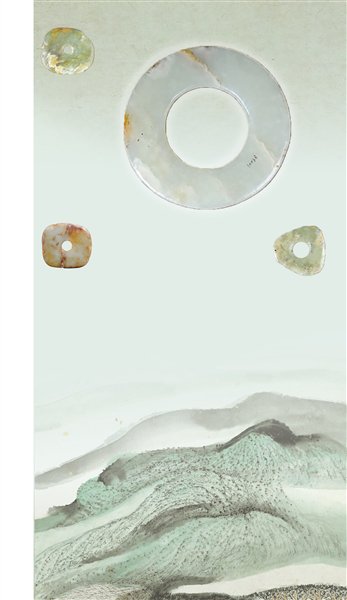
我是岁月的信使
Xin Lang Cai Jing· 2026-02-26 20:43
Group 1 - The article discusses the historical significance and craftsmanship of jade bi, an ancient ceremonial artifact, highlighting its evolution from practical tools to symbols of power and identity in rituals [1][2]. - The production process of jade bi involved meticulous techniques, including selecting fine jade, shaping it through striking and grinding, and drilling precise holes, showcasing the advanced skills of ancient craftsmen [2][3]. - Various styles of jade bi emerged over time, such as linked bi (联璧), double bi (重圈璧), and tooth-shaped bi (牙璧), indicating the increasing complexity and artistry in jade craftsmanship [3]. Group 2 - The jade bi serves as a cultural messenger, containing stories of the Hake civilization, and is currently displayed in the Hulunbuir History Museum, emphasizing its role in preserving historical narratives [3].