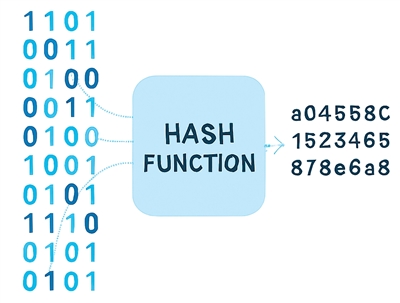
哈希函数

Search documents
诺娃RWA丨解密加密货币:技术本质与现实边界
Sou Hu Cai Jing· 2025-09-26 16:49
Core Insights - The core of cryptocurrency lies in cryptographic security mechanisms, relying on three main pillars: hash functions, asymmetric encryption, and consensus mechanisms [1] - Major categories of cryptocurrencies include native cryptocurrencies like Bitcoin, stablecoins like USDT and USDC, and platform tokens like Ethereum that support smart contracts [3] - Global regulation of cryptocurrencies has shifted from ambiguity to structured frameworks, with the EU's MiCA Act and the US's GENIUS Act establishing clearer guidelines [3] Group 1 - Cryptocurrencies are categorized into three types: native cryptocurrencies with a fixed supply, stablecoins pegged to fiat currencies, and platform tokens for decentralized applications [3] - The EU's MiCA Act requires stablecoin issuers to hold 100% reserve assets, while the US's GENIUS Act brings stablecoins under federal regulation [3] - Countries are focusing on anti-money laundering measures, requiring service providers to conduct customer due diligence [3] Group 2 - The price of cryptocurrencies is highly influenced by market sentiment and lacks actual value support, making them high-risk digital assets rather than currencies [3] - Understanding the asset attributes and regulatory boundaries of cryptocurrencies is more important for the general public than chasing short-term gains [4]


王小云:攀登世界密码学巅峰(科教人物坊)
Ren Min Ri Bao Hai Wai Ban· 2025-06-18 22:51
Core Viewpoint - The 27th "L'Oréal-UNESCO For Women in Science Awards" recognized five scientists for their groundbreaking research in natural sciences, mathematics, and computer science, with Chinese Academy of Sciences academician Wang Xiaoyun being one of the awardees, marking her as the ninth Chinese scientist to receive this honor [3][6]. Group 1: Achievements in Cryptography - Wang Xiaoyun's significant contributions to cryptography include revealing fundamental vulnerabilities in widely used hash functions, which has led to the establishment of new generation hash function standards widely applied in banking, computer security, and e-commerce [3][5]. - Her research on cryptographic algorithms, particularly the attacks on MD5 and SHA-1, has had a profound impact on global cryptography standards, prompting the development of new secure algorithms [4][5]. Group 2: Commitment to National Interests - Wang Xiaoyun emphasizes that her work in cryptography serves national interests, prioritizing the development of domestic cryptographic standards over participating in international design efforts [5]. - She played a crucial role in designing the SM3 hash function standard, which has been widely adopted in critical sectors such as finance and national security [5]. Group 3: Advocacy for Women in Science - The award aims to bridge the gender gap in science and enhance the visibility and influence of female researchers, with Wang Xiaoyun advocating for a supportive environment for young female scientists [6][8]. - The recognition of female scientists, including Wang Xiaoyun, reflects the growing strength of women in research, with nine Chinese female scientists having received this award to date [7][8].