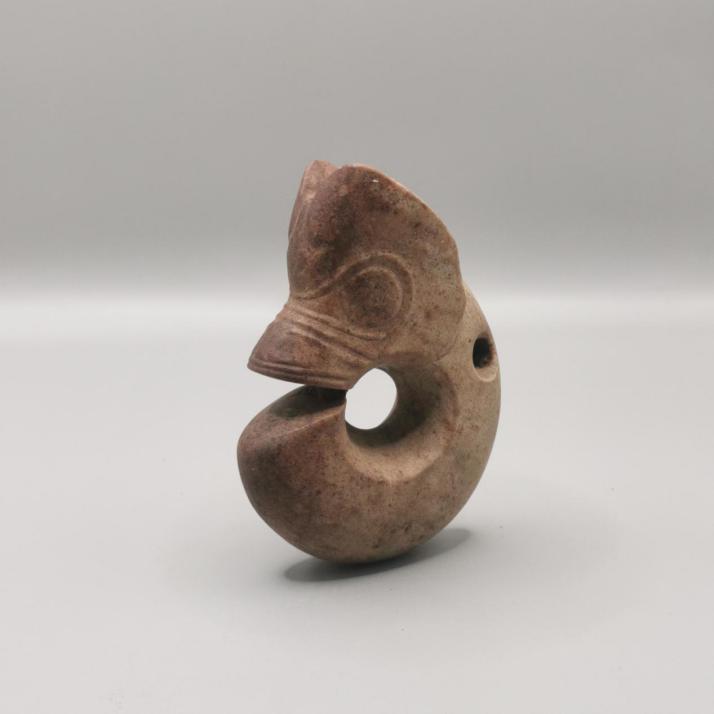
商代晚期黄土高原文明进程

Search documents
清涧寨沟遗址入选第六届“世界考古论坛·上海”重大田野考古发现奖
Zhong Guo Xin Wen Wang· 2025-12-17 03:25
Core Viewpoint - The Qingjian Zaigou site in Shaanxi Province has been recognized as a "Major Field Archaeological Discovery" at the 6th World Archaeological Forum in Shanghai, highlighting significant advancements in understanding the late Shang Dynasty civilization in the Loess Plateau region [1][2]. Group 1: Archaeological Findings - The Qingjian Zaigou site covers an area of approximately 3 million square meters and has revealed extensive rammed earth structures, large tombs, small burial sites, ash pits, and pottery molds, indicating a large and rich settlement from the Shang Dynasty [2]. - The site features a complex of large rammed earth buildings with distinctive local characteristics, including a "回" shaped layout and advanced construction techniques, showcasing the region's architectural sophistication [5]. - Numerous high-status noble tombs have been uncovered, including 11 large "甲" shaped tombs, which have dimensions comparable to the royal tombs at Anyang, significantly exceeding previous academic expectations [5]. Group 2: Cultural Insights - The discoveries confirm the existence of a complex social structure and a highly developed bronze civilization in the late Shang Dynasty on the Loess Plateau, with artifacts reflecting a blend of Central Plains Shang culture and local cultural traits [7]. - Artifacts such as chariots, jade, bone, lacquerware, and pottery molds found at the site demonstrate a strong influence from Central Plains culture while also showcasing distinct local characteristics, indicating a rich cultural synthesis [7]. - The findings provide crucial evidence for understanding the governance model of the Shang Dynasty's frontier regions and the development of a "multi-faceted integrated" cultural pattern during this period [7].

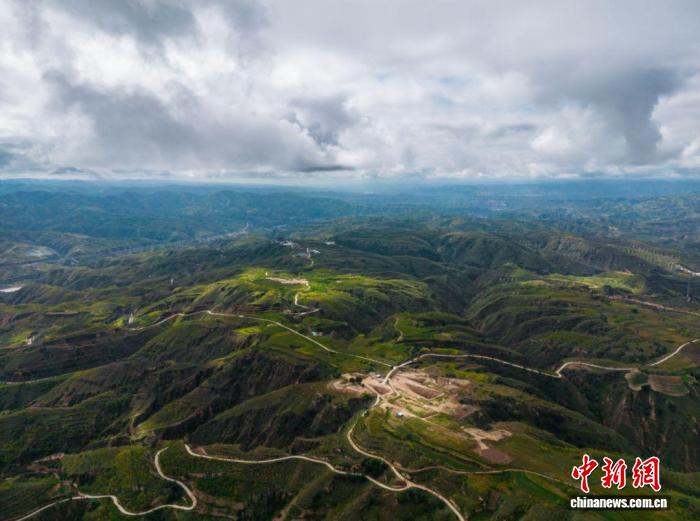
中国两项考古入选世界考古论坛重大田野考古发现成果展示
Ren Min Ri Bao· 2025-12-16 02:35
Core Insights - The "6th World Archaeology Forum" held in Shanghai focuses on the theme of "Technology, Society, and Archaeology," showcasing significant archaeological discoveries and research outcomes from around the world, emphasizing how technology shapes human society and connects regional civilizations [1] Group 1: Major Archaeological Discoveries - The "Hongshan Society Civilization Process Research" led by the Chinese Academy of Social Sciences has made significant findings over the years, showcasing the development of the Hongshan society from various perspectives [1] - The Niuhua Liang site, a representative of the prosperous phase of Hongshan culture, has been confirmed as a major ritual center, with new excavations revealing a large architectural complex of 60,000 square meters [1] - The Zhengjiagou site in the Sanggan River basin, identified as a Hongshan culture site, provides new insights into the burial practices and social development of the late Hongshan culture [2] Group 2: Ritual Sites and Cultural Insights - Newly discovered ritual sites such as Dongshantou, Sanjiadongbei, and Yuanbaoshan further illustrate the consistency of social norms within the Hongshan culture, contributing to the understanding of its "unified society" characteristics [4] - The findings at Yuanbaoshan and Dongshantou enrich the understanding of ritual activities within the Hongshan culture, providing new data on the spiritual world of Hongshan society [4] Group 3: Social Complexity and Development - Recent archaeological discoveries expand the temporal and spatial framework of the Hongshan culture, revealing a complex social structure that does not simply evolve into a state form but develops through religious authority, technological division of labor, and regional networks [11] - The Qingjian Zaigou site in Shaanxi has fundamentally updated the understanding of the late Shang Dynasty's civilization process, revealing a highly developed bronze civilization with complex social structures [11][12] - The Zaigou site, covering approximately 3 million square meters, features large rammed earth buildings and a variety of burial sites, highlighting the characteristics of a central settlement in the northern Loess Plateau during the Shang Dynasty [12][14] Group 4: Artifacts and Cultural Exchange - The Zaigou site has yielded over 40 chariots, the largest number found outside the Yin ruins, including the earliest known double-yoke chariot, pushing back the timeline of its appearance by about 1,000 years [16] - Artifacts such as bronze chariot fittings and jade ornaments found at the Zaigou site indicate close economic and cultural exchanges with the Shang Dynasty [18][22] - The findings at the Zaigou site provide crucial archaeological support for understanding the complex interactions between the Shang Dynasty and regional states, enriching the knowledge of early Chinese civilization formation [22][23]