
善意文明执行理念

Search documents
黑龙江法院:2025年执行到位金额超360亿元 胜诉权益兑现跑出“加速度”
Zhong Guo Fa Zhan Wang· 2026-01-08 08:00
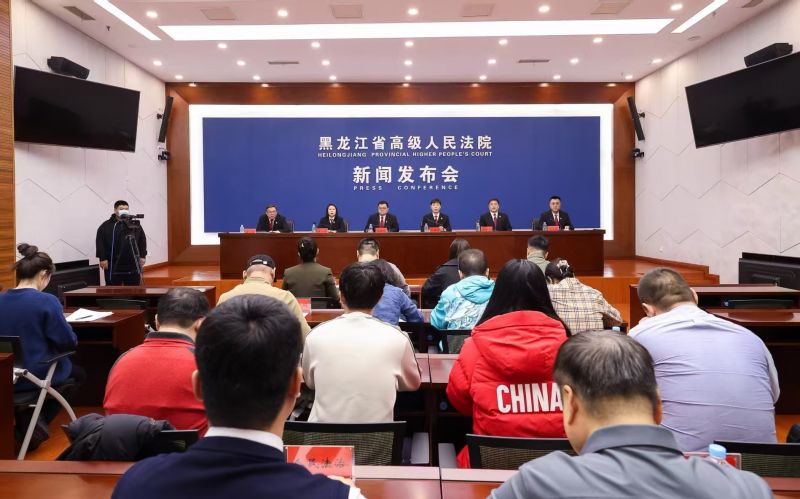
Core Viewpoint - The "Thunder 2025" execution action in Heilongjiang Province has significantly improved the efficiency of judicial enforcement, with a total of 200,500 cases concluded and an execution amount of 36.078 billion yuan, showcasing the authority and effectiveness of the judicial system [1][5]. Group 1: Execution Results - A total of 8,916 cases related to people's livelihood were concluded, with 2.602 billion yuan returned to the public, addressing urgent social issues [3]. - The courts executed 18,517 cases involving financial institutions, contributing to the stability of the real economy [3]. - The execution actions included 53,000 enforcement measures such as property seizures and restrictions on travel for 881,300 individuals [3]. Group 2: Execution Strategies - The courts adopted a dual approach of strict enforcement and civil execution, distinguishing between "dishonesty" and "inability" to pay, and conducted 27,000 credit restorations [3][4]. - The execution of enterprise-related cases reached 80,700, with 16.042 billion yuan executed, supporting over 3,000 small and micro enterprises in maintaining operations [3][4]. Group 3: Collaborative Efforts - The "cross-regional execution" mechanism facilitated the handling of 10,844 cross-execution cases, with substantial progress in 3,879 cases and an execution amount of 3.992 billion yuan [4]. - The execution actions prioritized agricultural and environmental cases, with 1,398 agricultural cases executed for 326 million yuan and 1,228 environmental cases executed for 60.775 million yuan [4]. Group 4: Long-term Impact - Over the past eight years, the courts have concluded more than 1.7 million cases and executed over 300 billion yuan, reflecting a strong commitment to justice and public expectation [5].

直击执行丨善意执行促主动履行
Xin Lang Cai Jing· 2025-12-21 13:34
Core Viewpoint - The case handled by the Huinan County People's Court exemplifies a successful application of a civil and humane execution philosophy, resolving a property return dispute through mediation and understanding, thereby avoiding potential conflicts and achieving positive legal and social outcomes [1][2]. Group 1: Case Background - The applicant Liang filed a lawsuit against the respondent Xiao for the return of a property, which was ruled in favor of Liang, requiring Xiao to vacate the property within ten days [1]. - After Xiao failed to comply with the ruling, the case entered the execution phase, where the executing judge discovered that Xiao's elderly mother was living in the property, complicating the situation [1]. Group 2: Execution Process - The executing judge adopted a flexible execution model, combining legal principles with emotional understanding, engaging in multiple discussions with Xiao to clarify the consequences of non-compliance and encouraging cooperation [1]. - The judge also communicated with Liang, informing them of Xiao's family situation and facilitating a dialogue that led to a preliminary agreement between both parties [1]. Group 3: Challenges and Resolution - As the deadline approached, Xiao's husband Liu was involved in a traffic accident, causing further delays in vacating the property [2]. - The judge organized additional mediation sessions, leading to Liang agreeing to extend the deadline for vacating the property [2]. - Ultimately, Liu, after recovering, proactively contacted the judge and Liang to complete the property handover ahead of the extended deadline, successfully concluding the case [2]. Group 4: Judicial Philosophy and Future Directions - The Huinan Court emphasizes balancing the protection of the applicant's legal rights with consideration for the respondent's reasonable requests and difficulties, using diverse execution methods to resolve disputes [2]. - The successful resolution of this case highlights the court's commitment to upholding legal authority while conveying judicial compassion, contributing to social harmony and stability [2]. - The court plans to continue enhancing its civil execution philosophy and improving execution efficiency to ensure fairness and justice in every judicial case [2].
海陵法院构建涉重大项目执行快速响应机制
Xin Hua Ri Bao· 2025-12-16 21:51
Core Viewpoint - The Taizhou Hailing Court has established an innovative rapid response mechanism for executing major project cases, ensuring the smooth implementation of significant projects through effective judicial measures, which has received recognition from local government leaders [1] Group 1: Rapid Response Mechanism - The court has created a classification response mechanism for litigation projects, allowing for special identification of "major project" cases and the establishment of dedicated collegial panels for full-process tracking [1] - In a specific case involving the "Hailing Port" project, the court expedited the execution process by allowing for preliminary execution to avoid delays that could impact project construction [1] Group 2: Internal and External Collaboration - A collaborative execution system has been built to address the multi-departmental challenges of executing major project cases, enhancing internal integration and external cooperation [2] - The court has engaged with various departments such as development, construction, and land management to facilitate information sharing and collaborative measures, exemplified by the resolution of a land lease dispute in the special aquatic breeding project [2] Group 3: Comprehensive Service Tracking - The court has implemented a service chain that includes a "project demand list," "execution progress board," and "risk warning ledger" to ensure a full-cycle legal service from project initiation to operation [3] - In a case involving a new energy motorcycle manufacturing project, the court provided comprehensive legal guidance and coordinated resources to facilitate the project's rapid launch and stable operation [3]
崇川法院:多维发力破解执行裁判难题 “执”写司法为民答卷
Yang Zi Wan Bao Wang· 2025-09-11 11:04
Core Viewpoint - The execution process in judicial cases is crucial for achieving fairness and justice, and the execution tribunal plays a key role in resolving disputes and protecting the legal rights of the public [1] Group 1: Execution Case Statistics - From 2022 to the first half of 2025, the Chongchuan Court accepted a total of 817 execution objection cases and 210 execution objection lawsuits, with 822 execution objection cases and 182 execution objection lawsuits concluded [3] - The annual case acceptance numbers show an overall declining trend, indicating the effectiveness of the court's governance work [3] Group 2: Case Structure and Challenges - Disputes in cases are primarily concentrated on issues such as "discrepancy between name and reality" of property rights and conflicts of multiple rights, with the highest proportion of cases involving third parties claiming ownership to exclude execution [3] - New types of objections, such as residential rights and leasing rights, are gradually emerging [3] Group 3: Innovative Mechanisms - To address challenges in execution adjudication, the Chongchuan Court has implemented innovative mechanisms, including the responsibility system and case review mechanism, enhancing business learning to improve the quality and efficiency of execution adjudication [3] - The court has established a pre-examination mechanism for execution disputes to promote substantive resolution of objections and prevent abuse of objections through a warning mechanism [3] Group 4: Judicial Principles and Case Examples - The execution adjudication work emphasizes the principle of good faith and civilized execution, prioritizing the review of cases involving survival rights and promptly lifting improper execution measures [4] - A typical case involved the court supporting the rental rights of two employees living in a property seized during execution, highlighting the need to respect historical welfare housing rights [4] Group 5: Future Directions - The Chongchuan Court plans to continue deepening reforms in execution adjudication mechanisms to address execution difficulties and contribute to the protection of legal rights and the optimization of the legal business environment [4]
强制腾退2000余平方米物业!龙岗法院助力区重大产业项目
Nan Fang Du Shi Bao· 2025-06-18 08:52
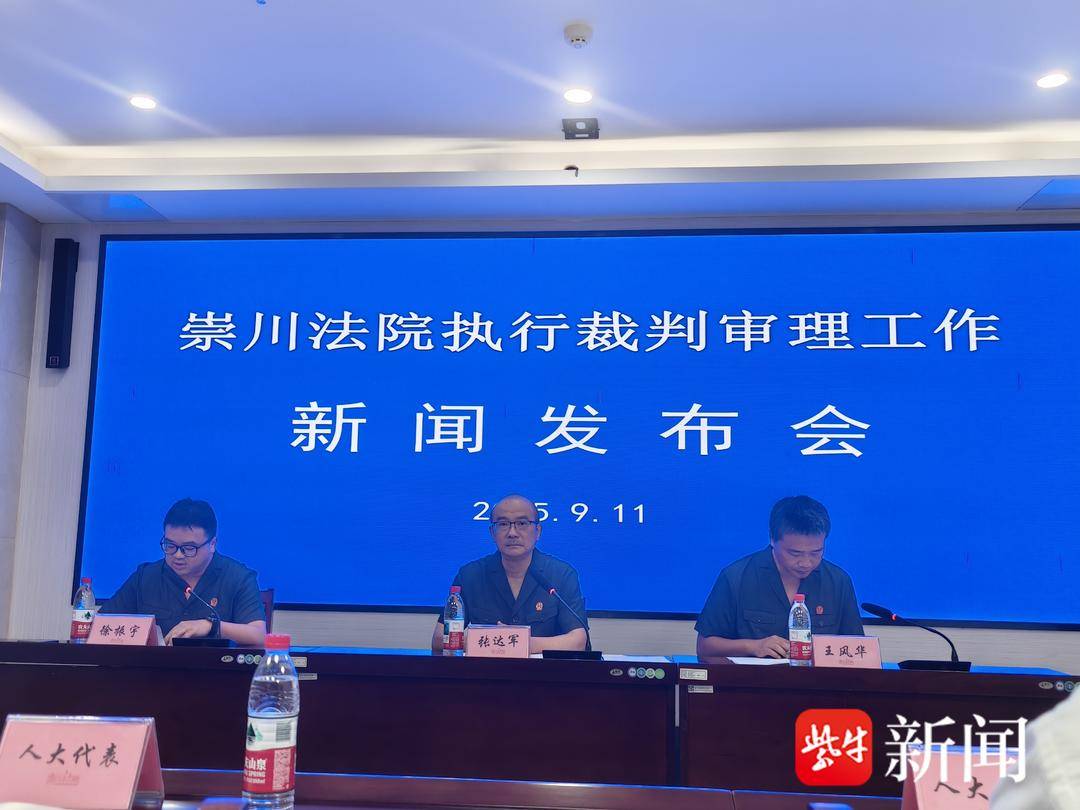
Core Viewpoint - The Shenzhen Longgang District Court successfully executed a forced eviction of over 2,000 square meters of property in the Zhuangbei community, which is part of a significant land consolidation project included in the 2021 urban renewal plan, despite adverse weather conditions [1][3]. Group 1: Execution Process - The court's execution team, supported by local authorities, conducted thorough pre-eviction preparations, including site investigations and community outreach [2]. - The eviction faced challenges due to the presence of hazardous materials and the refusal of defendants to vacate the premises, leading to a complex situation requiring careful handling [2][3]. - A total of 115 personnel, including judges and police, were mobilized for the eviction, which took place over seven hours, successfully transferring the property to the applicant [3]. Group 2: Legal and Community Engagement - The court employed a dual approach of "flexible guidance" and "legal deterrence" to encourage compliance from the defendants, including multiple discussions and mediation attempts [2]. - The court ensured the safe accommodation of the defendants' family members during the eviction process, reflecting a commitment to a civil execution approach [3]. - The entire eviction process was witnessed by local representatives and recorded for transparency, reinforcing the judicial support for the land consolidation project [3].
