四大名著

Search documents
话说经典:在“江湖”中照见人心
Xin Lang Cai Jing· 2026-01-15 22:30
Core Viewpoint - The new book "In the Jianghu: Talking about the Four Great Classics" by Professor Miao Huaiming reinterprets the Four Great Classics of Chinese literature through the lens of "jianghu," emphasizing the complexity of human relationships and life experiences reflected in these texts [1][2]. Summary by Sections Book Concept and Themes - Miao Huaiming chose the term "jianghu" to encapsulate the essence of the Four Great Classics, indicating a complex environment and intricate human relationships rather than just geographical or martial connotations [2]. - Each classic represents a different form of "jianghu": "Romance of the Three Kingdoms" depicts a historical struggle for power, "Water Margin" illustrates loyalty and vengeance, "Journey to the West" explores spiritual trials, and "Dream of the Red Chamber" reflects familial relationships and societal changes [2]. Character Analysis - Miao's analysis of Lin Chong from "Water Margin" reveals a deeper understanding of societal dynamics, showcasing betrayal and true friendship through the character's journey [2]. - The portrayal of Zhuge Liang in "Romance of the Three Kingdoms" is redefined as a tragic hero, emphasizing his awareness of the futility of his efforts in a politically divided landscape [3]. Value of the Classics - Miao believes that the essence of the Four Great Classics can be summarized in four concepts: strategy, righteousness, enlightenment, and emotion, which represent essential life stages and challenges [3]. - The collective contribution of all 120 chapters of "Dream of the Red Chamber" is acknowledged, highlighting the importance of the latter chapters in preserving the narrative and the author's intent [3]. Reading Challenges - In the current era of fragmented information and short-form content, Miao stresses the importance of deep reading and the value of physical books in developing critical thinking skills [4]. - He encourages readers to dedicate time to engage with the Four Great Classics, emphasizing the wisdom and insights that can be gained from these texts [4].
这一套小人书,撑起中国连环画半壁江山,绝了!
凤凰网财经· 2025-09-01 15:07
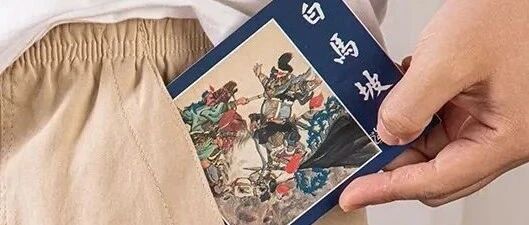
Core Viewpoint - The article emphasizes the cultural significance and nostalgic value of traditional Chinese comic books, particularly the "Four Great Classical Novels" illustrated editions, which have influenced generations and are now being re-released for modern readers [1][8][30]. Group 1: Historical Context and Impact - The "Three Kingdoms" illustrated edition from 1979 was reprinted over ten million times, impacting multiple generations [2][4]. - Writers like Liang Xiaosheng and Feng Jicai highlight how these comic books were crucial in cultivating literary interest and artistic appreciation during their childhood [5][6]. Group 2: Current Market and Offerings - Shanghai People's Fine Arts Publishing House is re-releasing a boxed set of the "Four Great Classical Novels" illustrated editions, comprising 136 volumes, which includes "Three Kingdoms" (60 volumes), "Dream of the Red Chamber" (16 volumes), "Water Margin" (40 volumes), and "Journey to the West" (20 volumes) [17][18]. - The set is priced at 468 yuan, with a promotional price of 248 yuan, making it highly affordable at approximately 1.7 yuan per volume [30][69]. Group 3: Educational Value - The illustrated editions are designed to be engaging and accessible for children, allowing them to complete the reading of the four novels in about two months, thus fostering a love for reading [32][61]. - Each volume presents key stories from the original texts, omitting complex or inappropriate content for younger readers, while maintaining literary quality [35][38]. Group 4: Artistic Quality - The comic books feature works from renowned artists like Dai Dunbang and Qian Xiaodai, whose illustrations have become iconic in Chinese art history [22][24]. - The illustrations are noted for their detail and ability to vividly convey character emotions and storylines, enhancing the reading experience [50][58].