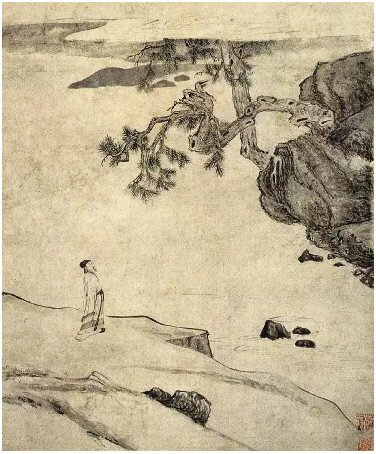
四种境界

Search documents
由世界的对岸回到世界中
Xin Lang Cai Jing· 2026-01-02 17:26
Core Viewpoint - The essence of Chinese aesthetics is deeply rooted in philosophical concepts and reflects a profound understanding of human existence, distinguishing it from Western aesthetic perspectives [3]. Group 1: Key Concepts of Chinese Aesthetics - The book "Essence of Chinese Aesthetics" by Professor Zhu Liangzhi compiles nine core concepts: beauty and ugliness, qi yun (spirit resonance), virtual and real, simplicity and complexity, space, time, subtle understanding, and transformation [3]. - Chinese aesthetics is not merely about aesthetic forms but is fundamentally intertwined with Daoist and Zen philosophical thoughts, emphasizing a deep comprehension of the state of existence [3]. Group 2: Philosophical Underpinnings - The philosophy of "shifa zaohua" (learning from nature) aims to correct the artificial flaws caused by human knowledge and emotions, promoting a harmonious relationship between humans and the world [4]. - The opposition between natural and artificial is central to Laozi's philosophy, which advocates for a return to natural rhythms and the avoidance of blind actions that disrupt these rhythms [5]. Group 3: The Four Realms of Existence - Feng Youlan's concept of the "Four Realms" includes the natural realm, the utilitarian realm, the moral realm, and the realm of heaven and earth, providing a framework for understanding human existence from different perspectives [6]. - The natural realm is viewed as a state of desire-driven existence, while the utilitarian realm focuses on self-interest, and the moral realm emphasizes altruism [6]. Group 4: Overcoming Desire and Artificial Constructs - Laozi's teachings suggest that human desires and artificial constructs lead to a disconnection from nature, advocating for a life of moderation and simplicity to achieve true harmony [7]. - The highest state of existence, as described by Laozi, is to transcend desires and live in unity with the universe, achieving a state of balance and peace [8]. Group 5: The Human Condition - The writings of Zhuangzi illustrate the struggles of human existence, emphasizing the futility of a life driven by desires and societal pressures, leading to a loss of life's meaning [9][10]. - Zhuangzi argues for a return to a natural state of being, where individuals can find true freedom and connection with the world, rather than being enslaved by artificial constructs [10].