道家哲学

Search documents
由世界的对岸回到世界中
Xin Lang Cai Jing· 2026-01-02 17:26
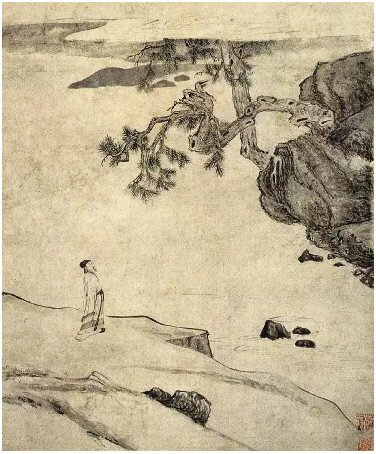
Core Viewpoint - The essence of Chinese aesthetics is deeply rooted in philosophical concepts and reflects a profound understanding of human existence, distinguishing it from Western aesthetic perspectives [3]. Group 1: Key Concepts of Chinese Aesthetics - The book "Essence of Chinese Aesthetics" by Professor Zhu Liangzhi compiles nine core concepts: beauty and ugliness, qi yun (spirit resonance), virtual and real, simplicity and complexity, space, time, subtle understanding, and transformation [3]. - Chinese aesthetics is not merely about aesthetic forms but is fundamentally intertwined with Daoist and Zen philosophical thoughts, emphasizing a deep comprehension of the state of existence [3]. Group 2: Philosophical Underpinnings - The philosophy of "shifa zaohua" (learning from nature) aims to correct the artificial flaws caused by human knowledge and emotions, promoting a harmonious relationship between humans and the world [4]. - The opposition between natural and artificial is central to Laozi's philosophy, which advocates for a return to natural rhythms and the avoidance of blind actions that disrupt these rhythms [5]. Group 3: The Four Realms of Existence - Feng Youlan's concept of the "Four Realms" includes the natural realm, the utilitarian realm, the moral realm, and the realm of heaven and earth, providing a framework for understanding human existence from different perspectives [6]. - The natural realm is viewed as a state of desire-driven existence, while the utilitarian realm focuses on self-interest, and the moral realm emphasizes altruism [6]. Group 4: Overcoming Desire and Artificial Constructs - Laozi's teachings suggest that human desires and artificial constructs lead to a disconnection from nature, advocating for a life of moderation and simplicity to achieve true harmony [7]. - The highest state of existence, as described by Laozi, is to transcend desires and live in unity with the universe, achieving a state of balance and peace [8]. Group 5: The Human Condition - The writings of Zhuangzi illustrate the struggles of human existence, emphasizing the futility of a life driven by desires and societal pressures, leading to a loss of life's meaning [9][10]. - Zhuangzi argues for a return to a natural state of being, where individuals can find true freedom and connection with the world, rather than being enslaved by artificial constructs [10].

“这里的文化,完全改变了我的人生”(我在中国·行耕记)
Ren Min Ri Bao Hai Wai Ban· 2025-06-20 21:21
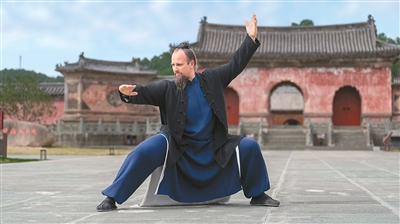
Core Insights - Jake Pinnick, an American who has lived in Wudang Mountain for over a decade, has received a "Five-Star Card," granting him permanent residency in China, highlighting his deep connection to Chinese culture and martial arts [2][3][6] - His journey from a novice in martial arts to becoming the 16th generation successor of the Wudang Sanfeng School illustrates the transformative power of cultural immersion [3][4][6] - Jake's commitment to promoting Wudang culture is evident through his teaching, online presence, and plans to establish a martial arts school in the U.S. [8][9] Cultural Integration - Jake's initial fascination with Chinese martial arts was sparked by films featuring Bruce Lee and Jackie Chan, leading him to Wudang Mountain in 2010 [3] - His rigorous training included mastering various martial arts forms and engaging deeply with Chinese philosophy, particularly the teachings of the Dao De Jing [4][8] - The cultural exchange is further enriched by his marriage to a Chinese woman, which has fostered a family environment that embraces both cultures [6][7] Educational Impact - Jake assists in teaching at the martial arts school, effectively bridging language barriers and integrating traditional Chinese philosophy with martial arts training for foreign students [8] - His online educational content has garnered over 1 million followers, showcasing his dedication to spreading knowledge of Wudang culture and martial arts [8][9] - The publication of his English-language教材 on the Dizi instrument marks a significant step in making Chinese cultural practices accessible to a global audience [8][9] Global Reach - The popularity of Wudang culture is reflected in the annual influx of approximately 400,000 international visitors to Wudang Mountain, with over 20,000 foreign martial arts students across more than 50 countries [9] - Jake's vision includes expanding the reach of Wudang culture by establishing a martial arts school in the U.S., aiming to cultivate a greater appreciation for this cultural heritage [9]