
《中国美学要义》

Search documents
由世界的对岸回到世界中
Xin Lang Cai Jing· 2026-01-02 17:26
Core Viewpoint - The essence of Chinese aesthetics is deeply rooted in philosophical concepts and reflects a profound understanding of human existence, distinguishing it from Western aesthetic perspectives [3]. Group 1: Key Concepts of Chinese Aesthetics - The book "Essence of Chinese Aesthetics" by Professor Zhu Liangzhi compiles nine core concepts: beauty and ugliness, qi yun (spirit resonance), virtual and real, simplicity and complexity, space, time, subtle understanding, and transformation [3]. - Chinese aesthetics is not merely about aesthetic forms but is fundamentally intertwined with Daoist and Zen philosophical thoughts, emphasizing a deep comprehension of the state of existence [3]. Group 2: Philosophical Underpinnings - The philosophy of "shifa zaohua" (learning from nature) aims to correct the artificial flaws caused by human knowledge and emotions, promoting a harmonious relationship between humans and the world [4]. - The opposition between natural and artificial is central to Laozi's philosophy, which advocates for a return to natural rhythms and the avoidance of blind actions that disrupt these rhythms [5]. Group 3: The Four Realms of Existence - Feng Youlan's concept of the "Four Realms" includes the natural realm, the utilitarian realm, the moral realm, and the realm of heaven and earth, providing a framework for understanding human existence from different perspectives [6]. - The natural realm is viewed as a state of desire-driven existence, while the utilitarian realm focuses on self-interest, and the moral realm emphasizes altruism [6]. Group 4: Overcoming Desire and Artificial Constructs - Laozi's teachings suggest that human desires and artificial constructs lead to a disconnection from nature, advocating for a life of moderation and simplicity to achieve true harmony [7]. - The highest state of existence, as described by Laozi, is to transcend desires and live in unity with the universe, achieving a state of balance and peace [8]. Group 5: The Human Condition - The writings of Zhuangzi illustrate the struggles of human existence, emphasizing the futility of a life driven by desires and societal pressures, leading to a loss of life's meaning [9][10]. - Zhuangzi argues for a return to a natural state of being, where individuals can find true freedom and connection with the world, rather than being enslaved by artificial constructs [10].

美学大家朱良志解码华夏美学,《中国美学要义》出版
Xin Lang Cai Jing· 2025-12-22 04:57
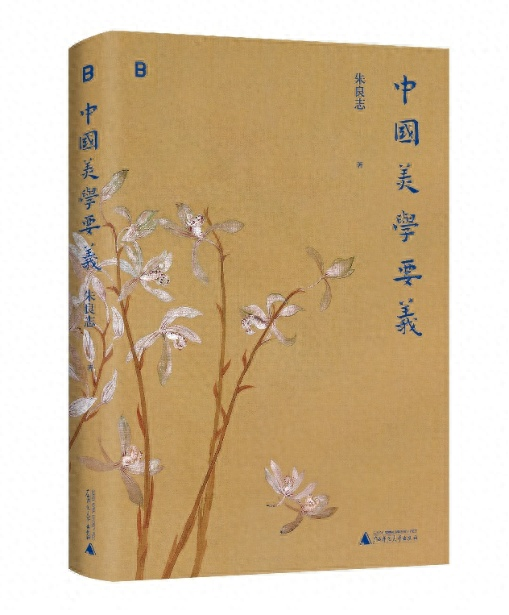
Core Viewpoint - The publication of "Essence of Chinese Aesthetics" by Zhu Liangzhi aims to enrich modern minds with the wisdom of traditional Chinese art and philosophy, helping readers draw strength from ancient wisdom to rebuild inner order and stability in a chaotic world [4] Group 1: Book Overview - "Essence of Chinese Aesthetics" is a significant work that encapsulates Zhu Liangzhi's lifelong thoughts and teachings, published by Guangxi Normal University Press and Beijing Beibeite [1] - The book achieved remarkable success during its online launch, selling over 15 million copies in one hour and generating a GMV of 200,000 in the philosophy book category [1] - This book serves as a special commemoration of Zhu's 70th birthday and distills the essence of his popular course at Peking University on aesthetics [3] Group 2: Philosophical Insights - Zhu Liangzhi posits that Chinese aesthetics fundamentally represents "the study of transcending life" and "the study of settling life," emphasizing the appreciation of imperfection as a recognition of life's essence [3] - The book discusses the cyclical nature of life, where individuals transition from vitality to decline, and highlights the internal strength of life that should not be forgotten during low periods [3] - Zhu suggests that understanding this aspect of life can be healing, allowing individuals to navigate through difficulties without being trapped in despair [3] Group 3: Thematic Structure - The book addresses the fundamental question of "What is Chinese aesthetic?" and is structured around nine key issues that reflect the characteristics of Chinese aesthetics, such as beauty and ugliness, spirit, and reality [4] - It aims to guide readers beyond mere knowledge to the core of aesthetics, using Daoist and Zen philosophies as the ideological roots of Chinese art [4] - The writing style is intentionally clear and accessible, minimizing lengthy citations to make profound philosophical ideas more understandable to a general audience [4]
经典美学课程《中国美学要义》出版
Xin Lang Cai Jing· 2025-12-20 19:01
Core Viewpoint - The book "Essence of Chinese Aesthetics" by Zhu Liangzhi explores key concepts of Chinese aesthetics, emphasizing its distinctiveness from Western aesthetics and its connection to life and human experience [1][2]. Group 1: Key Concepts of Chinese Aesthetics - The book identifies nine critical concepts that reflect the characteristics of Chinese aesthetics, including beauty and ugliness, qi yun (spirit resonance), virtual and real, simplicity and complexity, space, time, subtle understanding, the great within the small, and transformation [1]. - Zhu Liangzhi argues that Chinese aesthetics is a study of transcending life and finding a stable spiritual core in a changing world, linking aesthetics closely with human existence [1]. Group 2: Author's Background and Contributions - Zhu Liangzhi is a distinguished professor at Peking University and a recipient of the National Book Award, with a long-standing focus on traditional Chinese aesthetics and art philosophy [1]. - The book serves as a synthesis of Zhu's teachings from his classical courses at Peking University, aimed at making Chinese aesthetics accessible to a broader audience [1].