因果链推理

Search documents
英伟达长达41页的自驾VLA框架!因果链推理,实车可部署
自动驾驶之心· 2025-11-15 03:03
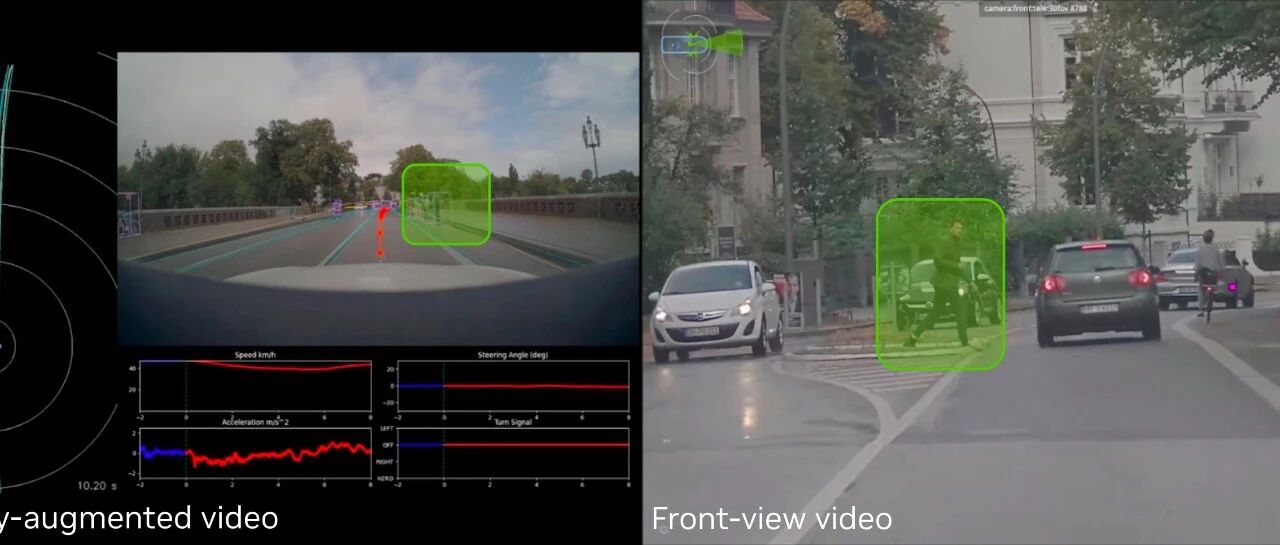
Core Insights - The article discusses the introduction of the Alpamayo-R1 (AR1) framework by NVIDIA, which aims to enhance decision-making capabilities in complex driving scenarios through causal reasoning and trajectory planning [1][2]. Group 1: Background and Development - The evolution of autonomous driving systems has shifted from traditional modular architectures to end-to-end frameworks, which are now widely recognized in the industry [3]. - Current end-to-end methods struggle with long-tail scenarios due to sparse supervisory signals and the need for higher-order reasoning capabilities, highlighting a significant gap between existing models and the requirements for robust Level 4 (L4) autonomous driving [3][4]. Group 2: Innovations in AR1 - AR1 integrates causal chain reasoning with trajectory planning, resulting in a 12% improvement in planning accuracy in high-difficulty scenarios compared to trajectory-based benchmark models [2][8]. - The model demonstrates a 35% reduction in lane deviation rates and a 25% decrease in near-collision rates during closed-loop simulations [2]. - After reinforcement learning post-training, the model's reasoning quality improved by 45%, and reasoning-action consistency increased by 37% [2]. Group 3: Causal Chain Dataset and Structured Reasoning - The article emphasizes the necessity of structured causal reasoning in autonomous driving, proposing the creation of a causal chain (CoC) dataset that aligns reasoning trajectories with driving decisions [5][29]. - The CoC dataset is designed to ensure that reasoning trajectories are concise and directly linked to specific driving decisions, enhancing the model's interpretability and training efficiency [5][31]. Group 4: Training Strategies and Model Architecture - AR1 employs a multi-stage training strategy that combines supervised fine-tuning and reinforcement learning to optimize reasoning quality and trajectory prediction [8][12]. - The model architecture is modular, allowing compatibility with existing visual-language model (VLM) backbones while integrating components tailored for autonomous driving [12][16]. Group 5: Visual Encoding and Action Decoding - The article discusses the challenges of visual encoding in multi-camera setups and proposes efficient tokenization methods to reduce the number of tokens generated during real-time inference [19][22]. - Action decoding is based on a bicycle model to ensure smooth trajectory outputs, enhancing the model's performance in real-world applications [27][28]. Group 6: Quality Assurance and Annotation Process - A hybrid annotation process combining human and automated labeling is implemented to ensure high-quality training data for the CoC dataset, balancing efficiency and accuracy [48][49]. - The quality assurance process includes multiple checks to ensure causal correctness and decision minimality in the annotated data [52][53].


英伟达一篇长达41页的自驾VLA框架!因果链推理,实车可部署算法Alpamayo-R1
自动驾驶之心· 2025-11-05 00:04
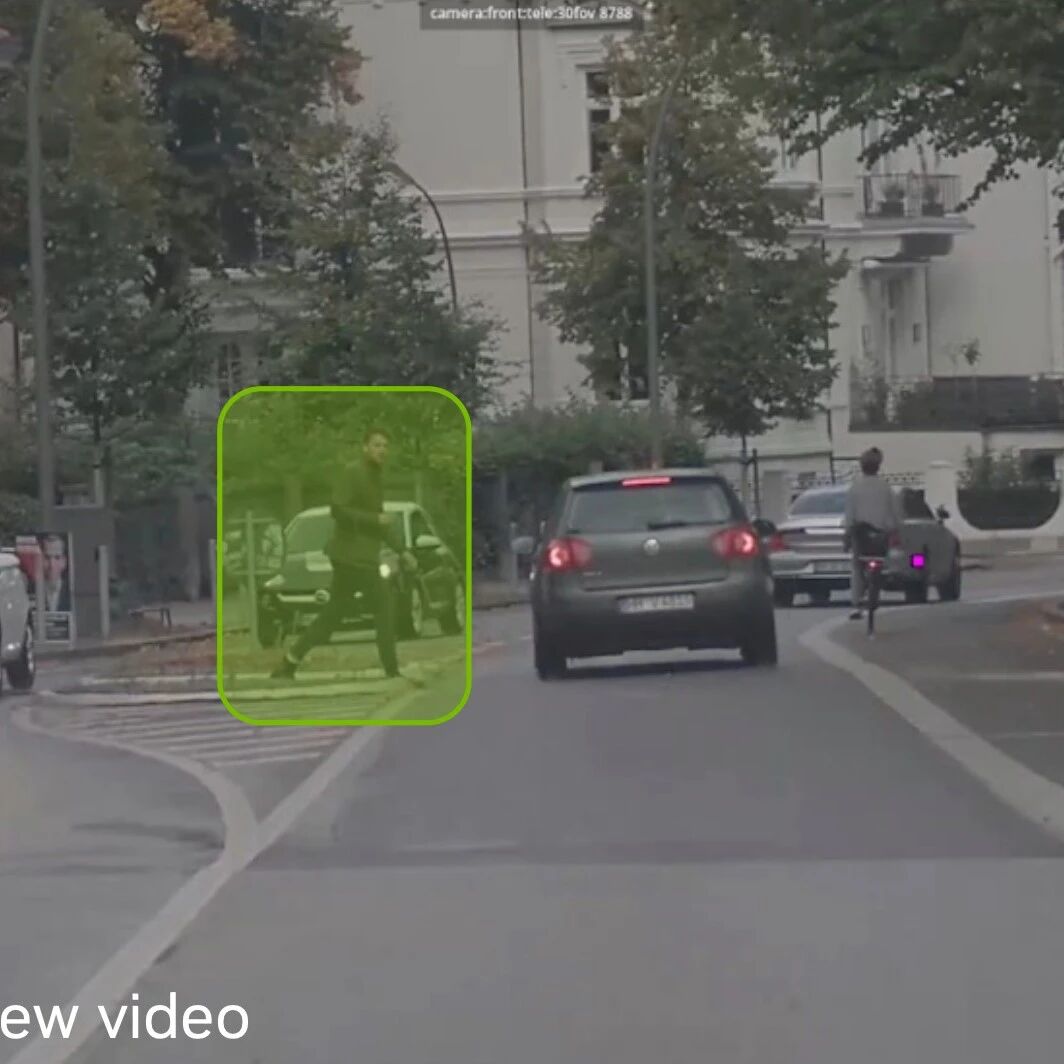
Core Insights - The article discusses the introduction of the Alpamayo-R1 (AR1) framework by NVIDIA, which aims to enhance decision-making capabilities in complex driving scenarios through causal reasoning and trajectory planning [1][2]. Group 1: Background and Framework - The development of autonomous driving systems has shifted from traditional modular architectures to end-to-end frameworks, which are now widely recognized in the industry [3]. - Current end-to-end methods struggle with long-tail scenarios due to sparse supervisory signals and the need for high-order reasoning capabilities, highlighting a significant gap between existing models and the requirements for robust Level 4 (L4) autonomous driving [3][4]. Group 2: Innovations in AR1 - AR1 integrates causal chain reasoning with trajectory planning, resulting in a 12% increase in planning accuracy in high-difficulty scenarios compared to trajectory-based benchmark models [2][8]. - The model demonstrates a 35% reduction in lane deviation rates and a 25% decrease in near-collision rates during closed-loop simulations [2]. - After reinforcement learning post-training, the model's reasoning quality improved by 45%, and reasoning-action consistency increased by 37% [2]. Group 3: Causal Chain Dataset - The article introduces a structured causal chain (CoC) annotation framework that generates reasoning trajectories aligned with driving behavior, ensuring that each trajectory is decision-centric and causally linked [5][29]. - The CoC dataset is designed to provide clear supervision for learning decision causality, enabling the reasoning model to efficiently infer the reasons behind specific driving actions [31][42]. Group 4: Training Strategies - A multi-stage training strategy is employed, utilizing supervised fine-tuning and reinforcement learning to enhance reasoning capabilities and ensure consistency between reasoning and actions [8][12]. - The AR1 model is built on the Cosmos-Reason backbone, which is specifically designed for physical intelligence applications, enhancing its deployment capabilities in autonomous driving scenarios [16][17]. Group 5: Visual-Language-Action (VLA) Architecture - The AR1 architecture emphasizes modularity and flexibility, allowing it to integrate existing visual-language models while incorporating specialized components for efficient visual encoding and real-time action decoding [12][19]. - The model's design addresses the challenges of processing multi-camera inputs and generating precise multi-modal trajectory predictions necessary for safe vehicle control [11][12]. Group 6: Data Annotation and Quality Assurance - A hybrid annotation process combining human and automated labeling is implemented to ensure high-quality training data while maintaining efficiency [48][49]. - The quality assurance process includes multiple checks to ensure causal correctness and minimal decision-making ambiguity in the annotated data [52][53].