
国债削减

Search documents
US Tariff Revenue Falls For First Time Since Trump's Import Taxes In April— Massive $38 Trillion Debt Reduction Plan At Risk?
Benzinga· 2025-12-13 06:25
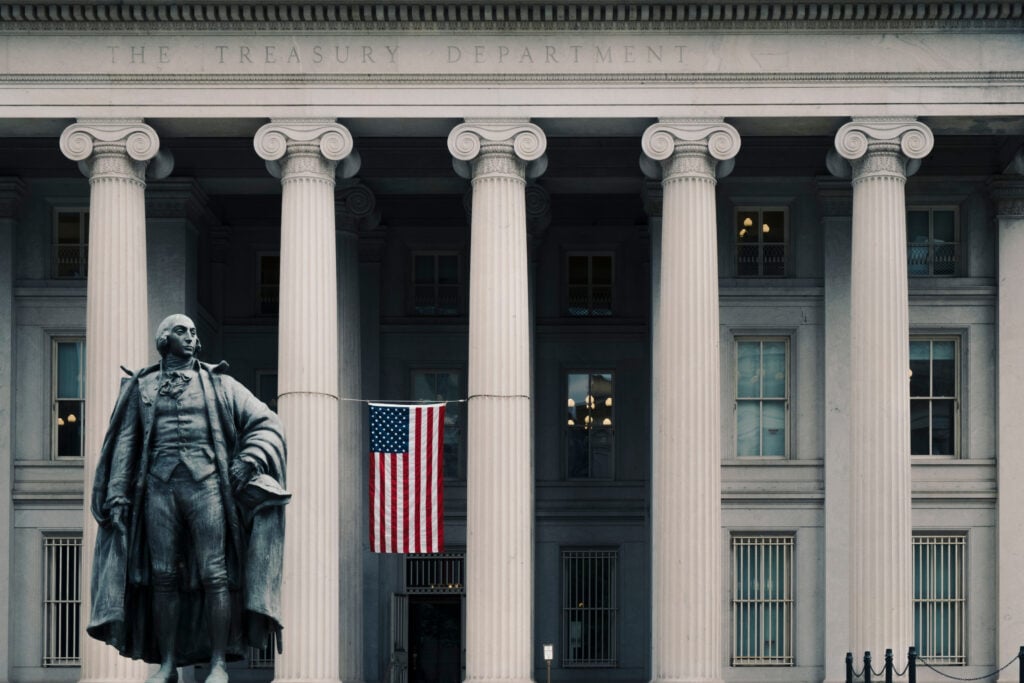
Group 1 - Tariff revenue declined month-over-month for the first time since the imposition of import taxes in April, with collections falling to $30.75 billion in November from $31.35 billion in October [1] - Tariff collections peaked at $15.6 billion in April and continued to rise until October, but the decline in November coincided with the rollback of tariffs on grocery staples [2] - Total government receipts for the first two months of fiscal 2026 reached $740.373 billion, an increase from $628.525 billion in the previous year, with individual income taxes contributing $363.911 billion and corporation income taxes adding $22.237 billion [3] Group 2 - Trump proposed using tariff revenue to reduce the national debt, which exceeded $38 trillion in October, and to fund $2,000 rebate checks for Americans [4] - A $12 billion farm aid package for farmers affected by tariffs was announced, partially funded by tariff revenue [4] - The Congressional Budget Office estimated that tariff reductions on groceries and duties on China and the EU would eliminate approximately $800 billion in anticipated debt reduction over the next ten years [5]

巨额国债压力下,意大利黄金归属争议升温
智通财经网· 2025-12-03 13:00
Core Viewpoint - The European Central Bank (ECB) has requested the Italian government to reconsider its proposal to declare the country's gold reserves as property of the Italian people, which may lead to the potential sale of part of Italy's gold reserves [1][2] Group 1: ECB's Position - The ECB suggested that Italian authorities reassess the draft proposal while considering the independence of the Italian central bank in fulfilling its responsibilities within the ECB system [1] - The ECB expressed concerns that the specific purpose of the draft proposal remains unclear [1] Group 2: Italian Government's Actions - Senator Lucio Malan from the ruling Brothers of Italy party submitted an amendment to the 2026 budget, stating that gold reserves managed by the Italian central bank belong to the state and are held in trust for the Italian people [1] - The Italian government has faced ongoing calls from various political factions over the past 20 years to clarify gold ownership, with discussions about potentially selling gold to reduce public debt or fund tax cuts and increased spending [1] Group 3: Historical Context and Current Situation - Italy holds the third-largest national gold reserves globally, with 2,452 tons valued at approximately $300 billion, representing about 13% of the country's GDP [1] - Italy's national debt has exceeded €3 trillion (approximately $3.49 trillion), with projections indicating that the debt-to-GDP ratio will reach 137.4% next year [2] - Despite ongoing discussions about selling gold to alleviate debt, such proposals have not been approved to date [2] Group 4: Perspectives on Gold Reserves - Some analysts argue that selling gold could free up funds for public services, while others emphasize that the Italian central bank has no intention of selling gold reserves [2] - Historical experiences, such as the looting of 120 tons of gold by Nazi forces during World War II, have shaped Italy's modern gold policy [2] - Experts suggest that retaining gold reserves is a prudent decision, especially in the context of global market fluctuations and the rise of digital assets [2]