军事干涉

Search documents
持续冲突风险升高,美军或为对伊长期行动做准备
Xin Lang Cai Jing· 2026-02-14 06:12
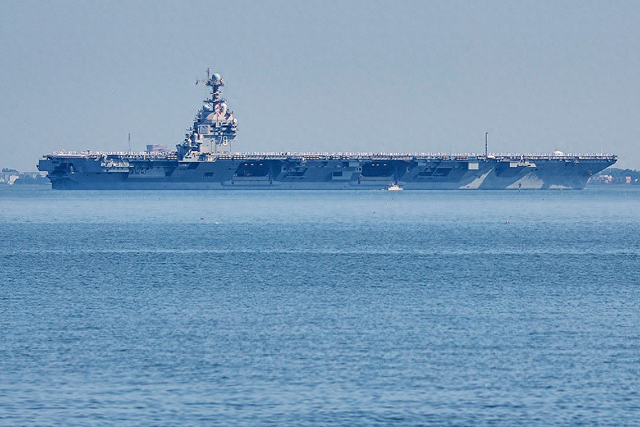
Group 1 - The U.S. is increasing military pressure on Iran while engaging in diplomatic negotiations, with President Trump confirming the deployment of a second aircraft carrier strike group to the Middle East to compel Iran to reach an agreement [1][3] - U.S. military preparations indicate a potential for prolonged military action against Iran, which could escalate into a more severe conflict than previously experienced, as Iran possesses a strong missile arsenal [1][4] - Trump emphasized the difficulty of reaching an agreement with Iran, suggesting that instilling fear may be necessary to resolve the situation [1] Group 2 - The "Gerald R. Ford" aircraft carrier strike group has been ordered to move from the Caribbean to the Middle East, with reports indicating that it will take at least a week to be fully deployed [3] - The Pentagon has been advised to delay military action until U.S. forces are better prepared, particularly in terms of defense capabilities to protect American interests from potential Iranian retaliation [4] - The U.S. military fleet currently includes eight destroyers capable of intercepting Iranian ballistic missiles and submarines equipped to launch cruise missiles at Iranian targets [4]

伊朗外长:美国做法“荒谬”
中国能源报· 2026-02-01 08:58
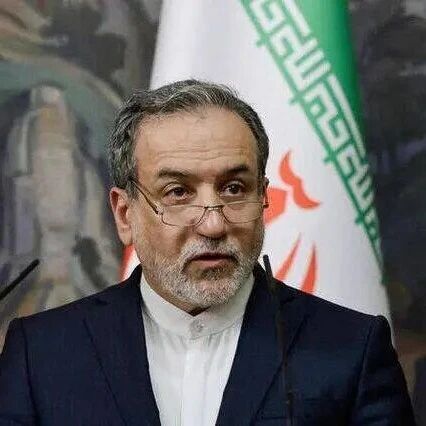
Group 1 - The Iranian Foreign Minister criticized the U.S. military actions near Iranian waters, calling them "absurd" [3] - The Iranian Revolutionary Guard Corps is scheduled to conduct live-fire exercises in the Strait of Hormuz from February 1 to 2 [3] - The U.S. Central Command stated it would not tolerate "unsafe behavior" from Iran in the Strait of Hormuz, urging Iran to conduct its exercises safely and professionally to avoid unnecessary risks [3]
释新闻|美军打击“箭在弦上”,伊朗有哪些应对手段?
Xin Lang Cai Jing· 2026-01-30 23:52
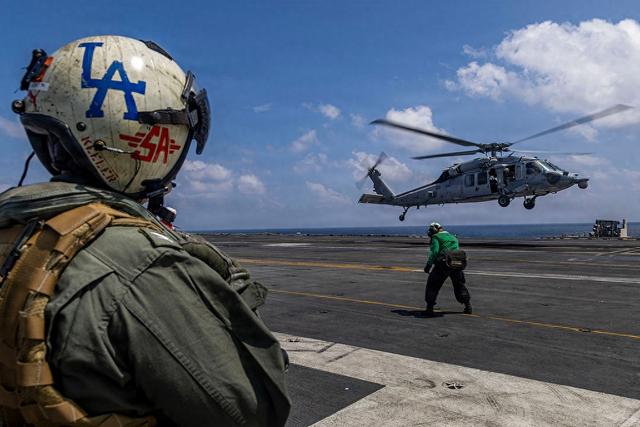
Group 1: Military Actions and Strategies - The U.S. has threatened military intervention against Iran, with the deployment of the USS Abraham Lincoln carrier strike group and numerous aircraft to the Middle East, providing a range of military options for the Trump administration [1] - Various military strike plans against Iran have been considered, including a "large-scale" bombing campaign targeting the Iranian regime and its Islamic Revolutionary Guard Corps facilities, as well as smaller-scale strikes on symbolic targets [1][3] - Iran possesses approximately 2,000 medium to long-range ballistic missiles capable of striking Israel and a significant number of short-range missiles aimed at U.S. military assets in the Persian Gulf [3][4] Group 2: Iran's Military Capabilities - Despite suffering significant losses during the "Twelve-Day War," Iran has improved its missile capabilities and can launch attacks using short-range missiles against nearby U.S. targets [3][4] - Iran has integrated 1,000 strategic drones into its military operations, enhancing its offensive capabilities [3] - Analysts note that Iran's missile launch methods have evolved, allowing for direct launches from underground silos, making them harder to target [4] Group 3: Regional Implications and Risks - Any military action against Iran could escalate into a broader regional conflict, which the Trump administration aims to avoid [5] - The U.S. has deployed numerous "Patriot" and "THAAD" missile defense systems in the region, but analysts warn that the vast area needing defense may limit their effectiveness [6] - Iran's ability to potentially close the Strait of Hormuz poses a significant threat to global oil markets, as approximately 20% of the world's LNG and 20-25% of oil passes through this strategic waterway [8] Group 4: Support from Regional Allies - Despite setbacks, Iran's regional allies, such as the Popular Mobilization Forces in Iraq and Hezbollah in Lebanon, have pledged support in the event of military action against Iran [8] - The potential for a coordinated response from these groups could complicate U.S. military operations in the region [8] Group 5: Strategic Considerations - The U.S. has over 20 military bases in the Middle East, with approximately 40,000 troops stationed within range of Iranian missiles [7] - The cost of maintaining a large military presence in the region is significant, raising questions about the sustainability of U.S. operations [7]
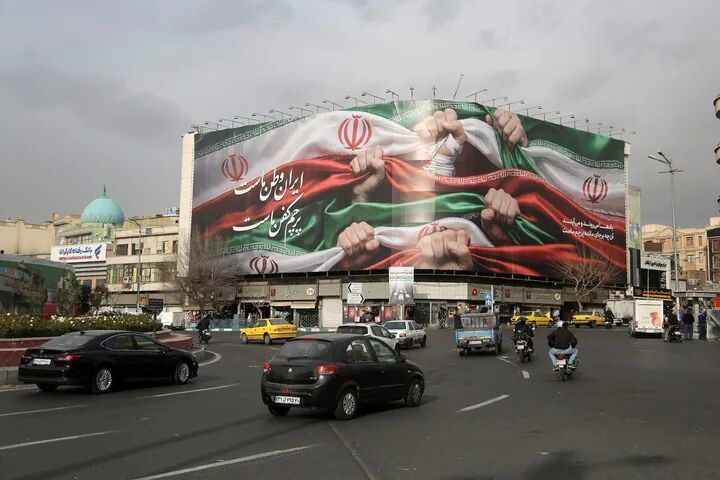
局势骤紧!美军航母就位 伊朗立巨幅画暗指航母被炸
Xin Hua She· 2026-01-27 11:44
Group 1 - Iran's Foreign Ministry spokesperson Baghaei warned that if war is imposed, Iran will respond in a way that makes aggressors "regret" their actions [1][2] - A large propaganda poster was erected in Tehran showing a U.S. aircraft carrier being attacked, with the caption "The instigator will face the storm," indicating Iran's stance against U.S. military presence [1][2] - The U.S. Navy's Abraham Lincoln carrier strike group has entered the Middle East waters, indicating a potential military buildup in the region, although no immediate military action has been confirmed [1][2] Group 2 - Iran is closely monitoring the situation and is fully prepared for military action, emphasizing that the presence of U.S. warships will not deter its defensive resolve [2] - Iran possesses a significant arsenal of medium and long-range missiles, as well as drones, which could be utilized in military operations [2] - The potential for conflict is heightened by the historical context of a 2025 war scenario between Iran and Israel, where Iran successfully launched advanced ballistic missiles during previous conflicts [2]
特朗普放话:若遭暗杀将把伊朗从地球抹去;伊朗:武装力量将全力应对任何侵犯
Hua Xia Shi Bao· 2026-01-27 08:09
Core Viewpoint - The article discusses President Trump's recent statements regarding Iran, emphasizing the potential for military action while also leaving the door open for diplomatic negotiations [1][2]. Group 1: Military Actions - Trump has deployed a significant naval fleet to the Middle East, larger than the one near Venezuela, indicating a heightened military presence in the region [1]. - The USS Abraham Lincoln aircraft carrier strike group, which includes three missile destroyers and various advanced fighter jets, has entered the Central Command area [1][2]. - Additional military assets, including F-15E fighters and missile defense systems, have been sent to the Middle East [1]. Group 2: Diplomatic Efforts - Trump has not completely ruled out diplomatic solutions to the Iran issue, suggesting that Iran is interested in negotiating with the U.S. [2]. - White House officials have indicated that military action remains an option, but they are also open to dialogue with Iran [2]. - Recent unrest in Iran has led to casualties, prompting Trump to threaten military intervention while Iran's officials have warned of severe consequences for any aggression [2].
伊朗议长称该国所有城市已恢复和平
Yang Shi Xin Wen· 2026-01-22 15:35
Core Viewpoint - The recent unrest in Iran is viewed as a continuation of the "12-day war" from June, allegedly supported by Israel and the United States, with Iranian officials emphasizing the restoration of peace due to the efforts of security forces and public unity [1]. Group 1: Bilateral Relations - Iranian Parliament Speaker Ghalibaf and Turkish Parliament Speaker Kurtulmuş discussed bilateral relations and regional issues during a phone call [1]. - Kurtulmuş expressed concern over Israel's actions aimed at undermining unity among Islamic countries and hoped for Iran's continued peace and stability [1]. Group 2: Recent Unrest - The recent unrest in Iran has resulted in casualties among both civilians and law enforcement [1]. - Iranian President Pezeshkian stated that the unrest is a continuation of conspiracies orchestrated by the United States and Israel [1]. Group 3: International Reactions - U.S. President Trump has repeatedly threatened military intervention regarding the situation in Iran [1].
特朗普称可能与伊朗恢复外交沟通
Yang Shi Xin Wen· 2026-01-22 15:24
Core Viewpoint - The article highlights President Trump's indication of Iran's willingness to engage in dialogue with the United States, suggesting a potential restoration of diplomatic communication between the two nations [1]. Group 1: Diplomatic Engagement - President Trump stated that Iran is indeed interested in talks, and the U.S. is open to discussions, although no specifics regarding the format, timing, or topics of the dialogue were provided [1]. - The context of this potential engagement follows recent unrest in Iran, which has resulted in casualties among both civilians and law enforcement [1]. Group 2: Regional Tensions - Trump has repeatedly threatened military intervention in response to the situation in Iran, indicating heightened tensions in the region [1]. - Iranian President Raisi has accused the U.S. and Israel of orchestrating the recent unrest, framing it as part of a broader conspiracy [1].
突发!美国大举增兵!
Zheng Quan Shi Bao Wang· 2026-01-21 13:54
Group 1 - The core viewpoint of the articles highlights the escalating military tensions between the United States and Iran, with the U.S. increasing its military presence in the Middle East due to the strained relations [1][2][3][4]. - The U.S. has deployed over ten F-15E "Strike Eagle" fighter jets and C-17 "Globemaster III" transport aircraft from the UK to the Middle East, confirming the deployment through the Central Command [2][3]. - The "Abraham Lincoln" aircraft carrier strike group has passed through the Strait of Malacca and is heading towards the Middle East, with additional missile defense systems expected to be deployed in the region to enhance defense capabilities [2][3]. Group 2 - Iranian officials, including Foreign Minister Zarif, have warned that any new attacks against Iran will be met with a strong response, emphasizing the need for the U.S. to engage with Iran on a basis of mutual respect [4][5]. - Iran's military readiness has been heightened, with an increase in missile stockpiles since 2025, as stated by the commander of the Islamic Revolutionary Guard Corps [3][4]. - Iranian military spokesperson Shekarchi has issued a warning that any military action against Supreme Leader Khamenei would result in "devastating retaliation," indicating a high level of military alertness and readiness to respond to perceived threats [5].
美媒:美国在中东地区军事集结继续,多架战机、加油机、运输机飞往该地区
Huan Qiu Wang· 2026-01-21 05:37
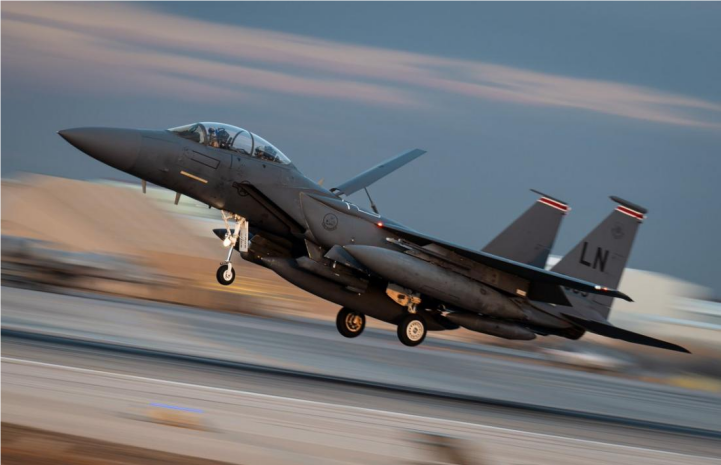
Core Viewpoint - The relationship between the United States and Iran is highly tense, with the U.S. continuing its military buildup in the Middle East, including the deployment of the USS Abraham Lincoln carrier strike group and additional F-15E fighter jets [1][4]. Military Deployment - The USS Abraham Lincoln carrier strike group is en route to the Middle East, equipped with F-35C and F-18 Super Hornet aircraft, and has turned off its transponder [1][3]. - Twelve F-15E fighter jets from the U.S. Air Force's 494th Fighter Squadron, based in the UK, have been deployed to the Middle East, supported by KC-135 Stratotanker aircraft [1][3]. - Three F-15E squadrons are currently known to be deployed in the Middle East, with additional F-16 and A-10 aircraft also expected to be sent to the region [3]. Strategic Intent - The purpose of the military buildup remains unclear, with speculation on whether it is intended for offensive actions against Iran or defensive measures against potential attacks [4]. - President Trump has indicated that military options against Iran are being considered, stating that the situation will be monitored closely [4].
美军航母5天左右抵达中东,伊朗国内现在怎样了?
Xin Lang Cai Jing· 2026-01-17 13:34
Group 1 - The core viewpoint of the article highlights the current stability in Tehran amidst ongoing external threats and internal challenges, suggesting a temporary calm before potential turmoil [1][3] - Protests in Iran have been fueled by rising prices and currency devaluation, with the government acknowledging the difficulties faced by citizens and promising to address their concerns [3][4] - The U.S. has threatened military intervention under the pretext of supporting Iranian protesters, but has not yet taken action due to concerns about the effectiveness and potential escalation of conflict [3][4] Group 2 - The Iranian government attributes current economic hardships to both internal management issues and long-standing economic sanctions imposed by Western countries, indicating a complex interplay of factors affecting the situation [4] - Iran's foreign minister expressed a willingness to resolve issues through negotiation over the past two decades, criticizing the U.S. for repeatedly abandoning diplomatic channels in favor of military options [5] - The Iranian military remains on high alert, with citizens expressing a strong resolve to resist external threats, indicating a potential for increased tensions in the region [5]