国际海洋秩序

Search documents
美军公海扣俄油轮
Xin Lang Cai Jing· 2026-01-08 16:56
Core Viewpoint - The U.S. military's seizure of the Russian-flagged oil tanker "Mariner" in international waters has escalated tensions regarding maritime freedom and unilateral sanctions, drawing strong condemnation from Russia and China, and raising concerns about the implications for global energy trade and international law [4][6][8]. Group 1: Seizure Details - On January 7, the U.S. military, with support from the UK, intercepted the "Mariner" oil tanker in the North Atlantic, marking a coordinated operation rather than a unilateral action [5][6]. - The U.S. Coast Guard tracked the vessel before the Navy SEALs executed the boarding operation, indicating a high level of military preparedness [5]. - The Russian government confirmed that the tanker had been granted permission to fly the Russian flag under international law, complicating the legal justification for the seizure [5][7]. Group 2: U.S. Justification and Policy - The U.S. government claims the seizure is part of its comprehensive sanctions against Venezuelan oil exports, asserting that such actions are necessary to maintain control over the global oil market [6]. - U.S. officials have stated that the tanker violated American sanctions, suggesting that crew members could face prosecution under U.S. law, which raises concerns about the extraterritorial application of U.S. laws [6][8]. Group 3: International Reactions - The seizure has provoked strong reactions from Russia, which labeled the action as "piracy" and a violation of international law, demanding humane treatment for the crew [7][8]. - China's foreign ministry condemned the U.S. actions as a serious violation of international law, reflecting broader international concerns about unilateral sanctions and the use of military force [8][9]. Group 4: Implications for Global Maritime Order - The incident highlights the potential for increased military enforcement of U.S. foreign policy, which could disrupt established maritime norms and international relations [9][10]. - The seizure may lead to heightened risks for global shipping, particularly for vessels attempting to evade sanctions, as the precedent set could encourage more aggressive enforcement actions by the U.S. [10].


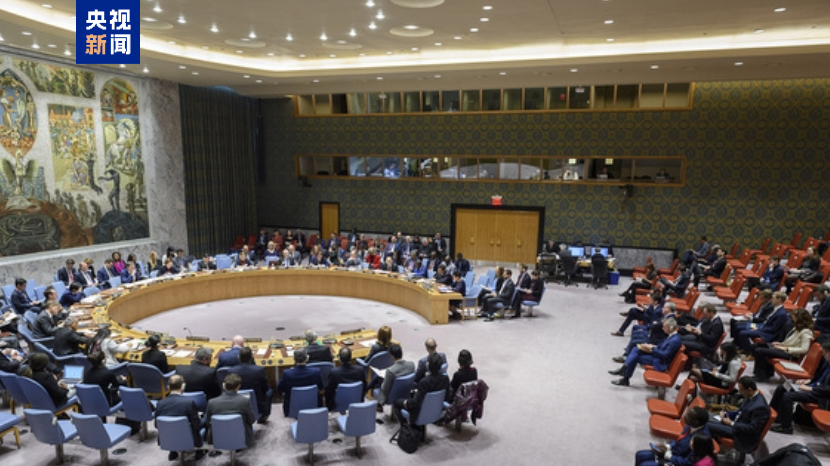
“美国代表的发言格格不入”
Yang Shi Xin Wen Ke Hu Duan· 2025-05-21 01:08
Core Viewpoint - The importance of ocean security and governance is emphasized as a shared responsibility among nations, promoting global peace and development [2][3]. Group 1: Ocean Community and Governance - The concept of a maritime community of shared destiny is highlighted, stressing that humanity is interconnected through the oceans rather than isolated [2]. - The need to maintain a fair and just maritime order based on the United Nations Convention on the Law of the Sea is underscored, advocating for adherence to international law and the avoidance of selective application [2][3]. Group 2: Maritime Security and Cooperation - The rise of maritime crimes such as piracy, drug trafficking, and human trafficking is acknowledged, calling for international cooperation to combat these issues [3]. - Emphasis is placed on resolving disputes through dialogue and consultation, rather than confrontation, to ensure maritime stability [3]. Group 3: Global Ocean Governance - The relationship between sustainable development and a healthy ocean environment is stressed, with a call for practical cooperation to harness ocean potential for socio-economic development [3]. - China's commitment to being a builder of global ocean governance and a promoter of sustainable development is reiterated [3]. Group 4: Response to External Criticism - China's opposition to the U.S. involvement in South China Sea issues is stated, asserting that the U.S. poses the greatest threat to regional stability [4]. - The illegitimacy of the South China Sea arbitration ruling is rejected, with a commitment to resolving disputes through dialogue with relevant parties [4]. Group 5: Call for Constructive Engagement - A call for the U.S. to adhere to its commitments regarding the One China policy is made, contrasting U.S. rhetoric with the cooperative spirit of other nations at the meeting [5].