土地金融化

Search documents
土地金融化对企业债券定价影响研究
Xin Lang Cai Jing· 2025-10-15 23:00
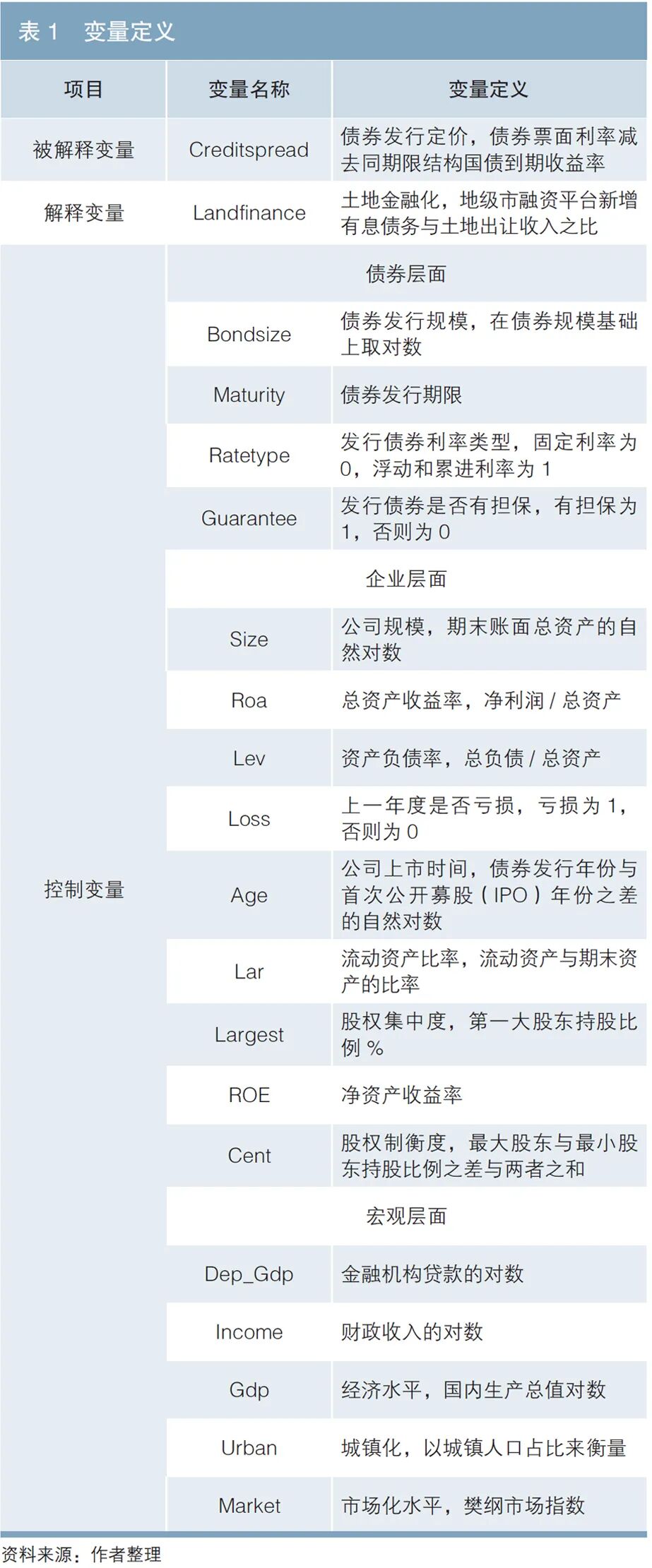
Core Viewpoint - The article discusses the impact of land financialization on corporate bond pricing in China, highlighting how local government actions influence credit spreads through explicit support mechanisms [1][2][3]. Group 1: Land Financialization and Bond Pricing - Land financialization is defined as the process of converting land resources into capital, which has positively contributed to urbanization and economic development in China [2][3]. - The study analyzes data from 265 prefecture-level cities in China from 2016 to 2023, focusing on the relationship between land financialization and corporate bond pricing [1][8]. - The findings indicate that land financialization increases bond credit spreads through local government revenue enhancement and expenditure reduction [1][23]. Group 2: Mechanisms of Influence - The article identifies two main mechanisms through which land financialization affects bond pricing: explicit support and implicit guarantees [2][3]. - Explicit support includes government subsidies, tax reductions, and procurement support, which can lead to over-financing by companies [2][3]. - Implicit guarantees create market expectations that the government will intervene in case of bond defaults, leading to mispricing of bonds [2][3]. Group 3: Empirical Analysis and Findings - The empirical analysis employs a fixed-effects model to assess the impact of land financialization on bond pricing, revealing a positive correlation between land financialization and credit spreads [8][16]. - The study also examines the role of non-tax expenditures and government subsidies as mediating variables, confirming that increased non-tax expenditures and reduced subsidies during land market adjustments lead to wider credit spreads [20][21]. - The results show that the effect of land financialization on credit spreads varies by ownership structure, with state-owned enterprises being more significantly affected [22][23]. Group 4: Policy Recommendations - The article suggests that local governments should adopt diversified policy tools to optimize land resource utilization and reduce financial pressures, thereby mitigating the risks associated with land financialization [23][24]. - It emphasizes the need for companies to enhance their market pricing capabilities for bonds and improve their financial structures to counteract the adverse effects of land financialization [24][25].