地址投毒攻击

Search documents
Scam Sniffer:地址投毒 1 月损失 1220 万美元,签名钓鱼环比增 207%
Xin Lang Cai Jing· 2026-02-09 05:10
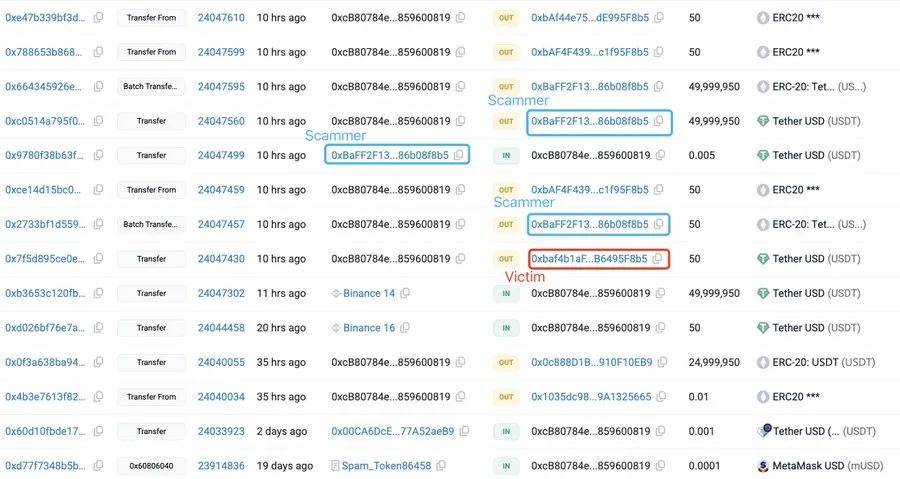
Core Insights - The report from Scam Sniffer highlights significant losses due to address poisoning attacks, with one victim losing $12.2 million in January and similar attacks causing $50 million in losses in December [1] - In January, signature phishing attacks resulted in the theft of $6.27 million, affecting 4,741 individuals, marking a 207% increase month-over-month [1] - Two wallets accounted for 65% of the total losses, indicating a concentrated risk in specific addresses [1] Industry Trends - Web3 Antivirus identifies address poisoning as a common method for incurring large losses, with no signs of a decrease in this trend [1] - Analysis suggests that the Ethereum Fusaka upgrade has reduced transaction costs, potentially facilitating dust attacks [1] - Dust transactions involving stablecoins represent 11% of Ethereum transactions and 26% of active addresses, indicating a significant presence of these activities in the ecosystem [1] Data Insights - Coin Metrics data shows that from November 2025 to January 2026, stablecoin balances were updated over 227 million times, with 38% of these transactions being below $0.01, raising suspicions of dust poisoning [1]
500枚比特币,黑客盗走490枚,留了10枚给“我”当作生活费
Sou Hu Cai Jing· 2025-12-22 12:41
Core Insights - The cryptocurrency world is depicted as a "dark forest" filled with both extraordinary wealth and significant risks, highlighted by contrasting experiences of individuals within the space [1] - A recent incident involving a trader losing nearly $50 million in a sophisticated "address poisoning attack" underscores the vulnerabilities in cryptocurrency transactions [2][3] - The narrative emphasizes the importance of security practices in the cryptocurrency industry, particularly regarding private key management and transaction verification [7][10] Group 1: Incident Analysis - Chun Wang, co-founder of F2Pool, shared a personal experience of losing 490 bitcoins while testing the security of a wallet address, which sparked widespread discussion in the crypto community [1][2] - The trader's loss was a result of a meticulously planned attack that exploited human error and trust in transaction history, leading to a significant financial loss [3] - The attack involved creating a fake address that closely resembled the victim's real address, demonstrating the need for heightened awareness and security measures among users [3] Group 2: Broader Implications - The incident reflects a growing trend of cryptocurrency-related crimes extending beyond the digital realm, as evidenced by bomb threats made to major companies in South Korea demanding bitcoin payments [4][6] - The psychological impact of such threats on businesses and society highlights the need for improved security protocols and user education within the cryptocurrency sector [6] - The industry must take responsibility for enhancing security features in wallets and educating users about emerging threats to prevent similar incidents in the future [7][10] Group 3: Security Recommendations - Users are advised to always copy addresses from original, trusted sources and to avoid selecting addresses from transaction history to mitigate risks [8] - Implementing multi-step verification processes and using address books or domain name services can help reduce the likelihood of errors during transactions [8] - The overarching message is that individuals must take personal responsibility for their asset security in the decentralized cryptocurrency landscape [10]