
地质灾害防灾减灾

Search documents
29人死亡失踪2人受伤!四川公布筠连县山体滑坡调查报告
Xin Lang Cai Jing· 2026-02-08 03:00
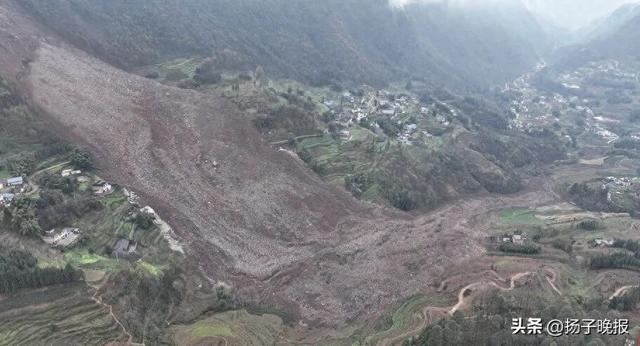
转自:扬子晚报 2月7日,四川公布筠连县"2·8"山体滑坡灾害调查评估报告。 2025年2月8日11时50分,宜宾市筠连县沐爱镇金坪村2组突发山体滑坡灾害,造成10人遇难、19人失 踪、2人受伤。灾害发生后,四川省政府成立调查评估组,通过现场踏勘、测绘调查、调阅资料、走访 座谈、问询谈话、分析计算、专家论证等方式,复盘灾害发生和应对处置过程,查明灾害原因,认定灾 害性质,查找短板不足,总结分析灾害教训,提出改进措施建议。 针对当前灾区连续降温、持续降雨、滑坡体尚不稳定等情况,当地正在对金坪村及周边可能存在安全风 险的居民点、村镇等重点场所区域划出危险区,并对滑坡体两侧山体进行实时安全监控,预设紧急撤离 路线和信号,全力预防应对次生灾害事故发生,确保救援行动安全。同时,做好卫生防疫、水质监测和 健康指导工作。 调查评估认定,四川宜宾筠连"2·8"山体滑坡是一起高陡斜坡受连绵阴雨持续入渗导致泥岩软化,突发 高位滑坡并转化为远程碎屑流的复合型自然灾害。在持续降雨作用下,高位岩体滑动后向下高速俯冲并 沿途冲击铲刮扩容,运移途中两次受阻转向,冲击速度快,滑动距离远,影响范围大,灾害破坏具有明 显放大效应和链式灾害特征, ...

自然资源部通报表扬甘肃永靖滑坡避险突出贡献单位和个人
Zhong Guo Zi Ran Zi Yuan Bao· 2025-12-23 00:56
该起地质灾害的成功避险,得益于地方健全的防灾体系和完善的防灾预案、基层群测群防员的履职尽 责,以及各级党委政府的高度重视、各级自然资源主管部门强有力的组织执行。由于地方政府和基层组 织层层压实责任,定期开展培训演练,才使得群众具有较强的防灾意识和临灾避险能力。 12月10日15时许,甘肃省临夏州永靖县盐锅峡镇黄茨2号滑坡发生复活滑动,滑坡造成直接经济损失约 3950万元,灾情等级为特大型。由于群测群防员第一时间发现险情,及时预警,盐锅峡镇政府果断对威 胁区和影响区人员进行转移,组织120户378人成功避险,避免了重大人员伤亡。 12月19日,自然资源部办公厅发函,对在甘肃省永靖县黄茨2号滑坡成功避险中作出突出贡献的群测群 防员张得元同志和黄茨村委、盐锅峡镇政府、甘肃省地质矿产勘查开发局水文地质工程地质勘察院、甘 肃省煤田地质局一四九地质队、永靖县自然资源局、省临夏州自然资源局、甘肃省自然资源厅予以通报 表扬。 自然资源部要求,时值冬季,冷暖交替引发的地质灾害风险不容忽视,各地自然资源主管部门要认真借 鉴学习甘肃省永靖县盐锅峡镇黄茨2号滑坡成功避险的有益经验,高度重视冬春季防灾减灾工作,压实 属地管理责任。一是 ...
极端气候下,地质灾害防范应综合施策 ——访中国工程院院士、自然资源部地质灾害技术指导中心首席科学家殷跃平
Zhong Guo Zi Ran Zi Yuan Bao· 2025-05-12 01:57
Core Viewpoint - The article discusses the increasing challenges posed by geological disasters due to extreme weather events driven by global climate change, emphasizing the need for improved identification and management of geological disaster risks in China [1]. Group 1: Geological Disaster Identification and Challenges - Identifying geological disaster risk points is crucial for disaster prevention and mitigation, with significant advancements in investigation methods since the 1990s, including the use of satellite remote sensing and drones [2]. - The number of geological disaster risk points in China is approximately 284,000, with over 1.8 million recorded risk slopes due to human activities [2]. - The shift towards smaller-scale geological disasters (under 100,000 cubic meters) has increased the difficulty of accurate identification, as 95% of recent geological disasters fall into this category [4]. Group 2: New Problems in Extreme Weather Conditions - The emergence of small-scale disasters has made it harder to identify risks, as traditional methods focused on larger disaster bodies [4]. - The dynamics of disaster occurrence have changed, with remote disaster patterns becoming more common, as seen in recent incidents where landslides transformed into debris flows, affecting areas far from the original slide [4][5]. - The identification of unknown risk sources has become critical, as extreme rainfall can destabilize previously stable slopes, leading to widespread small-scale disasters [5][6]. Group 3: Monitoring and Early Warning Systems - The monitoring and early warning systems have improved significantly, with 66,000 geological disaster risk points equipped with monitoring instruments since the 14th Five-Year Plan [8]. - Despite advancements, challenges remain in monitoring due to the complex environments of rural mountainous areas, where existing instruments may not provide timely warnings [9]. - The need for specialized monitoring and early warning systems for high-risk areas, particularly in western mountainous regions, is emphasized to address the limitations of current technologies [10]. Group 4: Comprehensive Disaster Prevention and Mitigation - The expansion of human engineering activities in mountainous areas has increased the potential risks of geological disasters, necessitating a combination of monitoring, evaluation, and engineering solutions [11]. - Recommendations include enhancing geological safety risk assessments in rural land use planning and implementing simple mitigation measures for construction activities [11]. - A scientific approach is essential for balancing national energy security with environmental safety, advocating for precise investigations and appropriate engineering interventions [11].