场景化生态

Search documents
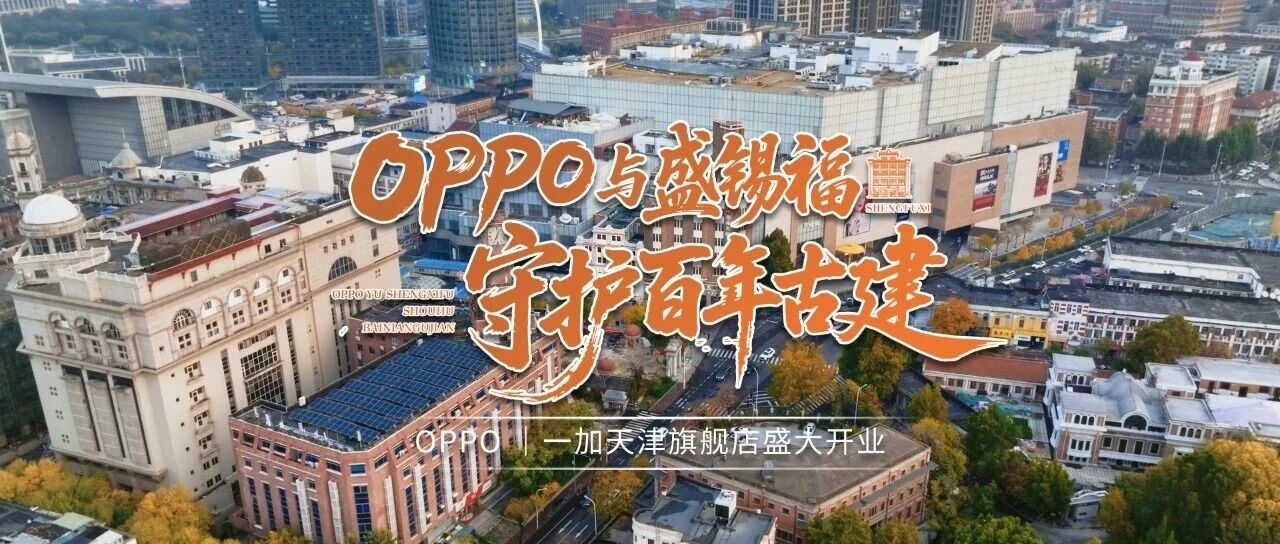
OPPO为百年建筑续写“新故事”
新华网财经· 2025-11-10 08:18
Core Viewpoint - The article highlights the opening of the first OPPO | OnePlus flagship store in North China, located in a historical building in Tianjin, showcasing a blend of technology and cultural heritage, while transforming the space into a dynamic cultural hub for the youth [2][11]. Group 1: Historical and Cultural Integration - The OPPO flagship store preserves the historical architecture of the former Shengxifu Hat Store while integrating modern technological elements, creating a dialogue between past and present [4][10]. - The restoration process adhered to the principle of "repairing the old as the old," maintaining the original design style and using traditional materials and techniques to restore the building's historical appearance [7][10]. - The store features a unique suspended OPPO sign that does not damage the original structure, emphasizing the respect for historical integrity [7][10]. Group 2: Youth Engagement and Experience - The flagship store is designed as a "city park for young people," combining local culture with gaming trends, providing a space for social interaction and leisure [9][10]. - The store includes product display areas, gaming interaction zones, and event spaces for activities like live broadcasts of esports, aiming to create a deeper emotional connection with the youth [10][11]. - OPPO's strategy involves transforming retail spaces from mere sales points to vibrant social environments, as evidenced by successful sales records in other flagship stores [10][11]. Group 3: Future Expansion Plans - OPPO plans to open 50 new OPPO | OnePlus flagship stores in core cities across China over the next three years, focusing on high-density commercial areas [11]. - The company aims to enhance its retail presence by adding 1,000 mall stores annually and optimizing the structure of street-side shops [11].

红星美凯龙:锚定“场景化生态” 破局存量竞争
Zheng Quan Ri Bao· 2025-06-09 16:36
Core Insights - The cyclical fluctuations in the real estate market present unprecedented challenges to the industry chain, prompting companies to seek new growth points [1] - Red Star Macalline is leveraging opportunities in high-end home appliances to explore new growth avenues, launching a three-year strategy to establish 40 high-end appliance ecological benchmarks nationwide [1][6] - The company aims to integrate home appliances with home decoration and furniture to enhance its competitive edge in the retail sector [1][3] Industry Trends - The home appliance market is experiencing a shift towards smart and low-carbon technologies, with the smart home appliance market in China projected to reach approximately 756 billion yuan in 2024, growing by 3% [2] - The demand for home appliances is evolving from single-function products to value creation through integrated scenarios, necessitating enhanced display, demonstration, design, and service capabilities from retailers [4] Competitive Strategy - Red Star Macalline is focusing on creating differentiated competitive advantages through rich experiential offerings, such as integrated home appliance and furniture stores that allow consumers to experience smart home solutions [3][4] - The company has established over 150 smart appliance lifestyle stores across 115 core cities, making high-end appliances one of its fastest-growing business segments [3] Service Enhancement - The company is enhancing its online service capabilities by connecting merchants, service providers, and users through a member app, facilitating seamless transactions and 24-hour service [5] - A new user service center has been introduced in the "Mega-E Smart Electric Oasis," offering comprehensive services such as appliance repair and recycling to foster ongoing consumer engagement [5] Policy Impact - The recent government initiative to provide subsidies of 15% to 20% for replacing old appliances has revitalized the appliance market, with Red Star Macalline's stores becoming key channels for these subsidies [6] - The company plans to replicate its successful "Mega-E Smart Electric Oasis" model in multiple cities, aiming to create the largest and most diverse appliance retail spaces to attract younger consumers [6]