垃圾焚烧发电技术

Search documents
深圳一座封场20年的巨型垃圾山正在消失
21世纪经济报道· 2026-01-27 05:34
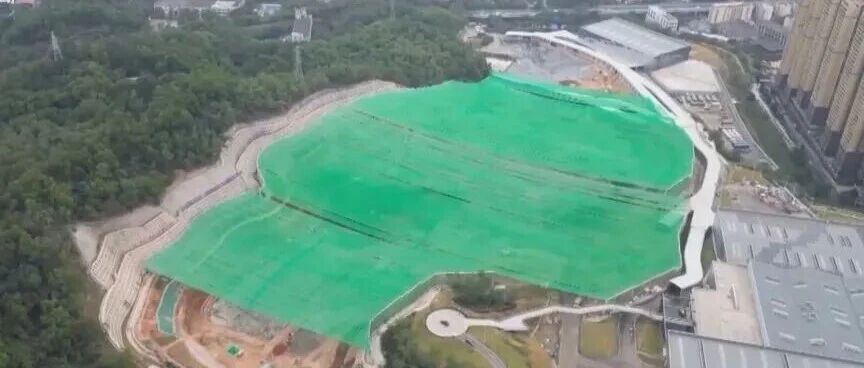
Core Viewpoint - The article discusses the significant advancements in waste management in China, particularly focusing on the large-scale garbage relocation and treatment project at the Yulong landfill in Shenzhen, which is the largest of its kind in the country. The project aims to address historical waste issues through innovative technologies and has implications for the broader waste-to-energy industry in China [1][19]. Group 1: Project Overview - The Yulong landfill, established in 1983 and closed in 2005, contained approximately 2.5 million cubic meters of waste, equivalent to filling 1,000 Olympic-sized swimming pools. The full excavation and relocation project commenced in 2024 and is expected to be completed by September 2026 [1]. - The height of the garbage mound, which reached 110 meters, has been completely leveled, and the site is now covered with large dust-proof fabric. Nearby, a waste sorting workshop with six giant conveyor belts is operational, ensuring that residents do not see or smell the waste [3]. Group 2: Waste Management Technology - Traditional landfill methods have led to significant land use and secondary pollution issues, prompting a shift towards waste incineration as a mainstream waste management solution in urban areas. This shift has alleviated the "garbage siege" problem that plagued many cities in the 1990s [5]. - China has made substantial progress in waste-to-energy technology, transitioning from a follower to a leader in the field. The country has developed a complete industrial chain for waste incineration, including waste collection, equipment manufacturing, and project operation [6][8]. Group 3: Market Dynamics - The market for waste incineration power generation in China is projected to reach approximately 73 billion yuan in 2024, a decrease from nearly 100 billion yuan in 2020 due to the reduction in available waste for incineration [9]. - Major players in the waste management sector include Everbright Environment, which holds over 15% market share, followed by companies like Sanfeng Environment and Huanlan Environment. The industry is characterized by a competitive landscape with a few leading firms [5][15]. Group 4: Regulatory and Operational Framework - The Chinese government has prioritized waste incineration as a key direction for solid waste management since the "11th Five-Year Plan." The strategic importance of waste-to-energy has increased with the introduction of the "dual carbon" goals and the concept of "waste-free cities" [8]. - The most common business model for waste incineration projects is the BOT (Build-Operate-Transfer) model, where companies are granted long-term operating rights to manage waste treatment facilities [16][18]. Group 5: Challenges and Innovations - Some regions are experiencing a "not enough waste to burn" phenomenon, particularly in newly constructed incineration plants in county-level areas, where the actual waste generation is lower than anticipated [15]. - Companies are exploring new waste sources, such as industrial solid waste and sludge, and are investing in technology innovations to enhance operational efficiency and project quality [18].




“垃圾不够烧了” 中国垃圾焚烧发电技术全球领跑
2 1 Shi Ji Jing Ji Bao Dao· 2026-01-26 09:37
Core Viewpoint - The article discusses the significant advancements in waste management in China, particularly focusing on the transition from traditional landfill methods to waste incineration, highlighting the ongoing large-scale projects aimed at environmental remediation and the technological innovations that have made waste a resource rather than a burden [1][2][4]. Group 1: Waste Management Developments - The Yulong landfill site in Shenzhen is undergoing the largest waste relocation project in China, with an expected completion date of September 2026 [1]. - The total volume of waste at the Yulong landfill was approximately 2.5 million cubic meters, equivalent to filling 1,000 Olympic-sized swimming pools [1]. - In 2024, the national urban household waste collection volume is projected to reach 262 million tons, up from 158 million tons in 2010 [3]. Group 2: Technological Advancements - China has made significant progress in waste incineration technology, transitioning from a follower to a leader in the field, with key advancements in combustion efficiency and pollution control [2][7]. - The market for waste incineration power generation in China is estimated to be around 73 billion yuan in 2024, reflecting a decrease from the nearly 100 billion yuan peak in 2020 due to reduced waste availability [5]. - The dominant technology in waste incineration is the mechanical grate furnace, which holds over 80% market share due to its stability and adaptability to China's waste characteristics [7]. Group 3: Industry Structure and Market Dynamics - The waste incineration power generation industry has developed a complete industrial chain, including waste collection, equipment manufacturing, and project operation [4]. - As of early 2025, over 1,000 waste incineration power plants are operational in China, but some regions face a "not enough waste to burn" issue, with average capacity utilization around 60% [9]. - Major players in the industry include China Everbright International, Sanfeng Environment, and Huaneng Environment, with a competitive landscape characterized by a few leading firms [12][13]. Group 4: Policy and Regulatory Environment - The Chinese government has prioritized waste incineration as a key direction for solid waste management since the 11th Five-Year Plan, further emphasizing its importance in the context of carbon neutrality and "zero waste cities" [4]. - Strict regulatory requirements mandate that all incineration plants install automatic monitoring systems to ensure compliance with environmental standards [8]. Group 5: Future Outlook and Challenges - Companies are exploring new waste sources and innovative technologies to enhance operational efficiency and address the issue of insufficient waste supply [13]. - The successful excavation of the Yulong landfill exemplifies the capability to tackle long-standing waste management challenges through advanced technologies [14].