城市智能

Search documents
2026年联合国人居署中国未来城市顾问委员会大会举行,多位院士共议“AI+城市”新范式
Xin Lang Cai Jing· 2026-01-18 03:58
Core Insights - The conference focused on the theme of "AI Empowering Urban Sustainable Development," discussing the evolution of urban intelligence, technological pathways, and governance frameworks [1][4]. Group 1: Urban Intelligence and AI - Wang Jian, an academician, emphasized that urban development under AI is distinct from traditional smart cities, advocating for viewing cities as organic entities that evolve to express their intelligence [1][4]. - Data is highlighted as a natural resource in the digital age, comparable to land and water, and is essential for the intelligent operation of cities [5]. - The past six to seven years of disruptive AI technology development have made the realization of urban intelligence possible, transitioning from concept to reality [5]. Group 2: Climate Challenges and Urban Resilience - Zheng Qinghua pointed out that China faces significant risks from extreme climate events, which challenge urban infrastructure such as drainage, power supply, and transportation [2][5]. - The Chinese government's urban development strategy emphasizes creating a human-centered, inclusive, green, low-carbon, and resilient urban system, with AI playing a leading role in various sectors [5][6]. Group 3: Knowledge Systems and Urban Evolution - Wu Zhiqiang discussed the importance of collective knowledge formation, storage, and dissemination in urban systems, which will become a crucial public platform for society [3][6]. - The evolution of cities is described as an active restructuring in response to new technologies, focusing on transforming technology into urban capabilities for long-term resilience [3][6]. - Urban planning concepts are evolving from utopian and functionalist approaches to organic and intelligent life stages, which is vital for addressing future urban challenges [3][6].
广电运通集团股份有限公司:联合资信维持公司“24运通01”、“25广电运通K1”等评级在AAA
2 1 Shi Ji Jing Ji Bao Dao· 2025-12-25 08:14
Core Viewpoint - Guangdian Yuntong Group Co., Ltd. has been assigned a long-term credit rating of AAA with a stable outlook by United Credit Ratings, reflecting its strong market position and financial stability [1] Group 1: Credit Rating and Financial Stability - The company's individual credit rating is aa+, with an external support adjustment of +1 sub-level, indicating a strong credit profile [1] - The operational risk assessment is rated B, highlighting the company's leading position in the smart financial equipment sector with the highest market share [1] - Financial risk assessment is rated F1, indicating strong profitability, good cash flow, robust capital structure, and excellent debt repayment capability [1] Group 2: Business Operations and Market Position - The company operates in two main business segments: financial technology and urban intelligence, maintaining a leading position in the smart financial equipment market in China [1] - The company is continuously expanding in the urban intelligence sector, focusing on smart security, intelligent transportation, and smart governance, leading to sustained revenue growth [1] - The company has significant competitive strength and strong sustainability in operations, although it faces risks related to declining demand for financial equipment and pressure on bargaining power [1] Group 3: Financial Performance and Asset Management - The company's asset scale is expected to grow year-on-year from 2022 to 2024, primarily consisting of current assets with ample cash reserves and good liquidity [1] - Continuous acquisitions have led to a large goodwill scale, which poses certain risks of goodwill impairment [1] - Since 2022, the company's revenue has been growing annually, while operating profit margins have been declining, indicating improved cost control and strong overall profitability [1] Group 4: Debt and External Support - The company has a light debt burden with strong debt repayment indicators, reflecting extremely low overall credit risk [1] - The company benefits from its state-owned background and the diversified industrial background of its controlling shareholder, which enhances its platform advantages in project acquisition and business collaboration [1]

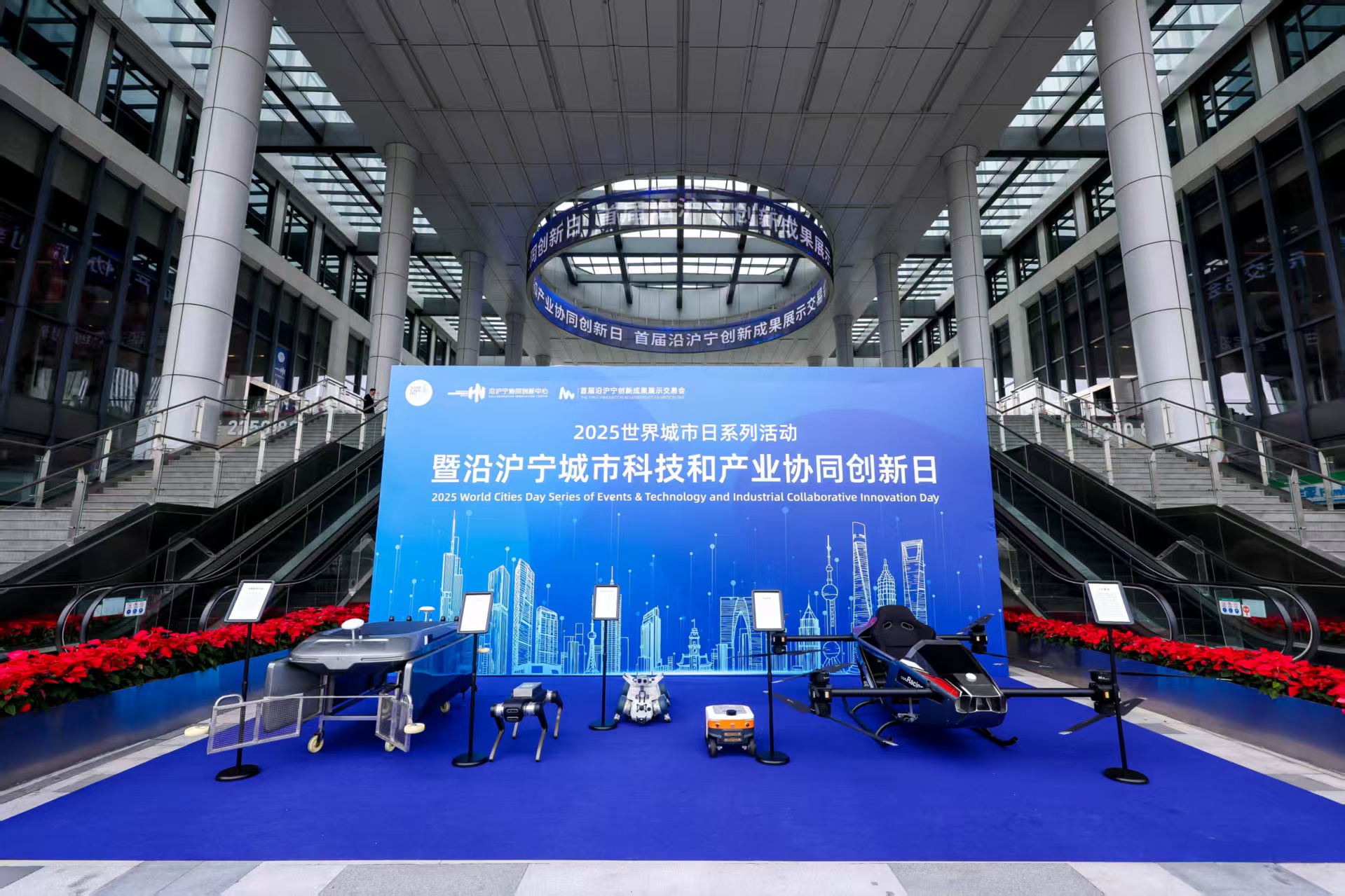
中国创新浓度最高的经济轴线“谋变”:沿沪宁9城加码“协同引擎”
Di Yi Cai Jing· 2025-10-28 12:04
Core Insights - The "Yangtze River Delta Industrial Innovation Belt" is transitioning from blueprint to practical implementation, emphasizing systematic advancement in the context of regional integration [1][3][6] Group 1: Economic Significance - The Yangtze River Delta Industrial Innovation Belt is a vital economic artery, contributing over 10% of China's GDP while occupying only 0.3% of the national land area and housing 4% of the population [3] - By 2024, the GDP of the nine cities along the innovation belt is projected to exceed 15.9 trillion yuan, accounting for 11.8% of the national GDP and nearly 48% of the Yangtze River Delta's economic total [3] Group 2: Collaborative Innovation - A series of innovation achievements were announced, marking a key period for the Yangtze River Delta's collaborative innovation, with the establishment of the first innovation consortiums covering sectors like biomedicine, integrated circuits, artificial intelligence, and new energy [6] - The innovation consortiums aim to address critical challenges in the industry and enhance the security and resilience of regional supply chains [6] Group 3: Industry-Specific Initiatives - The Suzhou-based consortium focuses on domestic equipment replacement to reduce reliance on imports, with a sales target of 1 billion yuan by 2028 and a research investment of 40 million yuan [7] - The Yangzhou high-end metal plate equipment consortium emphasizes the need for an efficient collaborative innovation mechanism to accelerate technological breakthroughs and enhance global market competitiveness [8] Group 4: Resource Integration and Platforms - The launch of the "Yangtze River Delta Collaborative Innovation Market" online platform aims to integrate resources and facilitate technology exchanges, enhancing the efficiency of innovation elements across cities [9][10] - The establishment of the Technology Manager Alliance is intended to bridge gaps between universities and enterprises, promoting technology transfer and collaboration [9][10] Group 5: Future Directions - The event highlighted the importance of integrating urban resources and addressing the challenges of sustainable development through technology, with a focus on the role of artificial intelligence in urban management [13][14] - The "Three-Year Action Initiative for Collaborative Innovation" was announced to further extend the paths for urban cooperation and industrial innovation [14]