
城市空间治理

Search documents
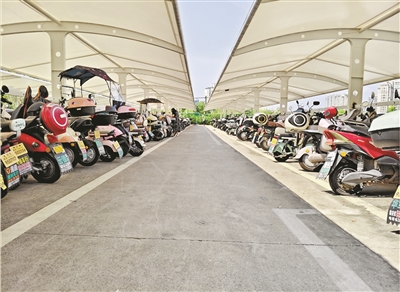
杭州多策疏解地铁口非机动车停放痛点
Hang Zhou Ri Bao· 2025-09-24 02:17
Core Insights - The article highlights the successful implementation of new non-motorized vehicle parking facilities at metro stations in Hangzhou, addressing the parking challenges faced by commuters [3][4][5] Group 1: Parking Solutions - Since 2025, over 4,000 new non-motorized vehicle parking spaces have been added at metro stations, alleviating the "last mile" parking issues for citizens [3] - The Hangzhou Municipal Urban Management Bureau has conducted a comprehensive assessment of parking needs and available spaces around metro stations, leading to tailored solutions for each location [4] - The integration of various strategies, such as expanding sidewalks and utilizing idle land, has been crucial in addressing the unique parking challenges at different metro stations [4][5] Group 2: Community Engagement and Project Execution - A collaborative oversight mechanism has been established to monitor the progress and quality of parking facility projects, ensuring effective implementation [5] - Public feedback has been actively sought through various channels, including discussions with representatives and citizen suggestions, which have been incorporated into the design and construction of parking facilities [5][6] - Enhancements such as rain shelters, lighting, and surveillance have been added to improve the usability and satisfaction of the new parking facilities [6] Group 3: Utilization of Idle Spaces - Many new parking facilities have transformed previously unused urban spaces into convenient areas for citizens [7] - Specific examples include the construction of an 800-space parking lot at Liangzhu Station and the creation of over 250 parking spaces at Lvtin Road Station, both of which have significantly improved parking conditions [7] - The ongoing commitment to innovative solutions aims to convert underutilized urban areas into efficient non-motorized vehicle parking facilities, enhancing urban space management in Hangzhou [7]

提前30天,深圳首个成功落地的公路物流枢纽封顶
Nan Fang Du Shi Bao· 2025-05-10 01:26
Core Insights - The Shenzhen Western Road Logistics Hub project has recently topped out, marking a significant milestone in the development of Shenzhen's production service-oriented national logistics hub [1] - The project is part of Shenzhen's "7+30+N" three-tier logistics station system and is located in Bao'an District, covering an area of approximately 200,000 square meters [1][2] - The hub aims to facilitate dual-use logistics services, supporting both regular and urgent supply needs, thereby enhancing the efficiency of material and goods distribution [1] Group 1: Project Overview - The project took 242 days to complete the main structure, finishing 30 days ahead of the contracted schedule, which lays a solid foundation for subsequent construction [1] - As a flagship project, it represents a major initiative to promote high-quality development in the logistics industry and the integration of advanced manufacturing and modern services in Bao'an District [1][3] Group 2: Strategic Location - The hub is strategically located in Songgang Street, the northwest gateway of Shenzhen, providing convenient access to major highways and proximity to the airport, enhancing its logistical reach within the Guangdong-Hong Kong-Macao Greater Bay Area [2] - The surrounding area includes several advanced manufacturing parks, which have a strong demand for logistics services, allowing the hub to offer comprehensive logistics solutions to local enterprises [2] Group 3: Industry Implications - Bao'an District ranks second in the national innovation index and fourth in the national industrial index, indicating a robust market for manufacturing logistics [3] - The development of the Western Road Logistics Hub is expected to complement the Bao'an Airport Logistics Hub, creating a dual-hub system that will strengthen Shenzhen's position as a global logistics industry center [3] - The efficient integration of land and air resources will be crucial for the logistics industry's upgrade, especially in the context of increasing competition among ports in the Greater Bay Area [3]
