
城市公共设施管理

Search documents
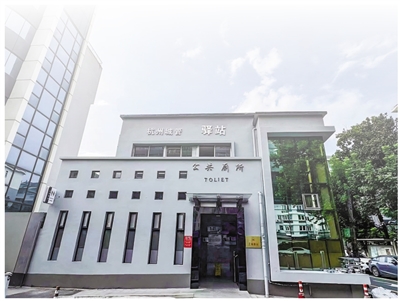
拱墅区10座公厕“旧貌换新颜”
Hang Zhou Ri Bao· 2025-10-14 02:26
Core Insights - The recent renovation of public toilets in Gongshu District has transformed them into modern facilities that incorporate cultural, ecological, and smart elements, enhancing the urban experience [3][4] - The upgrades address issues of outdated infrastructure and cleanliness, moving from basic standards to high-quality, user-friendly designs [3] Group 1: Renovation Details - Ten public toilets have undergone significant upgrades over two months, featuring improved aesthetics and functionality [3] - The Baoqing Bridge public toilet now has a dual-function layout, with the first floor focused on restroom needs and the second floor serving as a rest area for outdoor workers [3] - The design of the Baoqing Bridge toilet includes a light gray elastic coating and geometric facades, harmonizing with surrounding buildings [3] Group 2: Ecological and Smart Features - The Houxi River public toilet integrates with the surrounding landscape, creating an ecological garden space with a unique V-shaped roof for natural ventilation and lighting [4] - Both the Baoqing Bridge and Houxi River toilets are equipped with smart systems to monitor foot traffic and odor levels, enhancing energy efficiency and odor control [4] - The Luhuzhi Street toilet features a modern design with accessibility enhancements, including a voice prompt system and anti-slip flooring [4] Group 3: Additional Upgrades - Seven other older public toilets have also been renovated, focusing on facade updates, fixture replacements, and improvements to drainage and lighting systems [4]

数量全国第五!在苏州上厕所也有“满满幸福感”
Su Zhou Ri Bao· 2025-10-07 00:27
Core Insights - Suzhou ranks fifth in the number of public toilets and seventh in density nationwide, reflecting the city's commitment to public sanitation and convenience for residents and tourists [1][2] - The city has implemented a continuous improvement program for public toilets, focusing on enhancing functionality and aesthetics, integrating local cultural elements into the design [2][4] - Social media feedback highlights the cleanliness and innovative design of Suzhou's public toilets, with users praising their accessibility and additional amenities [3][4] Group 1: Public Toilet Distribution and Accessibility - Suzhou's public toilet distribution is strategically planned, with over 50 toilets within a 500-meter radius in busy areas like the Guanqian Street commercial district [1] - The city has made significant efforts to ensure that public toilets are well-marked and easy to locate, enhancing user experience [1][2] Group 2: Design and Quality Improvements - The city government has prioritized the "upgrading and enhancement" of public toilets, ensuring they meet both functional needs and aesthetic standards [2][4] - Public toilets in Suzhou are designed to reflect local culture, with features such as traditional architectural elements and modern conveniences [2] Group 3: User Experience and Amenities - Recent upgrades include the installation of facilities for the elderly and children, as well as amenities like warm water, automatic toilet paper dispensers, and free charging stations [4] - Feedback from users indicates a high level of satisfaction with the cleanliness and additional services provided at public toilets, contributing to a positive public perception of the city's infrastructure [3][4]
杭州多策疏解地铁口非机动车停放痛点
Hang Zhou Ri Bao· 2025-09-24 02:17
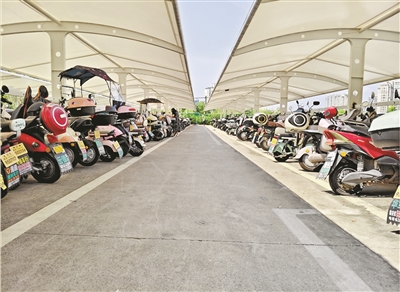
Core Insights - The article highlights the successful implementation of new non-motorized vehicle parking facilities at metro stations in Hangzhou, addressing the parking challenges faced by commuters [3][4][5] Group 1: Parking Solutions - Since 2025, over 4,000 new non-motorized vehicle parking spaces have been added at metro stations, alleviating the "last mile" parking issues for citizens [3] - The Hangzhou Municipal Urban Management Bureau has conducted a comprehensive assessment of parking needs and available spaces around metro stations, leading to tailored solutions for each location [4] - The integration of various strategies, such as expanding sidewalks and utilizing idle land, has been crucial in addressing the unique parking challenges at different metro stations [4][5] Group 2: Community Engagement and Project Execution - A collaborative oversight mechanism has been established to monitor the progress and quality of parking facility projects, ensuring effective implementation [5] - Public feedback has been actively sought through various channels, including discussions with representatives and citizen suggestions, which have been incorporated into the design and construction of parking facilities [5][6] - Enhancements such as rain shelters, lighting, and surveillance have been added to improve the usability and satisfaction of the new parking facilities [6] Group 3: Utilization of Idle Spaces - Many new parking facilities have transformed previously unused urban spaces into convenient areas for citizens [7] - Specific examples include the construction of an 800-space parking lot at Liangzhu Station and the creation of over 250 parking spaces at Lvtin Road Station, both of which have significantly improved parking conditions [7] - The ongoing commitment to innovative solutions aims to convert underutilized urban areas into efficient non-motorized vehicle parking facilities, enhancing urban space management in Hangzhou [7]
当路灯杆不只是路灯杆,城市更暖人心
Xin Hua Ri Bao· 2025-08-20 10:11
Core Insights - The integration of electric vehicle charging stations into streetlight poles in Jiangyin City, Jiangsu Province, represents an innovative approach to urban infrastructure, addressing the growing demand for charging facilities while minimizing land use and construction costs [1][2] Group 1: Urban Infrastructure Innovation - The "lamp-pole integration" model utilizes existing roadside parking resources and power supply facilities, effectively increasing the number of charging stations without additional land occupation or infrastructure disruption [1] - This initiative not only enhances convenience for citizens but also contributes to the aesthetic appeal of the city [1] Group 2: Multifunctional Streetlight Poles - Recent developments in cities like Nanjing have introduced multifunctional streetlight poles that provide various services, including charging for electric vehicles and bicycles, traffic monitoring, and environmental sensing [1] - These poles can detect PM2.5 levels, noise, temperature, and humidity, and even monitor the status of public amenities like trash bins and manhole covers through IoT technology [1] Group 3: Urban Governance and Resource Optimization - The transformation of streetlight poles into multifunctional service nodes exemplifies a resource optimization strategy in urban governance, emphasizing the importance of maximizing existing assets rather than solely relying on new constructions [2] - This approach reflects a systemic thinking in urban management, promoting collaboration among various departments such as electricity, city management, transportation, and public safety [2] Group 4: Community-Centric Urban Development - The multifunctionalization of streetlight poles highlights the significance of addressing community needs, such as the challenges faced by electric vehicle owners, rather than focusing solely on large-scale infrastructure projects [2] - Effective urban governance is characterized by attention to detail and responsiveness to residents' demands, fostering a sense of community and connection [2]