
城市绿色低碳转型

Search documents
COP30“中国角”边会呼吁共建绿色低碳美丽城市
Xin Hua She· 2025-11-18 22:51
Core Viewpoint - The event during COP30 focused on the theme of "Building a Green Low-Carbon Future for Cities," highlighting the importance of urban areas in global carbon emissions and the need for collaborative efforts in green transformation [1]. Group 1: Urban Low-Carbon Transformation - Cities are major sources of global carbon emissions and are at the forefront of green low-carbon transformation [1]. - Since 2010, China has initiated 81 low-carbon city pilot projects, covering various regions, development levels, and resource endowments [1]. - 95% of pilot cities have significantly reduced carbon emission intensity, 38% have stabilized or reduced total carbon emissions, and 25% have decreased the growth rate of total carbon emissions [1]. Group 2: Collaborative Efforts and Innovations - The transformation requires collaboration among governments, enterprises, research institutions, social organizations, and the public [1]. - Representatives from regions like Hainan and Shenzhen showcased their green transformation practices [1]. - The event featured technological innovations such as satellite remote sensing for low-carbon monitoring and clean fuel gasification solutions, along with reports providing replicable "Chinese solutions" for global cities [1].
全球城市绿色低碳透明度指数(CGTI):信息公开如何驱动全球城市绿色低碳转型?
Jing Ji Guan Cha Wang· 2025-11-12 09:58
Core Insights - The report titled "Global City Green Low-Carbon Transparency Index" (CGTI) evaluates 30 cities across six continents on their environmental, climate, ecological, and transformation development transparency [1][2] - New York, London, and Sydney rank as the top three cities for green low-carbon transparency, followed by Paris, Beijing, and Hong Kong [1] - Chinese cities have made significant improvements in environmental quality and pollution regulation information disclosure, reaching advanced global levels [1][3] Group 1: Evaluation Results - The CGTI index is based on four dimensions: environment (35%), climate (35%), ecology (15%), and development (15%), comprising 20 specific indicators for quantifying urban green low-carbon transparency [2] - Developed cities like New York, London, and Sydney lead due to robust regulatory frameworks and mature monitoring systems [2] - Chinese cities, particularly those in urban clusters like Beijing and Shanghai, have shown remarkable advancements in environmental monitoring and information disclosure over the past decade [3] Group 2: Recommendations - The report suggests integrating carbon reduction, pollution control, and green development goals to enhance collaborative efforts and accelerate comprehensive green transformation [4] - It advocates for the establishment of a smart environmental monitoring system using advanced technologies like satellite remote sensing and IoT to create a closed-loop mechanism for data collection and decision-making [4] - The report emphasizes the importance of enhancing corporate climate and environmental information disclosure to drive green transformation across the value chain [5]
推动城市发展绿色低碳转型 重磅文件明确三大任务
Di Yi Cai Jing· 2025-08-29 09:05
Core Viewpoint - The recent issuance of the "Opinions on Promoting High-Quality Urban Development" emphasizes the need for cities to transition towards green and low-carbon development, focusing on energy conservation, low-carbon lifestyles, and ecological environment governance [1] Group 1: Urban Development and Industrialization - Cities are crucial for industrial development and are closely linked to economic growth and urbanization in China, with urban areas accounting for 40% of the population and 60% of the economic output [2] - Major cities like Shanghai, Shenzhen, and Guangzhou are leading in green and low-carbon transitions, implementing actions to enhance industrial energy and water efficiency [2] - The urbanization rate in China is projected to reach 67% by 2024, indicating a significant concentration of energy consumption in urban areas [2] Group 2: Ecological Environment Governance - Urban areas are identified as key regions for ecological environment protection, with a significant portion of cities failing to meet air quality standards [6] - The "Opinions" propose measures for ecological restoration, urban green space development, and improved waste management to enhance urban environmental quality [6] - The "Implementation Plan for Beautiful Cities" aims for noticeable green and low-carbon transformation by 2027, with a comprehensive governance system by 2035 [8] Group 3: Transportation Modernization - The modernization of urban transportation is essential for urban development, with initiatives promoting public transport and green commuting [4] - Beijing has developed a comprehensive transportation system that prioritizes public transit, achieving a high integration of bus and rail services [5] Group 4: Policy Implementation and Local Government Role - Local governments are encouraged to tailor their urban development plans based on the "Beautiful City" construction indicators, focusing on local characteristics [9] - The establishment of an evaluation mechanism for urban ecological governance is planned to monitor progress and guide future initiatives [9]


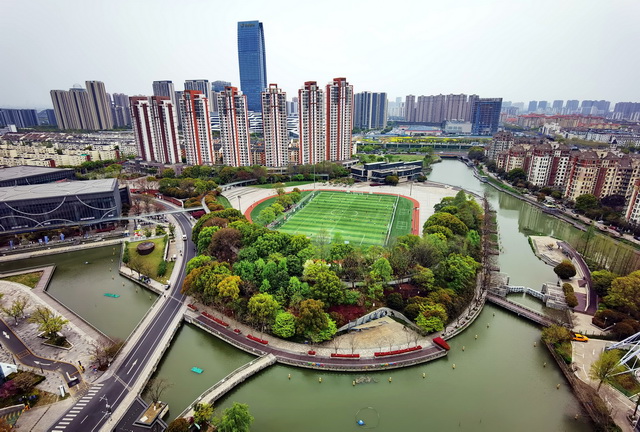
着力建设绿色低碳的美丽城市——深入贯彻落实中央城市工作会议精神述评之六
Xin Hua She· 2025-07-22 12:11
Core Viewpoint - The recent Central Urban Work Conference has outlined key tasks for urban development, emphasizing the construction of green and low-carbon beautiful cities as a priority for high-quality urban growth [1] Group 1: Urban Ecological Environment Governance - Continuous efforts are being made to consolidate the achievements in urban ecological environment governance, with specific examples such as the transformation of chemical enterprises in Yueyang, Hunan, leading to a 100% excellent water quality rate for seven consecutive years in the Yangtze River section [2] - The Ministry of Ecology and Environment highlights that cities are densely populated and economically active areas, facing significant ecological challenges, necessitating effective measures to address air quality, drinking water source protection, and new pollutant management [2][3] Group 2: Green and Low-Carbon Transformation - Various cities are implementing actions to enhance pollution control, such as promoting electric vehicles in Jinan and utilizing advanced dust control technologies in Beijing, contributing to improved urban ecological quality [3][4] - The Central Urban Work Conference calls for collaborative efforts to achieve pollution reduction, carbon reduction, and green expansion, with a focus on developing green industries and services, and improving transportation and energy systems [4] Group 3: Harmonious Coexistence with Nature - Urban areas are not only human habitats but also rich biodiversity zones, with Beijing creating natural belts to support wildlife, enhancing urban ecological safety and quality of life [6] - Experts emphasize the importance of maintaining urban biodiversity and ecological integrity, advocating for nature-based solutions and the use of native species in urban planning [6][7]