
基层治理精细化

Search documents
正宁县 “幸福餐桌”温暖守护“夕阳美好”
Xin Lang Cai Jing· 2026-01-14 03:04
Core Viewpoint - The article highlights the "Happiness Dining Table" initiative in Zhengning County, which aims to address the food insecurity faced by elderly residents, particularly those who are left alone due to younger family members working away from home. The program not only provides meals but also fosters social interaction among the elderly, thereby enhancing their quality of life [1][2][3]. Group 1: Program Overview - Zhengning County has a population of 239,000, with 16% aged 60 and above, and over 30% of elderly residents are left alone or live in rural areas [1]. - The county plans to establish 75 village-level dining points by 2025, supported by an investment of 3 million yuan for rural revitalization, to serve over 800 elderly individuals daily [1][3]. Group 2: Funding and Sustainability - The initiative employs an innovative "Five Points" model for funding, which includes contributions from individuals, government subsidies, collective efforts, corporate donations, and social contributions, reducing reliance on government funding [2]. - In the program, elderly participants pay a small fee for meals, which helps maintain their dignity and encourages shared responsibility, avoiding welfare dependency [2]. Group 3: Community Engagement and Activities - Dining points serve as social hubs where elderly individuals can engage in activities such as playing chess and participating in health lectures, enhancing their social lives [2][3]. - The program has created 75 public welfare positions, encouraging younger seniors to assist older seniors, fostering a mutual support system within the community [3]. Group 4: Food Safety and Quality Control - Food safety is prioritized, with strict regulations in place for sourcing and preparing meals, including a "three checks" system for ingredients and regular inspections by market regulatory authorities [2]. - Daily menus and financial records are publicly displayed to ensure transparency and accountability in operations [2]. Group 5: Future Plans and Goals - By the end of 2025, the program aims to serve over 21,000 elderly individuals monthly across the 75 dining points, addressing the challenges posed by aging and rural depopulation [3]. - The county plans to continue optimizing services and integrating smart management systems to attract more social participation, creating a sustainable and caring environment for the elderly [3].
安徽全椒为乡镇编制“履职清单”
Xin Lang Cai Jing· 2025-12-24 11:38
Core Viewpoint - The article discusses the transformation of grassroots governance in Chuzhou City, Anhui Province, focusing on the integration of various agricultural and rural service functions into a comprehensive service center, leading to improved efficiency and clarity in responsibilities [1][2]. Group 1: Governance Reform - Chuzhou County has restructured its governance by consolidating multiple departments into 7-10 comprehensive functional institutions, enhancing the clarity of responsibilities and improving service efficiency [1][2]. - The previous governance model faced challenges due to overlapping functions and complicated processes, which have been streamlined through this reform [1][2]. Group 2: Task Management - A systematic review of over 1,000 township work items was conducted, resulting in the identification of 16 categories of basic responsibilities and 16 categories of cooperative responsibilities, along with 12 categories of specialized tasks assigned to county-level departments [2]. - This clear delineation of responsibilities aims to enhance accountability and streamline the execution of tasks at the township level [2]. Group 3: Law Enforcement Integration - The county has implemented a "comprehensive inspection" mechanism, consolidating various enforcement functions into a single comprehensive law enforcement team to address violations more effectively [2]. - This approach has improved the timeliness of law enforcement actions, allowing for early detection and prevention of violations [2]. Group 4: Economic Development Initiatives - The transformation of Machang Town exemplifies the empowerment through clear task lists, enabling the town to develop a tourism brand that integrates agriculture and culture, thus enhancing local income [3]. - Xiwang Town has also benefited from clarified responsibilities, focusing on e-commerce to support agricultural development through a collaborative framework involving government, enterprises, and educational institutions [3]. Group 5: Future Directions - The county plans to continue deepening institutional reforms, aiming for more precise delegation of powers, rational institutional setups, scientific personnel allocation, and convenient service models [3].
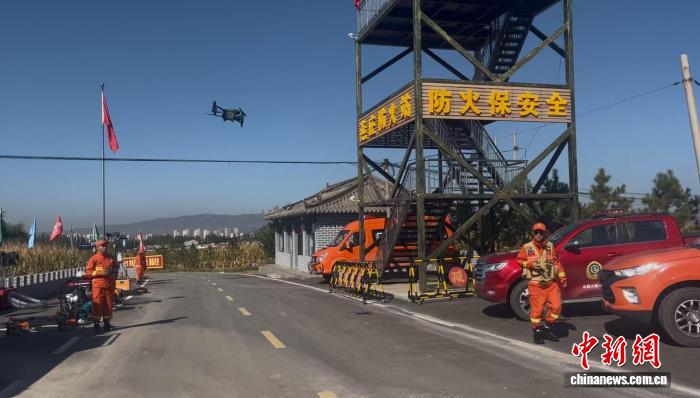
基层应急“守护者联盟”:一座古城的平安密码
Zhong Guo Xin Wen Wang· 2025-12-18 07:04
Core Viewpoint - The article discusses the establishment of a comprehensive grassroots emergency management system in Pingcheng District, Datong City, which integrates professional teams, social forces, and grassroots networks to enhance safety and emergency response capabilities in the region [1][10]. Group 1: Emergency Management System - Pingcheng District has developed a "multi-dimensional coverage, top-down communication" emergency governance system to address complex safety challenges, especially with the increasing tourism and population density [1]. - The district's emergency management strategy includes the formation of 18 street comprehensive emergency rescue teams, 5 major area management units, 3 professional social rescue teams, and 1 mobile emergency rescue team [10]. Group 2: Community Involvement - The grassroots emergency response is supported by community members, such as the Bai Dengshan Yanzhuang Fire and Flood Assault Team, which consists of 16 local villagers and has proven to be a rapid response force in emergencies [2][3]. - Community grid workers play a crucial role in safety management by conducting regular inspections, identifying hazards, and ensuring prompt reporting and resolution of issues [7][8]. Group 3: Professional Rescue Teams - The district has integrated three professional social rescue teams, including the Datong Blue Sky Rescue Team, which specializes in various emergency response areas such as medical aid and disaster rescue [4][6]. - These professional teams enhance the overall emergency response capabilities by collaborating with local authorities and providing specialized equipment and expertise [6][9]. Group 4: Technological Integration - The emergency management system aims to leverage technology to promote intelligent transformation in emergency management, ensuring a robust safety net for the ancient city [10].

以数字化赋能基层治理创新
Jing Ji Ri Bao· 2025-10-15 22:12
Core Insights - Grassroots governance is identified as the cornerstone of national governance, a stabilizer for social development, and an accelerator for high-quality economic growth [1] - The integration of advanced technologies such as big data, cloud computing, blockchain, and artificial intelligence is being utilized to enhance grassroots governance and urban management [1][2] Group 1 - The key to digital empowerment in grassroots governance innovation is to awaken dormant data, facilitating data flow and breaking down information silos [1] - The State Council's opinion on strengthening grassroots governance emphasizes the integration of data resources and the establishment of comprehensive data collection at the village and community levels [1] - Local practices, such as Hangzhou's "One Table Pass" application, demonstrate the digitalization of governance, aiding in cost reduction and efficiency for enterprises [1] Group 2 - Digital technology aids in transitioning from a "one-size-fits-all" approach to a more precise service model, allowing services to proactively reach individuals [2] - Beijing's implementation opinion on modernizing grassroots governance aims to enhance the precision and intelligence of governance [2] - The establishment of an enterprise economic big data platform allows managers to observe economic dynamics and identify challenges faced by enterprises, providing data support for targeted interventions [2] Group 3 - Future improvements in grassroots digital governance should be demand-driven, empowering local communities with rights to call for services, evaluate, and supervise [2] - A three-tiered linkage system among districts, streets, and communities is proposed to efficiently address governance issues at the grassroots level [2] - Emphasizing party leadership is crucial for resolving grassroots governance challenges and establishing a responsive service mechanism for the public [2]
聚焦“两高四着力”·一“县”观察丨石龙区 小切口做好善治精细化
He Nan Ri Bao· 2025-10-06 23:20
Core Insights - The article highlights the transformation of grassroots governance in Shilong District, Pingdingshan City, focusing on the integration of party leadership, multi-party cooperation, and community service [1][2]. Group 1: Governance Structure - Shilong District has established a closed-loop responsibility system for social governance, led by the district committee secretary, addressing key issues such as site construction, grid division, team training, and funding support [3]. - A detailed task breakdown has been created, consisting of 21 key tasks categorized into six major areas, with clear responsibilities assigned to 19 leading units and 31 responsible units [3]. Group 2: Party Leadership and Community Engagement - The district emphasizes the role of party leadership in enhancing governance efficiency, implementing the "Five Basics and Four Transformations" strategy, and refining multi-party cooperation mechanisms [4]. - Initiatives include the creation of "Five-Star" party branches in rural areas, increasing party organization coverage in urban areas, and innovating community self-governance systems in residential complexes [4]. Group 3: Service Optimization - The district has scientifically divided 21 villages and communities into 155 basic grids, integrating various functions for unified management, with over 280 certified grid members serving multiple roles [5]. - A community grid information platform allows residents to report issues anytime, while on-site service stations facilitate direct interaction with community members, achieving a case resolution rate of 98.33% for over 5,000 public requests this year [5].