
政社协同

Search documents
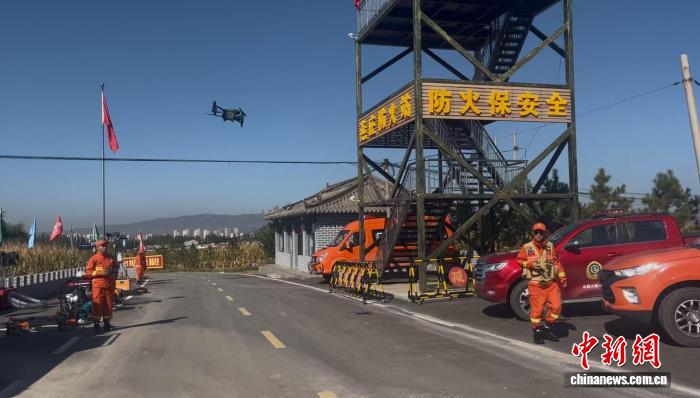
基层应急“守护者联盟”:一座古城的平安密码
Zhong Guo Xin Wen Wang· 2025-12-18 07:04
Core Viewpoint - The article discusses the establishment of a comprehensive grassroots emergency management system in Pingcheng District, Datong City, which integrates professional teams, social forces, and grassroots networks to enhance safety and emergency response capabilities in the region [1][10]. Group 1: Emergency Management System - Pingcheng District has developed a "multi-dimensional coverage, top-down communication" emergency governance system to address complex safety challenges, especially with the increasing tourism and population density [1]. - The district's emergency management strategy includes the formation of 18 street comprehensive emergency rescue teams, 5 major area management units, 3 professional social rescue teams, and 1 mobile emergency rescue team [10]. Group 2: Community Involvement - The grassroots emergency response is supported by community members, such as the Bai Dengshan Yanzhuang Fire and Flood Assault Team, which consists of 16 local villagers and has proven to be a rapid response force in emergencies [2][3]. - Community grid workers play a crucial role in safety management by conducting regular inspections, identifying hazards, and ensuring prompt reporting and resolution of issues [7][8]. Group 3: Professional Rescue Teams - The district has integrated three professional social rescue teams, including the Datong Blue Sky Rescue Team, which specializes in various emergency response areas such as medical aid and disaster rescue [4][6]. - These professional teams enhance the overall emergency response capabilities by collaborating with local authorities and providing specialized equipment and expertise [6][9]. Group 4: Technological Integration - The emergency management system aims to leverage technology to promote intelligent transformation in emergency management, ensuring a robust safety net for the ancient city [10].

搭建对话桥梁:气候政策制定的政社协同研讨会在南京举办
Jiang Nan Shi Bao· 2025-12-11 10:38
Core Viewpoint - The seminar on climate policy collaboration highlighted the importance of green development as a key aspect of China's modernization, emphasizing the role of social organizations in policy advocacy and local practice [1][2]. Group 1: Climate Policy Framework - Jiangsu's "1+1+N" climate policy system aims to address extreme weather challenges by promoting green low-carbon transitions across key sectors such as energy, industry, transportation, and construction [2]. - The province is actively participating in the national carbon market and exploring initiatives like carbon footprint management and zero-carbon park pilots [2]. Group 2: Role of Social Organizations - Social organizations are becoming increasingly professionalized and collaborative, playing a crucial role in environmental governance and contributing to ecological civilization [2][3]. - The seminar showcased innovative climate and environmental advocacy practices from various social organizations, demonstrating their unique value and active engagement in climate governance [3]. Group 3: Collaborative Efforts - The event facilitated open dialogue among government, social organizations, academia, and media, aiming to enhance the collaborative efforts in climate governance [3]. - Workshops were conducted to equip participants with effective tools and strategies for policy advocacy, transforming theoretical knowledge into practical capabilities [2].
《社会力量救灾物资管理指南》发布,助力应急慈善事业规范化发展
Xin Jing Bao· 2025-05-19 04:26
Core Viewpoint - The release of the "Guidelines for the Management of Disaster Relief Materials by Social Forces" marks a significant step towards standardizing and enhancing the efficiency of disaster relief efforts in China, particularly emphasizing the role of social forces in emergency response [1][3][6] Group 1: Development and Principles of the Guidelines - The guidelines were developed over nearly a year through field research, expert interviews, surveys, and comparative studies, establishing four core principles: coordination support, demand-oriented, transparency, and safety [2] - The guidelines cover various aspects of disaster relief material management, including classification, storage, procurement, transportation, distribution, and issuance, and include reference directories and assessment tools [2] Group 2: Focus on Vulnerable Groups and Collaborative Efforts - The guidelines particularly address the differentiated needs of vulnerable groups, such as people with disabilities, reflecting the precision and compassion of China's charitable efforts [3] - The release of the guidelines fills a significant gap in the charitable sector regarding disaster relief material management, enhancing the effectiveness of emergency charity initiatives [3] Group 3: Technological Integration and Future Directions - The guidelines emphasize a shift from experience-driven to standards-driven approaches, leveraging digital technologies for precise forecasting, resource optimization, and cross-regional collaboration [4] - Future efforts will focus on promoting the implementation of the guidelines, resource integration, and technological innovation to contribute to global disaster governance [5][6]