基金业绩考核新规

Search documents
薪酬新规透视 | 工银瑞信单文近三年在管4只仅1只跑赢基准,业绩首尾差超84%,工银信息产业A跑输基准超60%
Xin Lang Cai Jing· 2025-12-09 10:45
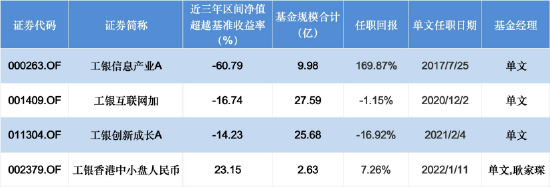
Core Viewpoint - The fund industry is undergoing significant reform in its compensation system, emphasizing performance-based pay for fund managers, with potential salary reductions for underperforming managers [1][5]. Group 1: Compensation Reform - New regulations from the Asset Management Association of China stipulate that if a fund manager's product returns are more than 10 percentage points below the benchmark over the past three years and the fund's profit is negative, their performance-based pay must be reduced by at least 30% [1][5]. - Fund companies are required to assess fund managers managing multiple products based on weighted performance metrics, considering fund size and management duration, while excluding funds managed for less than a year from evaluations [1][5]. Group 2: Performance Analysis of Fund Manager - Fund manager Dan Wen from ICBC Credit Suisse has five funds under management, totaling 7.603 billion yuan, with the longest-held fund, ICBC Information Industry A, achieving a cumulative return of 169.87% since July 2017 [2][6]. - Among the four equity funds managed by Dan Wen, ICBC Hong Kong Small Cap RMB outperformed its benchmark by over 23%, while ICBC Information Industry A underperformed by nearly 60.79%, resulting in an 84 percentage point performance gap [3][4][7]. Group 3: Implications of New Regulations - The new "tiered salary adjustment" mechanism introduces pressure on fund managers, as three of Dan Wen's products significantly underperformed the benchmark by over 10 percentage points, which could trigger salary reduction clauses if their profit margins are also negative [4][8]. - The reform shifts the focus from "star product highlights" to "overall weighted performance of product lines," promoting independent accounting for each product and clear reward and penalty systems, thereby challenging the "one manager, multiple funds" model that fails to achieve balanced performance [4][8].

银行股再度新高!现在都开始讲新的故事了
Sou Hu Cai Jing· 2025-05-14 09:16
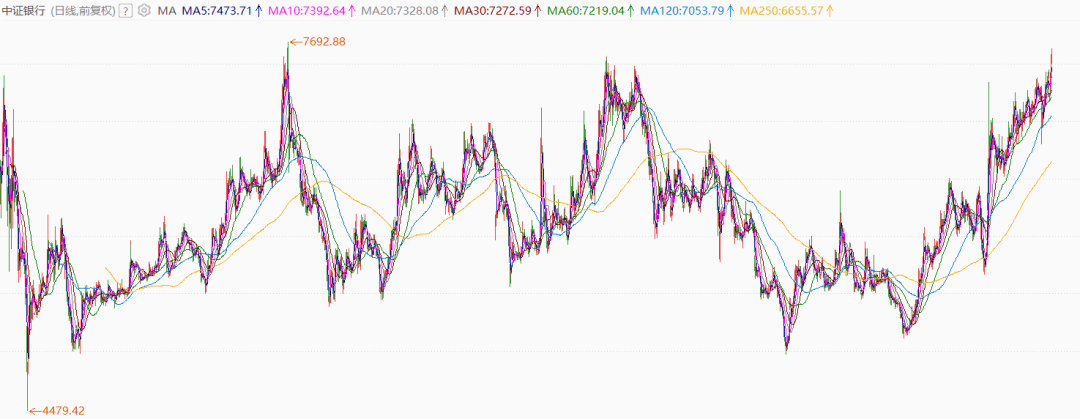
Group 1 - The A-share market is experiencing a high opening followed by a decline, reflecting the muscle memory of investors who anticipate this pattern [1] - The banking index is showing strong performance and is close to reaching a historical high not seen since 2015 [2] - The performance of ETFs has already reached historical highs, indicating a positive trend regardless of interest rate changes or company earnings [4] Group 2 - Recent regulations aimed at promoting the high-quality development of public funds may lead fund managers to focus on the banking sector, which has consistently outperformed the broader market [5] - The banking sector has become a standout performer, with institutional investors, particularly insurance companies, actively accumulating shares [5] Group 3 - The latest financial data for China Merchants Bank shows a slight decline in total revenue and net profit compared to the previous year, with total revenue at 828.92 billion and net profit at 372.86 billion [7] - The bank's earnings per share is reported at 1.48, with a dividend yield of 4.47% [7] Group 4 - Recent shareholding changes indicate that Ping An Life has increased its stake in China Merchants Bank, reflecting confidence in the bank's future performance [8]