
增强党性

Search documents
学习进行时|推进党的自我革命,总书记这些话振聋发聩
Xin Hua She· 2025-12-02 00:00
Core Viewpoint - The article emphasizes the importance of advancing the Party's self-revolution through five key areas of improvement, which include enhancing understanding of self-revolution, strengthening Party character among members, ensuring proper power operation, strict supervision and discipline, and implementing responsibilities for Party governance [1][4]. Group 1: Understanding Self-Revolution - There are misconceptions among some Party members regarding self-revolution, with beliefs that it is unnecessary or overly restrictive, which can hinder the Party's image and effectiveness [4]. - The article stresses the need to correct these erroneous views and encourage active participation in self-revolution efforts [4]. Group 2: Strengthening Party Character - A strong Party character is essential to resist negative influences and maintain integrity, while a weak character can lead to corruption and a disconnect from the Party and the people [5]. - Continuous self-reflection and strengthening of Party character are particularly important for younger members who may lack experience [6]. Group 3: Power Operation and Supervision - Identifying and addressing vulnerabilities in power operation is crucial, with a focus on strict adherence to institutional rules to prevent corruption and misuse of power [8]. - The article advocates for a combination of internal and public supervision to enhance accountability and effectiveness in governance [9]. Group 4: Addressing Corruption - The article calls for a deep investigation into corruption and misconduct, emphasizing the need to tackle systemic issues that contribute to corrupt practices [10]. - It highlights the importance of swift and severe action against violations to deter future misconduct [10]. Group 5: Leadership Responsibility - Leaders are identified as the "critical minority" who must take responsibility for Party governance, fostering a culture of accountability and integrity [11]. - The article encourages leaders to actively promote a positive atmosphere and uphold Party values [11].

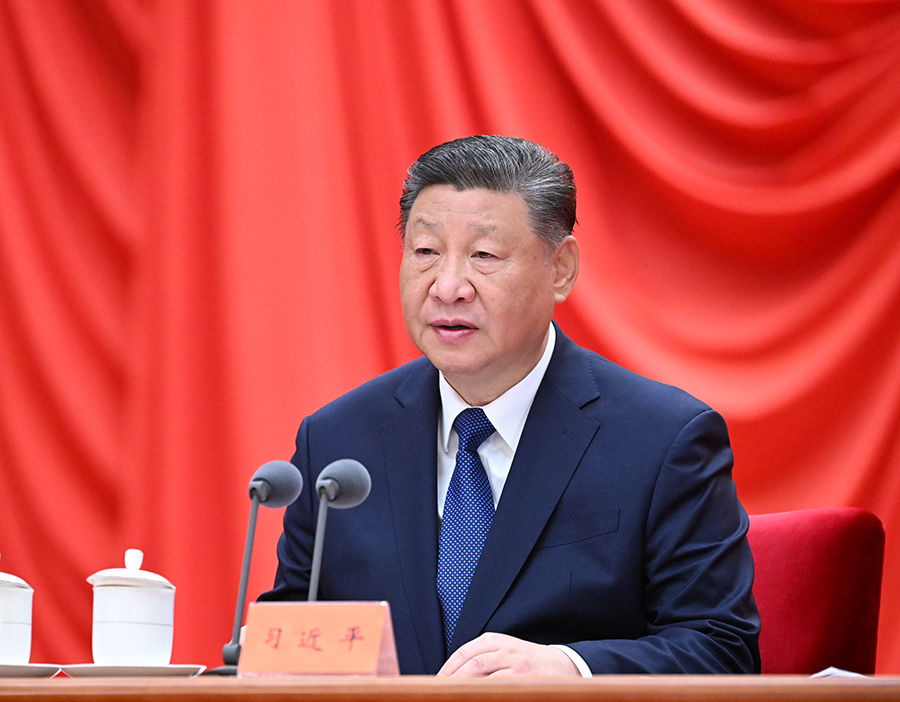
在纪念胡耀邦同志诞辰110周年座谈会上的发言
Ren Min Ri Bao· 2025-11-21 00:23
Core Viewpoint - The commemoration of Hu Yaobang's 110th birthday emphasizes his lifelong dedication to the Party and the people, highlighting his revolutionary spirit and exemplary conduct as a model for future generations [1][4]. Group 1: Three Struggles - The "Three Struggles" proposed by Hu Yaobang include "Unity Struggle," "Solid Struggle," and "Perseverance Struggle," which emphasize the importance of collective action, practical effectiveness, and unwavering commitment to the Party's directives [2][3]. - "Unity Struggle" focuses on collective alignment with the Party's correct policies, while "Solid Struggle" stresses diligence and effectiveness in work [2]. - "Perseverance Struggle" encourages steadfastness in following the Party's guidance and continuously improving practices [2]. Group 2: Four Imperatives - The "Four Imperatives" outlined by Hu Yaobang are "Improve Efficiency," "Strive to Learn," "Maintain Discipline," and "Enhance Party Spirit," which serve as concrete requirements for embodying the spirit of struggle [3]. - "Improve Efficiency" calls for prompt action on decisions made by the central authority, while "Strive to Learn" emphasizes the importance of education in Marxism and modern knowledge [3]. - "Maintain Discipline" aims to combat political liberalism and individualism, and "Enhance Party Spirit" focuses on serving the people wholeheartedly [3]. Group 3: Legacy and Modern Relevance - Hu Yaobang's principles of "Three Struggles" and "Four Imperatives" are seen as vital for fostering a spirit of struggle within the Party and the nation, especially in the context of advancing Chinese-style modernization [4][10]. - The current leadership is encouraged to learn from Hu Yaobang's example to inspire collective efforts towards national rejuvenation and modernization [4][10]. - The emphasis on unity and practical action is reiterated as essential for overcoming challenges in the new era [4][10].