
权力规范运行

Search documents
为4291家单位“经济体检”,2025年山东审计促进上缴财政超百亿元
Feng Huang Wang Cai Jing· 2026-02-10 23:53
Core Viewpoint - The Shandong Provincial Audit Office emphasizes the importance of auditing as a tool for national governance and economic development, outlining key audit activities and their contributions to economic stability and public welfare in 2025 [1][2]. Group 1: Audit Contributions to Economic Development - In 2025, Shandong's audit agencies audited 4,291 units, resulting in the contribution of 10.012 billion yuan to the treasury and the recovery of 8.578 billion yuan in losses [1]. - The audits focused on long-term special government bond funds and investments in state-owned enterprises, aiming to eliminate bottlenecks in policy implementation and ensure effective investment [1][3]. - The audit efforts also included monitoring key construction projects to promote effective investment and economic growth [1][3]. Group 2: Enhancing Public Welfare - The audit office conducted investigations into corruption and misconduct affecting public welfare, particularly in housing projects and vocational education, to ensure the effectiveness of policies aimed at benefiting the public [1][4]. - A special inspection was carried out regarding the "campus meal" issue, collaborating with educational authorities to improve management and governance in this area [1][4]. Group 3: Risk Prevention and Management - Shandong's audits served as a "probe" into economic operations, focusing on the management of funds in commerce and market development, as well as the financial health of state-owned cultural enterprises and rural commercial banks [2][4]. - The audits aimed to identify and mitigate risks in key sectors, enhancing the overall risk management framework [2][4]. Group 4: Regulation of Power Operations - Audits were conducted on 48 provincial leaders regarding economic responsibilities and on 12 party and government leaders concerning natural resource assets, establishing a framework for evaluating leadership accountability [2][5]. - The audit office aims to promote lawful governance and integrity among leaders, ensuring responsible management of natural resources and ecological protection [2][5]. Group 5: Future Audit Directions - The Shandong audit office plans to enhance its supervisory framework, focusing on comprehensive and authoritative audit practices to support high-quality economic and social development [2][5]. - The emphasis will be on expanding the scope and depth of audits to effectively address emerging economic issues and systemic challenges [2][5].
学习新语丨把权力关进制度的笼子
Xin Hua She· 2026-01-15 13:16
Core Viewpoint - The emphasis on putting power into the "cage of the system" is a crucial task for the comprehensive and strict governance of the Party in the new era, as highlighted by General Secretary Xi Jinping in his speeches [1][3][4]. Group 1: Institutional Framework - Continuous improvement of institutional regulations is necessary to ensure they are effective and not overly complex, while also enhancing the enforcement of these regulations to strengthen constraints [3][4]. - The goal is to effectively avoid situations where regulations are not enforced properly, thereby minimizing opportunities for power rent-seeking [4]. Group 2: Discipline and Accountability - Party discipline serves as a protective barrier for the correct exercise of power, and adherence to discipline can help resist corruption [7]. - There is a need for comprehensive coverage in managing the Party, focusing on key individuals, especially senior leaders, to ensure no exceptions or blind spots in governance [8][9]. Group 3: Leadership and Governance - All levels of leadership must lead by example in adhering to Party discipline and laws, actively opposing privilege and maintaining integrity in personal and professional conduct [10]. - A robust mechanism for power operation must be established, ensuring scientific decision-making, decisive execution, and effective supervision to promote just, lawful, and clean use of power [12]. Group 4: Long-term Mechanisms - The combination of immediate reforms and long-term establishment of mechanisms is essential for managing power, affairs, and personnel through institutional means [15]. - Strengthening constraints and supervision over power operations is vital to ensure transparency and accountability, thereby keeping power within the confines of the system [15][21].


学习新语|把权力关进制度的笼子
Xin Hua She· 2026-01-14 14:31
Core Viewpoint - The emphasis on putting power into the "cage of the system" is a crucial task for the comprehensive and strict governance of the Party in the new era, as highlighted by General Secretary Xi Jinping in his speeches [1][3][4]. Group 1: Institutional Framework - Continuous improvement of institutional regulations is necessary to ensure they are effective and not overly complex, while also enhancing the enforcement of these regulations to strengthen constraints [3][4]. - The goal is to effectively avoid situations where regulations are not enforced properly, thereby minimizing opportunities for power rent-seeking [4]. Group 2: Discipline and Accountability - Party discipline serves as a protective barrier for the correct exercise of power, and adherence to discipline can help resist corruption [7]. - There is a need for comprehensive coverage in managing the Party, focusing on the "key minority" and ensuring that no special treatment is given to any member [8][9]. Group 3: Leadership and Governance - All levels of leadership must lead by example in adhering to Party discipline and laws, actively opposing privilege and maintaining integrity in personal and professional conduct [10]. - A mechanism must be established to ensure that power operates within the correct framework, emphasizing democratic centralism and creating a robust system for decision-making, execution, and supervision [12]. Group 4: Long-term Mechanisms - The combination of immediate reforms and long-term establishment of mechanisms is essential for managing power, affairs, and personnel through institutional means [15]. - Strengthening the constraints and supervision of power is vital, ensuring that power operates transparently and is subject to public oversight [15][21].

学习进行时|推进党的自我革命,总书记这些话振聋发聩
Xin Hua She· 2025-12-02 00:00
Core Viewpoint - The article emphasizes the importance of advancing the Party's self-revolution through five key areas of improvement, which include enhancing understanding of self-revolution, strengthening Party character among members, ensuring proper power operation, strict supervision and discipline, and implementing responsibilities for Party governance [1][4]. Group 1: Understanding Self-Revolution - There are misconceptions among some Party members regarding self-revolution, with beliefs that it is unnecessary or overly restrictive, which can hinder the Party's image and effectiveness [4]. - The article stresses the need to correct these erroneous views and encourage active participation in self-revolution efforts [4]. Group 2: Strengthening Party Character - A strong Party character is essential to resist negative influences and maintain integrity, while a weak character can lead to corruption and a disconnect from the Party and the people [5]. - Continuous self-reflection and strengthening of Party character are particularly important for younger members who may lack experience [6]. Group 3: Power Operation and Supervision - Identifying and addressing vulnerabilities in power operation is crucial, with a focus on strict adherence to institutional rules to prevent corruption and misuse of power [8]. - The article advocates for a combination of internal and public supervision to enhance accountability and effectiveness in governance [9]. Group 4: Addressing Corruption - The article calls for a deep investigation into corruption and misconduct, emphasizing the need to tackle systemic issues that contribute to corrupt practices [10]. - It highlights the importance of swift and severe action against violations to deter future misconduct [10]. Group 5: Leadership Responsibility - Leaders are identified as the "critical minority" who must take responsibility for Party governance, fostering a culture of accountability and integrity [11]. - The article encourages leaders to actively promote a positive atmosphere and uphold Party values [11].
推进党的自我革命,总书记强调抓到位
Xin Hua She· 2025-12-01 07:03
Core Viewpoint - The article emphasizes the importance of advancing the Party's self-revolution, highlighting the need for effective implementation of key strategies to ensure the Party's self-governance and integrity [3]. Group 1: Key Strategies for Self-Revolution - Xi Jinping outlines "five further steps" that need to be taken to advance the Party's self-revolution, which include enhancing understanding of self-revolution, strengthening Party spirit among members, ensuring the proper functioning of power, enforcing strict supervision and discipline, and fulfilling responsibilities in Party governance [3][4]. - The article stresses that the Party must maintain a serious attitude towards its own construction, with a commitment to continuous improvement and accountability [3]. Group 2: Misconceptions and Challenges - Xi Jinping identifies common misconceptions about self-revolution, such as the belief that it creates unnecessary trouble or hinders economic development, and counters these with the assertion that corruption is a significant threat to both the Party and societal progress [4]. - The article highlights the need for Party members to cultivate strong Party spirit, especially during challenging times, and emphasizes the importance of moral development through practical experience [4]. Group 3: Power Supervision and Responsibility - The article underscores that the primary challenge for the Party is the supervision of power, with a focus on preventing corruption rooted in privilege and self-interest [5]. - Xi Jinping calls for strict adherence to institutional regulations and a correct understanding of power among Party members to ensure that power is exercised fairly and transparently [5]. - The article reiterates the necessity for leaders to take responsibility for Party governance, emphasizing that neglecting this duty is a significant failure [5].
第一观察|推进党的自我革命,总书记强调抓到位
Xin Hua She· 2025-12-01 02:21
Core Points - The article emphasizes the importance of implementing the "Five Further Improvements" in the context of the Party's self-revolution, which includes enhancing understanding of self-revolution, strengthening party character among members, regulating power operations, strict supervision and discipline enforcement, and fulfilling responsibilities in party governance [5][6][7] - Xi Jinping highlights the necessity of maintaining a strong focus on self-revolution amidst the complex governance environment and the heavy tasks of Chinese-style modernization [5][6] - The article addresses misconceptions about self-revolution, asserting that corruption and misconduct are significant threats to both the Party and the sustainable development of society [6][7] Summary by Sections Understanding Self-Revolution - Xi Jinping identifies current misunderstandings about self-revolution, such as it being seen as self-inflicted trouble or detrimental to economic and social development [6] - He stresses that the Party must confront corruption and misconduct as they are major enemies of both the Party and the people [6] Strengthening Party Character - The article emphasizes the need for practical methods to enhance party character, especially during challenging times [6] - Young cadres are encouraged to strengthen their party character to ensure the continuity of the Party's mission [6] Regulating Power Operations - The article underscores that the core of the Party's self-revolution lies in regulating power, with a focus on preventing corruption rooted in privilege [7] - Xi Jinping calls for strict adherence to institutional execution and a correct understanding of power among Party members [7] Supervision and Discipline - The article advocates for a persistent and rigorous approach to maintaining a clean political environment within the Party [7] - Xi Jinping reiterates the importance of party leadership in governance and the necessity of accountability in party building [7]
第一观察 | 推进党的自我革命,总书记强调抓到位
Xin Hua She· 2025-12-01 02:20
Core Viewpoint - The article emphasizes the importance of advancing the Party's self-revolution, highlighting the need for effective implementation of key strategies to ensure the Party's self-discipline and governance [3]. Group 1: Key Strategies for Self-Revolution - Xi Jinping outlines "five further steps" that need to be taken to advance the Party's self-revolution, which include enhancing understanding of self-revolution, strengthening Party spirit among members, ensuring the proper functioning of power, strict supervision and discipline enforcement, and fulfilling responsibilities in Party governance [3][4]. - The article stresses that the Party must maintain a serious attitude towards its own construction, with a commitment to continuous improvement and accountability [3]. Group 2: Misconceptions and Challenges - Xi Jinping identifies several misconceptions regarding self-revolution, such as the belief that it creates unnecessary trouble or negatively impacts economic and social development [4]. - The article highlights that corruption and misconduct are significant threats to both the Party and the broader society, necessitating a robust response to these issues [4]. Group 3: Power Supervision and Accountability - The article emphasizes that the core of the Party's self-revolution lies in the governance of power, with a focus on preventing corruption and ensuring that power is exercised in a lawful and ethical manner [5]. - Xi Jinping calls for strict adherence to institutional regulations and a culture of accountability among Party members, stressing the importance of a clean political environment [5]. Group 4: Leadership and Responsibility - The article underscores the critical role of leadership in promoting Party values and ensuring effective governance, with leaders expected to demonstrate loyalty and commitment to the Party [5]. - Xi Jinping reiterates that effective Party building is a fundamental responsibility, and failure to do so is considered a dereliction of duty [5].
着重抓好权力集中、资金密集、资源富集领域系统整治踔厉奋发新征程丨强化监督制约 防止权力滥用
Zhong Yang Ji Wei Guo Jia Jian Wei Wang Zhan· 2025-10-27 00:26
Core Points - The essence of corruption is the abuse of power, and preventing this requires a robust system of supervision and checks on power [16] - The need for a comprehensive and multi-layered supervisory system to ensure power operates within the correct framework is emphasized [16] Group 1: Power Regulation and Supervision - It is essential to establish a clear and transparent mechanism for power authorization and usage, focusing on identifying loopholes in power operation and addressing institutional shortcomings [1][16] - The importance of a unified leadership and an authoritative supervision system is highlighted, with a focus on party supervision as the main driver [1][4] - Key areas such as state-owned enterprises, engineering construction, and bidding processes are identified as high-risk sectors for corruption due to concentrated power and resources [4][16] Group 2: Anti-Corruption Measures - Recent corruption cases in state-owned enterprises reveal the need for systemic reforms to address the vulnerabilities in power operation [4][12] - The use of big data and technology is being promoted to enhance supervision and identify hidden corruption issues in bidding processes [5][6] - Collaborative supervision among various departments is crucial to effectively tackle corruption in state-owned enterprises [7][10] Group 3: Long-term Mechanisms and Reforms - Establishing long-term mechanisms to block corruption and improve power operation regulation is a priority [11][12] - Continuous analysis of corruption cases is necessary to develop effective recommendations and improve institutional frameworks [13][14] - The implementation of reforms such as the "evaluation and determination separation" in bidding processes aims to reduce risks associated with power abuse [14]

吴桂英主持召开市委审计委员会会议
Chang Sha Wan Bao· 2025-08-21 02:16
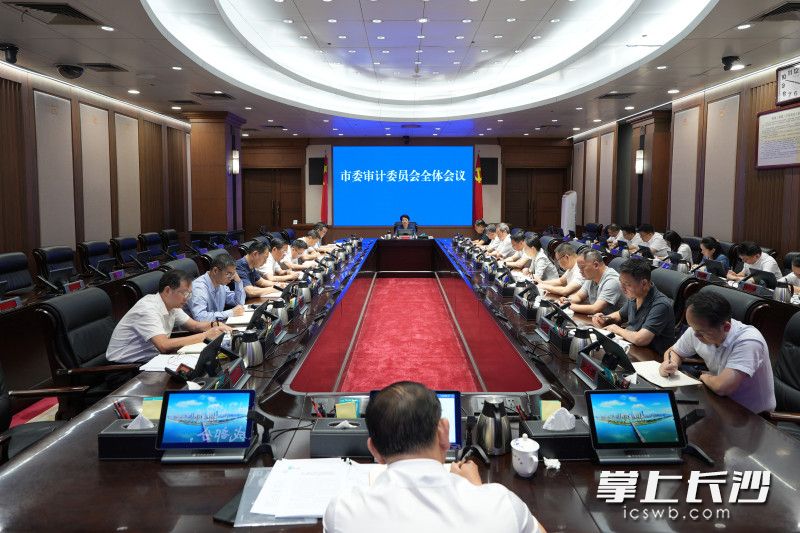
Core Points - The meeting emphasized the importance of implementing Xi Jinping's directives on audit work, focusing on political leadership and enhancing audit supervision effectiveness [1][4] - The audit agencies have played a positive role in promoting economic development, policy implementation, and revealing risks, while acknowledging existing shortcomings [4] - There is a strong focus on auditing policy execution, financial fund supervision, and key reform initiatives to ensure compliance and address issues effectively [4][5] Group 1 - The meeting highlighted the need for all levels of government to recognize the political attributes and functions of audit supervision [4] - Emphasis was placed on tightening the audit of major policies and projects, including the "three high grounds" and global R&D center city construction [4] - The meeting called for a focus on public service areas such as education, healthcare, employment, and housing through special audits [4] Group 2 - The meeting stressed the importance of accountability and the need for a coordinated approach to problem identification and audit rectification [5] - Audit agencies are expected to adhere to higher standards and strengthen political leadership while improving their capabilities [5] - Local party committees are urged to enhance leadership over audit work and ensure that audit findings are addressed effectively [5]
省委理论学习中心组学习会议强调 坚持不懈把新时代党的自我革命要求落实到位 为谱写陕西新篇争做西部示范提供坚强保障
Shan Xi Ri Bao· 2025-07-19 00:39
Core Points - The meeting emphasized the importance of deepening the understanding of the Party's self-revolution and maintaining political determination [1][2] - It highlighted the need for Party members and cadres to enhance their Party spirit through practical training and adherence to innovative Party theories [2] - The meeting called for the improvement of power regulation mechanisms and strict adherence to democratic centralism [2] - It stressed the importance of rigorous supervision and discipline enforcement, particularly focusing on the leadership and key positions [2] - The meeting underscored the necessity of implementing responsibilities for Party governance and ensuring accountability at all levels [2] Summary by Sections - **Understanding of Self-Revolution**: The meeting called for a deeper understanding of the Party's self-revolution, urging members to act as practitioners and promoters [2] - **Enhancing Party Spirit**: Emphasis was placed on the need for Party members to strengthen their Party spirit through innovative theories and serious political life [2] - **Power Regulation**: The meeting discussed the need to refine power distribution and operational constraints, ensuring fair and lawful use of power [2] - **Supervision and Discipline**: It was highlighted that strict supervision and discipline are essential, particularly for top leaders, to maintain a serious atmosphere [2] - **Accountability in Governance**: The meeting stressed the importance of fulfilling responsibilities in Party governance and ensuring that accountability measures are in place [2]