
多元主体协同治理

Search documents
桥下告别灰色空间 市民共享“金角银边”
Xin Lang Cai Jing· 2025-12-20 06:42
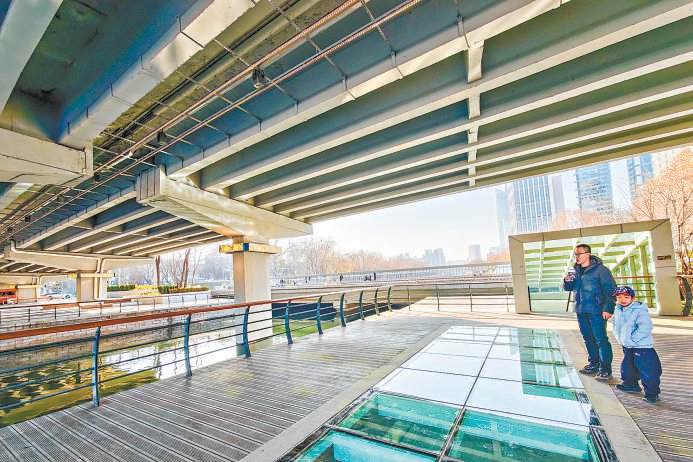
Core Viewpoint - The article discusses the transformation of under-bridge spaces in Beijing from neglected areas into vibrant public spaces through systematic governance and multi-department collaboration, with a focus on enhancing urban livability and functionality. Group 1: Systematic Governance - The management of under-bridge spaces faced challenges such as unclear responsibilities and functional misalignment, prompting the establishment of a three-tier governance mechanism: "city-level coordination, local responsibility, and departmental collaboration" [2] - New management regulations have been introduced, including the "Beijing Under-Bridge Space Usage Management Measures," which clarify the public space attributes and functional priorities of these areas [2][3] - A three-year action plan (2024-2026) has been implemented to detail specific measures for optimizing under-bridge spaces, ensuring a closed-loop management system [2][3] Group 2: Multi-Department Collaboration - Various departments, including transportation, urban management, and public safety, have collaborated to shift from "single management" to "joint participation," enhancing the overall quality of public spaces [3] - The coordination among departments has led to significant improvements, such as a 37% increase in pedestrian crossing efficiency and over 19% growth in peak traffic flow at the Guomao Bridge [3] Group 3: Infrastructure and Service Enhancements - The transformation of under-bridge spaces is not merely cosmetic but involves systematic restructuring to address urban challenges like traffic congestion and parking shortages [4] - Specific improvements include the reduction of crossing distances at Guomao Bridge from 170 meters to 107 meters and the expansion of road capacity, resulting in a 36% increase in morning peak traffic flow [4] - The addition of 5,487 public parking spaces has alleviated parking difficulties for residents [3] Group 4: Aesthetic and Environmental Improvements - The initiative has also focused on enhancing the aesthetic appeal of under-bridge areas, with projects like the 1.1-kilometer "Walking Corridor" at Guomao Bridge, which increased green space by 170% [5] - Safety measures have been implemented, including improved drainage systems and the installation of fire safety facilities [5] Group 5: Ongoing Management and Future Plans - A daily management evaluation system has been established to monitor the condition of under-bridge spaces, utilizing technology for real-time assessments [6] - By 2026, the remaining 46 bridge systems will undergo similar transformations, focusing on key areas like Baiyun Bridge and Jishuitan Bridge [7] - The overall goal is to create a more vibrant and livable urban environment, as evidenced by the successful projects at Guomao and Yansha Bridges [8]

北京桥下空间“蝶变记”
Xin Lang Cai Jing· 2025-12-19 22:31
Core Viewpoint - The article discusses the systematic transformation of under-bridge spaces in Beijing, aiming to enhance urban functionality and aesthetics through coordinated governance and innovative management strategies [2][5][11]. Group 1: Governance and Management - The Beijing transportation department has initiated a collaborative effort involving multiple agencies to redesign and manage the city's 346 bridges, with 300 already completed, representing 87% of the total [2][4]. - A three-tiered governance mechanism has been established to clarify responsibilities and improve management of under-bridge spaces, addressing issues like unclear authority and functional misalignment [5][7]. - New regulations, including the "Beijing Under-Bridge Space Usage Management Measures," have been introduced to define the public space attributes and establish a clear functional orientation for these areas [7][16]. Group 2: Infrastructure and Urban Development - The transformation of under-bridge spaces is not merely cosmetic; it involves a comprehensive approach to address urban challenges such as traffic congestion and parking shortages while enhancing the aesthetic appeal [11][15]. - Specific projects, such as the reconstruction of the Guomao Bridge, have led to significant improvements in traffic efficiency, with pedestrian crossing distances reduced and vehicle flow increased by 36% during peak hours [10][13]. - The initiative has also resulted in the creation of additional public parking spaces, with 5,487 new spots established to alleviate parking difficulties for residents [10][13]. Group 3: Community and Environmental Impact - The under-bridge spaces are being transformed into community-friendly areas, such as gardens and public performance spaces, contributing to the overall quality of urban life [4][15]. - Environmental enhancements include the integration of green spaces and improved safety features, such as better drainage systems and fire safety measures [15][16]. - The use of technology, including smart monitoring systems, is being implemented to ensure ongoing management and responsiveness to community needs [15][16].
