多元化进口策略

Search documents
43万吨美国大豆将运往中国,贝森特放话:下周签协议,中国将买1200万吨大豆!
Sou Hu Cai Jing· 2025-11-01 17:05
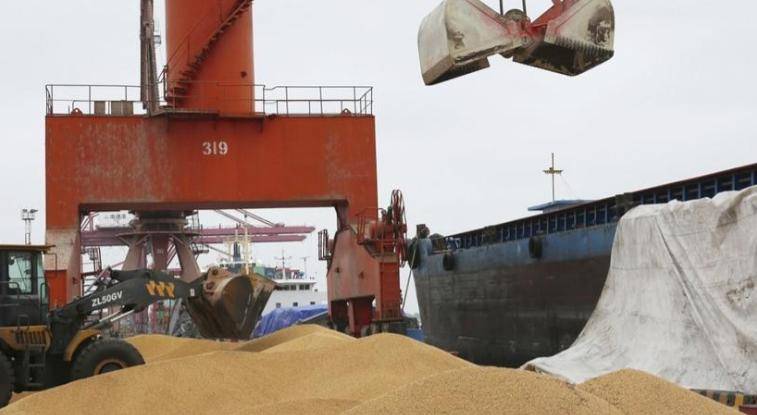
Group 1 - The meeting between the leaders of China and the United States in Busan resulted in China agreeing to purchase 12 million tons of U.S. soybeans this quarter and plans to buy 25 million tons annually over the next three years [1][3] - This soybean deal is seen as a significant political gesture for the U.S., particularly for President Trump, as it aims to support American farmers who have suffered economically due to previous trade tensions [1][3] - The agreement is expected to provide political backing for the upcoming midterm elections in the U.S., showcasing a form of "economic gift" to farmers [3] Group 2 - China's annual demand for soybeans exceeds 100 million tons, making U.S. soybeans a crucial option due to their quality and supply capabilities [3][5] - The meeting emphasized the importance of cooperation in U.S.-China relations, with both sides recognizing that confrontation would lead to mutual losses [5][7] - The outcomes of the meeting, including the suspension of retaliatory measures and tariff reductions, indicate a pragmatic approach to fostering a stable economic relationship [3][5] Group 3 - The strategic significance of the meeting lies in both countries' willingness to seek cooperation amidst a complex international environment, marking a potential shift in their relationship [7] - The commitment to mutual benefits and communication, even in sensitive areas like technology and agriculture, is essential for long-term market relationships [5][7] - The expectation is that, despite ongoing challenges, a comprehensive trade war is unlikely to resume, as both nations have vested interests in maintaining stable trade relations [5][7]

贪心砸了饭碗?巴西硬抬价,中国130万吨大豆订单瞬间流向阿根廷
Sou Hu Cai Jing· 2025-10-26 10:07
Core Viewpoint - The global soybean market is experiencing significant shifts, with Brazil emerging as the primary supplier to China, while Argentina's recent policy changes disrupt the pricing strategies of Brazilian exporters [1][10]. Group 1: Historical Context - China has historically relied on the U.S. for soybean imports, with U.S. exports to China reaching 32.85 million tons in 2017, accounting for 34% of China's total imports [3]. - The U.S. soybean market share declined after the 2018 trade tensions, leading to increased costs for U.S. soybeans by 300 to 500 RMB per ton, diminishing its competitive edge [3][5]. Group 2: Brazil's Rise - Brazil became China's largest soybean supplier in 2018, exporting 53.99 million tons, which constituted 56% of China's imports [5]. - By 2024, Brazil's soybean exports to China are projected to reach 74.65 million tons, representing 71.1% of China's imports [7]. - Brazilian farmers have seen significant income increases, with some purchasing private planes for monitoring crops due to the booming soybean market [7]. Group 3: Pricing Strategies and Market Dynamics - Brazilian exporters attempted to form a price alliance to raise soybean prices, leading to a premium of $66 per ton over U.S. soybeans, the highest in four years [8][10]. - However, this strategy backfired as China diversified its import sources, establishing procurement channels with Argentina, Uruguay, and Russia [10]. Group 4: Argentina's Impact - Argentina announced a reduction of export tariffs from 26% to zero, significantly lowering export costs and disrupting Brazilian pricing strategies [11]. - Following Argentina's announcement, China quickly secured 1.3 million tons of soybeans at competitive prices, undermining Brazilian exporters' plans [11][13]. Group 5: Consequences for Brazil - Brazilian exporters faced a dramatic shift in market conditions, with many unable to sell their accumulated stocks, leading to layoffs and financial distress [13][14]. - The Brazilian media criticized exporters for their short-sighted pricing strategies, which damaged trust in the Chinese market and resulted in a loss of market share [14][16].