多元解纷体系

Search documents
最高法:如何深化“总对总”多元化纠纷解决机制改革?
Zhong Guo Jing Ying Bao· 2026-02-01 01:24
Core Insights - The Supreme People's Court has reported significant progress in the multi-faceted dispute resolution mechanism, with 1,266 typical cases successfully resolved through non-litigation methods since the launch of the multi-faceted dispute case database in January 2025 [1] - The "total-to-total" multi-faceted dispute resolution mechanism has been established to enhance coordination and information sharing among various departments and organizations, aiming to prevent and resolve conflicts at the grassroots level [1][2] Group 1: Achievements in Dispute Resolution - In 2025, the "total-to-total" cooperation units increased to 18, achieving full coverage across 31 provinces and regions, with mediation organizations reaching 38,000 and mediators increasing to 96,000, representing year-on-year growth of 3.3% and 8.9% respectively [2][3] - The courts facilitated the resolution of 985,000 cases through the "total-to-total" mechanism, with 654,000 cases resolved independently via court mediation platforms, marking a 4.3-fold increase compared to 2024 [3] Group 2: Optimization of Services - The Supreme People's Court has integrated litigation services into community governance centers, establishing service windows and fast-track courts, with over 17,510 personnel deployed to assist in mediation and case processing [2] - Online mediation cases reached 8.35 million in 2025, with a satisfaction rate of 90.4% for litigation services, indicating a strong emphasis on enhancing user experience [3] Group 3: Future Directions - The People's Court plans to continue enhancing the effectiveness of conflict prevention and resolution, aligning with the "14th Five-Year Plan" goals to make the results of multi-faceted dispute resolution more tangible and accessible [4]
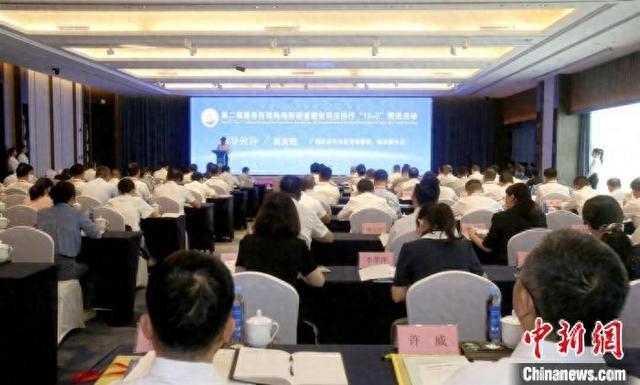
西部陆海新通道建设沿线省区市加强司法协作 健全多元解纷体系
Zhong Guo Xin Wen Wang· 2025-06-27 06:17
Group 1 - The event focused on implementing the Supreme People's Court's opinions on providing judicial services and guarantees for the construction of the Western Land-Sea New Corridor [1][2] - Representatives from the "13+2" provinces and regions gathered to discuss new judicial support measures for the corridor's construction [1][2] - The meeting included a signing of the "Framework Agreement on Cooperation for the Identification of Foreign Laws" and outlined the 2025 action plan [5] Group 2 - The event emphasized the need for collaboration among courts to address legal needs related to the corridor, including dispute resolution and unified law enforcement standards [2] - Discussions covered the integration of judicial services with regional economic development and the establishment of a multi-faceted dispute resolution system [5] - Participants visited key infrastructure projects to understand the achievements in building the Western Land-Sea New Corridor [5]