
司法协作

Search documents
持续加强新时代审判工作 护航四川经济社会高质量发展丨解读省法院工作报告
Xin Lang Cai Jing· 2026-02-04 18:26
Core Insights - The report from the Sichuan Provincial High People's Court indicates that by 2025, the court is expected to handle 2.1765 million cases, with a completion rate of 1.9672 million cases, reflecting year-on-year growth of 17.03% and 16.98% respectively, showcasing high judicial efficiency and quality [1] Group 1: Judicial Efficiency and Case Management - The average number of cases concluded per frontline judge is 333, with the provincial court handling 21,400 cases and concluding 19,000 cases [1] - The court has effectively maintained market order by addressing unfair competition, with 617,600 cases related to enterprises being adjudicated [2][3] - The court has implemented measures such as "active sealing and active deduction" to support the continuous operation of enterprises, resolving debts amounting to 65.132 billion yuan and revitalizing 100,100 acres of land through bankruptcy cases [2][3] Group 2: Support for Economic Development - The establishment of a judicial cooperation mechanism between Sichuan and Chongqing has facilitated resource sharing and unified standards for case adjudication, enhancing the business environment in the Chengdu-Chongqing economic circle [3][4] - The court has published 56 typical cases related to labor disputes and multi-faceted resolution, promoting legal clarity for cross-regional businesses [4] Group 3: Social Justice and Community Support - The court has set up specialized juvenile trial institutions across 22 intermediate courts, addressing 12,200 cases related to guardianship, inheritance, and care, ensuring the protection of vulnerable groups [5][6] - The issuance of over 1,200 family education guidance orders aims to improve parenting practices, thereby supporting the development of minors [6] Group 4: Dispute Resolution and Execution - The court has resolved 262,900 disputes before litigation through collaborative efforts with various departments, enhancing community engagement in dispute resolution [7] - A total of 550,400 execution cases were concluded, with an amount of 107.852 billion yuan being executed, reflecting a strong commitment to resolving execution difficulties [7]
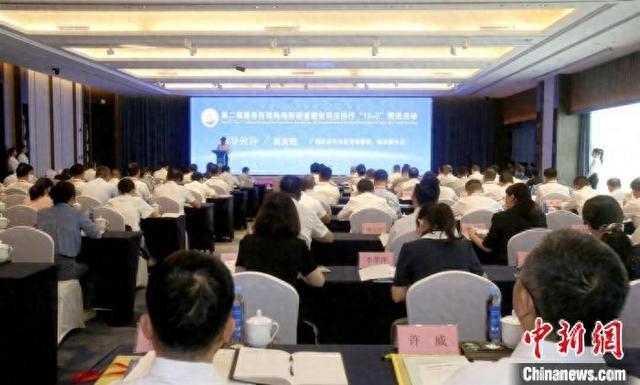
西部陆海新通道建设沿线省区市加强司法协作 健全多元解纷体系
Zhong Guo Xin Wen Wang· 2025-06-27 06:17
Group 1 - The event focused on implementing the Supreme People's Court's opinions on providing judicial services and guarantees for the construction of the Western Land-Sea New Corridor [1][2] - Representatives from the "13+2" provinces and regions gathered to discuss new judicial support measures for the corridor's construction [1][2] - The meeting included a signing of the "Framework Agreement on Cooperation for the Identification of Foreign Laws" and outlined the 2025 action plan [5] Group 2 - The event emphasized the need for collaboration among courts to address legal needs related to the corridor, including dispute resolution and unified law enforcement standards [2] - Discussions covered the integration of judicial services with regional economic development and the establishment of a multi-faceted dispute resolution system [5] - Participants visited key infrastructure projects to understand the achievements in building the Western Land-Sea New Corridor [5]

汇聚司法合力 奏响“长江之歌”
Zhong Guo Xin Wen Wang· 2025-05-28 10:48
Core Viewpoint - The meeting held in Chongqing emphasizes the judicial efforts in protecting the ecological environment of the Yangtze River and promoting high-quality development, marking the fourth anniversary of the implementation of the Yangtze River Protection Law [1] Group 1: Judicial Function and Achievements - From March 1, 2021, to February 28, 2023, courts in 19 provinces along the Yangtze River adjudicated 457,400 environmental resource cases, showcasing the commitment to legal protection of the ecological environment [2] - The Chongqing court has concluded 7,842 environmental resource cases and approved the enforcement of administrative fines totaling 177 million yuan, demonstrating effective judicial action [2] - Landmark cases such as the "Yunnan Green Peacock case" and the "Guizhou Ancient Tree case" highlight the progress in legal governance along the Yangtze River [2] Group 2: Ecological Restoration Efforts - The courts are extending their judicial protection efforts beyond trial phases to include post-judgment environmental restoration, ensuring timely recovery of damaged ecosystems [4] - Various courts are enhancing judicial protection for critical ecological areas, such as the source of the Yangtze River and the Three Gorges Reservoir, to strengthen ecological barriers [4] - Jiangsu courts have established 77 judicial restoration bases for ecological damage, implementing innovative compensation methods that allow companies to offset fines through environmental technology investments [4] Group 3: Collaborative Judicial Mechanisms - Courts across the Yangtze River basin are collaborating effectively, signing 486 cooperation agreements with various law enforcement agencies to enhance ecological governance [7] - The integration of judicial processes with environmental law enforcement aims to create a multi-faceted governance structure for the protection of the Yangtze River [7] - The Supreme People's Court emphasizes the importance of high-quality judicial services in ensuring the ecological safety and pollution prevention in the Yangtze River basin [7]