
多学科会诊

Search documents
从“罕见”到“被看见” 我国罕见病平均确诊时间从4年降至4周左右
Xin Lang Cai Jing· 2026-02-28 01:38
Core Insights - The article highlights significant advancements in the diagnosis and treatment of rare diseases in China, emphasizing the establishment of a collaborative network that enhances accessibility and reduces costs for patients [1][4][6]. Group 1: Diagnosis and Treatment Improvements - As of now, China's rare disease diagnosis and treatment collaboration network covers 419 hospitals, expanding the list of rare diseases and medications covered by insurance [1][4]. - The average diagnosis time for rare disease patients has decreased from over 4 years to approximately 4 weeks, with annual treatment costs reduced by about 90% [4]. - The establishment of a multidisciplinary "one-stop" diagnosis model is breaking the previous barriers faced by rare disease patients who had to navigate multiple departments [4]. Group 2: Clinical Research and AI Integration - Clinical guidelines for 86 rare diseases have been developed, providing comprehensive diagnostic and treatment protocols [7]. - The application of artificial intelligence in clinical settings has led to significant breakthroughs, with over 9,000 effective consultations conducted using the AI model "Xiehe·Taichu" in the past year [7]. - Genetic research related to rare diseases is accelerating, with a focus on understanding the mechanisms behind these conditions, as approximately 80% of rare diseases are linked to genetic factors [7]. Group 3: Policy and Regulatory Support - The Chinese government has included rare disease prevention and treatment in the "Healthy China 2030" plan, indicating a commitment to addressing these health challenges [6]. - Two batches of rare disease directories have been published, listing a total of 207 rare diseases, and a "green channel" for drug approval has been established to expedite the availability of new treatments [8]. - The dynamic adjustment mechanism for insurance coverage is favoring rare disease medications, with over 100 rare disease drugs now included in the insurance guarantee scope [8].


30厘米巨大肿瘤“占据”八旬老人腹腔!盐城市一院成功“拆弹”
Xin Lang Cai Jing· 2026-01-31 11:13
Core Insights - The successful removal of a 30-centimeter tumor from an 82-year-old patient by the expert team at Yancheng First People's Hospital marks a significant breakthrough in the hospital's ability to manage complex cases in elderly patients [1][5]. Group 1: Patient Background and Initial Diagnosis - The patient, referred to as Grandma Tang, initially did not take her abdominal swelling seriously, believing it to be a digestive issue or natural weight gain [3]. - As symptoms worsened, including abdominal distension and difficulty breathing, local hospital examinations revealed a massive tumor in the abdominal cavity [3][5]. - Due to the patient's age and the tumor's size and proximity to vital blood vessels, local hospitals recommended transfer to a higher-level facility for surgery [3]. Group 2: Surgical Challenges and Multidisciplinary Approach - The tumor was found to occupy most of the abdominal cavity, causing displacement of the stomach and intestines, and leading to digestive obstruction [5][7]. - The surgical team faced significant challenges due to the patient's age, organ function decline, and the risks associated with anesthesia and surgery [5][7]. - A multidisciplinary consultation was initiated, involving various departments to create a comprehensive treatment plan aimed at ensuring surgical safety and improving outcomes [7]. Group 3: Surgical Procedure and Outcome - The surgery lasted two hours, during which the team successfully separated the tumor from surrounding tissues, preserving critical anatomical structures [7]. - The estimated blood loss during the procedure was approximately 50 milliliters, and the patient received careful postoperative care [7]. - Following the surgery, Grandma Tang had a good recovery and was discharged one week later, highlighting the effectiveness of the hospital's approach to complex cases in elderly patients [7]. Group 4: Implications for Elderly Surgical Care - The increasing number of elderly patients with complex diseases necessitates a rigorous, individualized preoperative assessment and perioperative management [7]. - Advances in surgical techniques, anesthesia management, and critical care have made it feasible to perform high-difficulty surgeries on elderly patients [7]. - The successful surgery exemplifies the hospital's commitment to addressing medical challenges and safeguarding patient health [7].
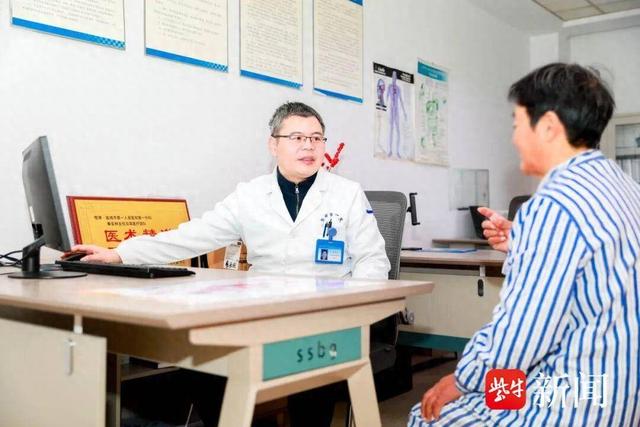
结石背后竟藏双侧肾癌 “三步走”精准手术“一石三鸟”
Xin Lang Cai Jing· 2026-01-25 18:15
Core Insights - A patient named Mr. Lu, previously diagnosed with bilateral kidney cancer and stones, successfully underwent a complex surgical procedure at Southeast University Affiliated Zhongda Hospital, showcasing the effectiveness of robotic-assisted surgery and multidisciplinary collaboration [1][2][3]. Patient Diagnosis and Initial Findings - Mr. Lu, aged 48, was initially diagnosed with a 1 cm stone in the right ureter and right kidney hydronephrosis during a routine check-up [2] - Subsequent imaging revealed irregularities in both kidneys, leading to a suspicion of bilateral renal tumors, specifically renal clear cell carcinoma [2] Multidisciplinary Treatment Strategy - A multidisciplinary team, including urology, radiology, anesthesia, pathology, and oncology, was formed to address the complex case of kidney cancer combined with stones [3] - A phased "three-step" treatment plan was developed: first, relieve the right kidney obstruction; second, simultaneously address the right kidney tumors; and third, defer treatment of the left kidney tumor until the right kidney function was restored [3] Surgical Procedures and Techniques - The first two phases of surgery involved robotic-assisted laparoscopic techniques to remove the stone and excise the tumors from the right kidney, which were successfully completed [4] - The left kidney tumor presented significant challenges due to its location and blood supply, requiring precise surgical techniques to minimize risks during removal [4] Postoperative Recovery and Follow-up - Post-surgery, Mr. Lu experienced a smooth recovery and was discharged, entering a regular follow-up phase with preserved kidney function [5]
破解疑难脑病诊疗困局 提升区域医疗协作水平
Xin Lang Cai Jing· 2025-12-28 00:54
Core Insights - The forum focused on addressing challenges in the diagnosis and treatment of complex neurological diseases, bringing together medical experts from various regions to share knowledge and experiences [1][2] - New technologies such as robot-assisted brain biopsy and refined cerebrospinal fluid cytology testing were highlighted as significant advancements that improve diagnostic accuracy and efficiency [2] Group 1: Forum Highlights - The forum featured discussions on key topics such as intracranial lesion differentiation and neuropathological biopsy, with experts sharing real case studies and advanced techniques [1] - A collaborative approach was emphasized, with multidisciplinary consultations conducted on-site to bridge information gaps and enhance diagnostic thinking among local teams [1] Group 2: Technological Advancements - Robot-assisted brain biopsy technology was noted for its minimal invasiveness and over 95% accuracy, addressing the challenge of precise lesion targeting and significantly reducing diagnosis time [2] - The refined cytological testing for cerebrospinal fluid was introduced as a method to reveal "hidden" neurological diseases, thereby improving overall diagnostic efficiency [2] Group 3: Future Implications - The forum established a foundation for ongoing regional medical collaboration, aiming to gradually resolve complex neurological diagnosis challenges and enhance public health regarding brain conditions [2]