多模态控制

Search documents
Snapchat提出Canvas-to-Image:一张画布集成 ID、姿态与布局
机器之心· 2025-12-09 03:17
Core Viewpoint - Canvas-to-Image is a new framework for compositional image generation that integrates various control signals into a single canvas, simplifying the image generation process by allowing users to provide multiple types of control information simultaneously [2][9][31] Group 1: Traditional Control Limitations - Traditional image generation methods utilize independent input paths for identity reference, pose sketches, and layout boxes, leading to a fragmented and lengthy process [7][8] - Users are unable to overlay multiple control signals in the same area of an image, which restricts the complexity of scene construction [8][9] Group 2: Canvas-to-Image Methodology - The Canvas-to-Image framework consolidates all control signals onto a single canvas, allowing the model to interpret and execute them within the same pixel space [9][10] - The multi-task canvas serves as both the user interface and the model's input, enabling the integration of heterogeneous visual symbols and their spatial relationships [14] Group 3: Training and Inference Process - During training, the model learns from cross-frame image sets, which introduces significant variations in pose, lighting, and expression, preventing it from relying on simple copy mechanisms [15] - In the inference phase, users can flexibly combine multiple control modalities on the same canvas, allowing for complex scene generation without switching between different modules [16] Group 4: Experimental Results - Canvas-to-Image can simultaneously handle identity, pose, and layout box controls, outperforming baseline methods that often fail under similar conditions [18] - The model maintains spatial and semantic relationships between characters and objects, generating scenes with natural interactions and coherence even under complex control settings [20][21] Group 5: Conclusion - The core value of Canvas-to-Image lies in its ability to visualize multi-modal generation controls, making complex scene construction intuitive through direct manipulation on the canvas [31]


腾讯混元3D-Omni:3D版ControlNet突破多模态控制,实现高精度3D资产生成
机器之心· 2025-09-29 06:55
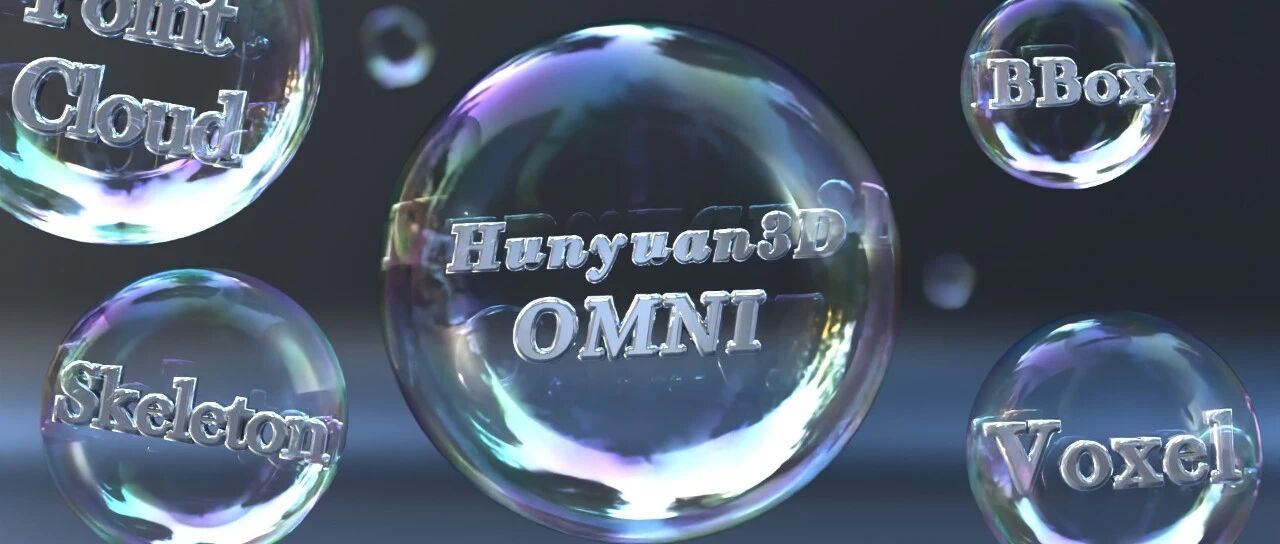
Core Viewpoint - The article discusses the launch of Hunyuan 3D-Omni by Tencent, a unified multimodal controllable 3D generation framework that addresses the limitations of existing methods reliant on image inputs, enhancing the precision and versatility of 3D asset creation in various industries [2][5][31]. Background and Challenges - The increasing scale of 3D data has led to the rise of generative models based on native 3D representations like point clouds and voxels, with Hunyuan3D 2.1 utilizing a combination of 3D Variational Autoencoders (VAE) and Latent Diffusion Models (LDM) for efficient 3D model generation [5]. - Existing methods face challenges such as geometric inaccuracies due to single-view image inputs, difficulties in fine control over object proportions and details, and limitations in adapting to multimodal inputs [6][7]. Core Innovations of Hunyuan3D Omni - Hunyuan 3D-Omni introduces two key innovations: a lightweight unified control encoder for handling multiple control conditions and a progressive difficulty-aware training strategy to enhance robustness in multimodal integration [9][10]. - The framework supports up to four types of control signals, significantly improving the controllability and quality of generated results [9]. Key Implementation Methods - The system utilizes various control signals: 1. Skeleton for character motion control 2. Bounding Box for adjusting object proportions 3. Point Cloud for providing geometric structure prior 4. Voxel for sparse geometric hints [11][14]. Experimental Results - The model demonstrates high-quality generation of character geometries aligned with target poses when using skeleton control, showcasing its ability to maintain geometric details across various input styles [18][19]. - Bounding box control effectively adjusts object proportions, enabling intelligent geometric reconstruction, as evidenced by successful generation of complex structures [23][25]. - Point cloud inputs significantly mitigate geometric ambiguities inherent in single-view images, ensuring accurate alignment with real-world structures [25][27]. - Voxel conditions enhance the model's ability to reconstruct detailed geometric features, improving overall generation quality [27][28]. Conclusion - Hunyuan 3D-Omni represents a lightweight, multimodal, and controllable 3D generation framework that integrates various geometric and control signals without compromising the foundational model capabilities, paving the way for future advancements in multimodal 3D generation [31].