多肽口服给药

Search documents
68周减重18.34 kg,司美格鲁肽片为何能突破多肽药物的口服易降解、难吸收?
GLP1减重宝典· 2025-11-13 10:41
Core Viewpoint - The successful development and market launch of oral semaglutide, a GLP-1 receptor agonist, represents a significant breakthrough in overcoming the challenges associated with oral administration of peptide drugs, enhancing patient compliance and treatment options [5][9]. Group 1: Development and Mechanism - Oral semaglutide has overcome multiple barriers, including instability due to gastric acid and digestive enzymes, large molecular size affecting absorption, and individual variability in efficacy [5][7]. - The use of SNAC (sodium N-[8-(2-hydroxybenzoyl) amino] caprylate) has been pivotal in enhancing the solubility and absorption of semaglutide, while also protecting it from degradation [7][9]. - Pharmacokinetic and pharmacodynamic studies have established optimal dosing methods, ensuring that the semaglutide tablet combined with 300 mg of SNAC achieves maximum bioavailability [7][9]. Group 2: Clinical Efficacy - Clinical studies have demonstrated that a 14 mg dose of oral semaglutide can significantly reduce HbA1c levels by approximately 2% and promote weight loss [9]. - In the OASIS 1 study, participants with obesity or overweight conditions experienced an average weight reduction of 17.4% (18.34 kg) with a 50 mg dose of oral semaglutide, indicating a more pronounced weight loss effect compared to previous studies [9]. Group 3: Mechanism of Action - Semaglutide acts as a "satiety manager" by directly suppressing appetite through central nervous system pathways, slowing gastric emptying, and stabilizing blood sugar levels, which collectively reduce food intake [10][12]. - The drug activates GLP-1 receptors in the hypothalamus and brainstem, enhancing satiety signals while inhibiting hunger signals [10][13]. - It also smooths blood sugar fluctuations by promoting insulin secretion and suppressing glucagon release, thereby reducing cravings for high-calorie foods [12][13].


司美格鲁肽片,如何突破多肽药物的口服易降解、难吸收?
GLP1减重宝典· 2025-11-05 05:00
Core Viewpoint - The successful development and market launch of oral semaglutide, a GLP-1 receptor agonist, represents a significant breakthrough in overcoming the challenges associated with oral administration of peptide drugs, which are typically unstable in gastric acid and difficult to absorb in the intestine [5][9]. Group 1: Development and Innovation - The oral formulation of semaglutide has addressed multiple obstacles, including instability due to gastric acid and digestive enzymes, large molecular size affecting absorption, and individual variability in efficacy [5]. - The use of SNAC (sodium N-[8-(2-hydroxybenzoyl) amino] caprylate) has been pivotal in enhancing the solubility and absorption of the peptide, as well as protecting it from degradation [7]. - Pharmacokinetic and pharmacodynamic studies have established the optimal administration method and dosage, ensuring that the semaglutide tablet combined with 300 mg of SNAC achieves maximum bioavailability [7]. Group 2: Clinical Efficacy - The disintegration and absorption of the semaglutide tablet occur rapidly, with drug absorption observable approximately one hour after administration, leading to the onset of its long-acting GLP-1 receptor agonist effects [9]. - Clinical studies have confirmed the titration method and clinical efficacy of semaglutide, showing that starting from a low dose and gradually increasing to an effective dose optimizes clinical outcomes [9]. - Research indicates that a 14 mg semaglutide tablet can significantly reduce HbA1c levels by approximately 2% and also contributes to weight loss [9]. Group 3: Industry Implications - The development of semaglutide tablets not only provides patients with a new and effective treatment option but also breaks down barriers for oral administration of peptide drugs, setting a new benchmark for the development of peptide-based medications [9]. - This innovation opens up new possibilities for the future development of more oral peptide drugs, potentially transforming the landscape of therapeutic options in the pharmaceutical industry [9].
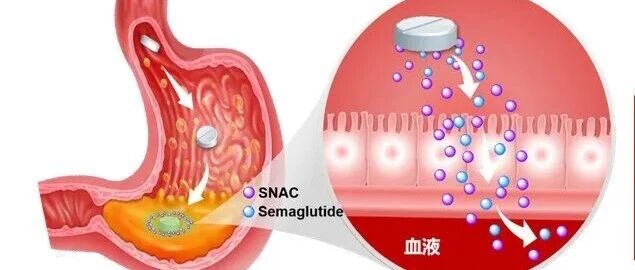
68周减重18.34 kg,司美格鲁肽片为何能突破多肽药物的口服易降解、难吸收?
GLP1减重宝典· 2025-08-14 10:33
Core Viewpoint - The successful development of oral semaglutide marks a significant breakthrough in the administration of peptide drugs, overcoming challenges related to stability, absorption, and individual variability in efficacy [4][6][9]. Group 1: Development and Mechanism - Oral semaglutide has successfully addressed multiple barriers, including instability due to gastric acid and digestive enzymes, large molecular size affecting absorption, and individual differences in therapeutic response [4]. - The use of SNAC (sodium N-(8-[2-hydroxybenzoyl] amino) caprylate) enhances the solubility and absorption of the peptide, while also protecting it from degradation [6]. - Pharmacokinetic and pharmacodynamic studies have established optimal dosing methods, ensuring that the semaglutide tablet combined with 300 mg of SNAC achieves maximum bioavailability [6]. Group 2: Clinical Efficacy - Clinical studies have demonstrated that a 14 mg oral semaglutide tablet can significantly reduce HbA1c levels by approximately 2% and promote weight loss [9]. - In the OASIS 1 study, participants with an average baseline weight of 105.4 kg experienced an average weight reduction of 17.4% (18.34 kg) with the 50 mg oral semaglutide group, indicating a more pronounced weight loss effect compared to previous studies [9]. Group 3: Mechanism of Action - Semaglutide acts as a "satiety manager" by directly suppressing appetite through central nervous system activation, particularly in the hypothalamus and brainstem [10]. - It slows gastric emptying, prolonging the feeling of fullness, and stabilizes blood sugar levels, indirectly reducing appetite fluctuations [11][12]. - The drug activates three key pathways: central nervous system pathways that enhance satiety signals, gastrointestinal-vagal pathways that slow gastric emptying, and pancreatic-metabolic pathways that smooth blood sugar levels [13].