大一统思想

Search documents
话剧《金中都》演绎“迁都”壮举:“混同华夏”的理想与现实
Xin Lang Cai Jing· 2025-12-20 00:32
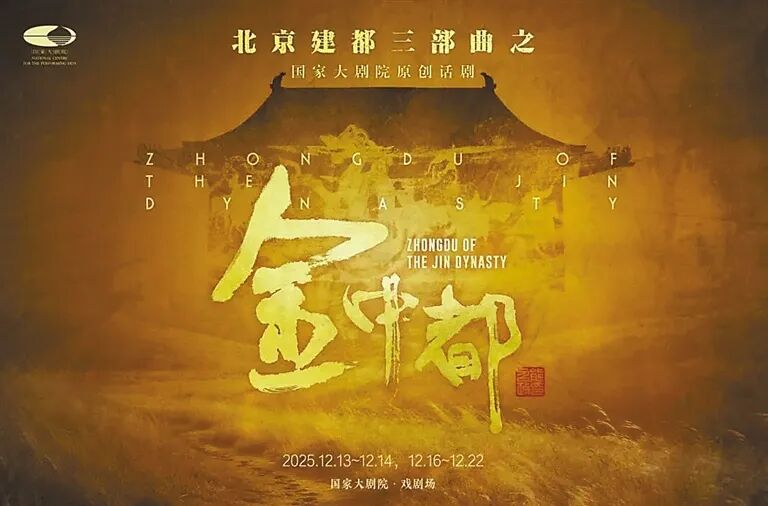
Core Viewpoint - The original play "Jin Zhong Du" premiered at the National Centre for the Performing Arts, marking the beginning of the "Beijing Capital Trilogy," which explores the historical significance of the Jin Dynasty's capital relocation to Beijing [1][16]. Historical Context - The play focuses on the historical event of the Jin Dynasty's capital relocation in 1153, led by Emperor Wanyan Liang, who moved the capital from Shangjing to Yanjing (modern-day Beijing) [2][3]. Cultural Significance - "Jin Zhong Du" illustrates the transformation of Beijing from a city to a capital, emphasizing the cultural and ethnic integration during the Jin Dynasty [3][14]. - The play aims to reflect the historical and cultural lineage of Beijing, showcasing its evolution over 3,000 years and 870 years as a capital [3][16]. Dramatic Elements - The play consists of 10 acts, depicting key moments in Wanyan Liang's life, including his ascension to the throne, reforms, and the challenges faced during the capital relocation [8][12]. - The character of Wanyan Liang is portrayed as both a visionary leader and a tyrant, highlighting the complexities of his rule and the historical implications of his decisions [10][12]. Artistic Presentation - The production features meticulous costume and set design, reflecting the cultural fusion between the Jurchen and Han Chinese, and aims to create a visually immersive experience for the audience [13][14]. - The stage design incorporates significant historical symbols and visual elements to convey the grandeur of the capital relocation event [13][14]. Conclusion - "Jin Zhong Du" serves as a cultural artifact that encapsulates the historical narrative of Beijing's rise as a capital, contributing to the understanding of China's multi-ethnic and unified civilization [16].

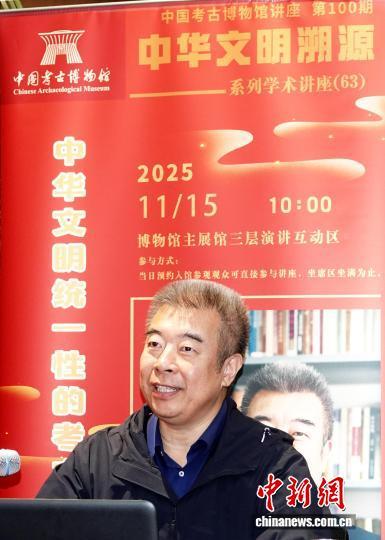
中国考古博物馆第100期讲座:考古实证中华文明的统一性
Zhong Guo Xin Wen Wang· 2025-11-16 04:16
Core Viewpoint - The 100th lecture at the China Archaeological Museum focused on the theme of "Archaeological Research on the Unity of Chinese Civilization," presented by researcher Liu Rui, highlighting the historical development and cultural influences that shaped Chinese civilization [1][3]. Group 1: Cultural Development - Archaeologist Pei Wenzhong posits that the integration of the colorful pottery culture from the Yellow River basin and the black pottery culture from the eastern coast led to the development of primitive Chinese culture, which evolved into ancient Chinese culture during the Xia, Shang, and Zhou dynasties [3]. - The concept of "ancient states, regional states, and empires" introduced by archaeologist Su Bingqi emphasizes the Qin and Han dynasties' administrative structures, which were based on existing smaller states [4]. - Researcher Yan Wenming proposed a "multi-faceted unified structure" of civilization, indicating a stable structure that reflects the strong cohesion of the Chinese nation, contributing to the generation of unity [3][4]. Group 2: Historical Significance - Liu Rui highlighted that the Qin Dynasty established the first unified feudal dynasty in Chinese history, while the Han Dynasty marked the first long-lasting unified dynasty, blending various cultural influences [4]. - The Han Dynasty's engagement with the world through the Silk Road, both overland and maritime, played a crucial role in ancient China's global interactions, encompassing political, diplomatic, military, commercial, and cultural dimensions [5]. - The deep-rooted national and world views formed during the Qin and Han dynasties contributed to a collective recognition of national unity, which is essential for the continuous development and prosperity of Chinese culture [5]. Group 3: Institutional Goals - The China Archaeological Museum aims to promote high-quality development in the field of archaeology and cultural heritage through its ongoing series of academic lectures, fostering public understanding of the profound and ancient Chinese civilization [7].