大东亚共荣圈

Search documents
张海鹏:日本军国主义滋长是对战后国际秩序的严重威胁
Xin Lang Cai Jing· 2026-01-05 08:25
Core Viewpoint - The resurgence of Japanese militarism poses a serious threat to the post-war international order, as evidenced by recent statements from Japanese Prime Minister Sanae Takaichi regarding Taiwan, which reflect a dangerous shift towards militaristic rhetoric and actions [1][6][11]. Historical Context - Japan's historical pattern of using terms like "survival rights" and "self-defense" as pretexts for foreign aggression dates back to the late 16th century, with significant events such as the Meiji Restoration marking the beginning of its imperial ambitions [2][3]. - The concept of "living space" was popularized by Japanese politicians in the early 20th century, justifying invasions of neighboring territories, including Korea and parts of China [2][3]. Military Actions and Consequences - Japan's military actions throughout history, including the invasion of China and the establishment of puppet states, resulted in significant loss of life and economic damage, with estimates of over 35 million casualties and direct economic losses exceeding $100 billion during the Second Sino-Japanese War [4][5]. - The atrocities committed during this period, such as the Nanjing Massacre and the use of "comfort women," have left lasting scars on the affected nations [5][4]. Current Political Climate - Takaichi's recent statements represent a notable shift in Japan's political landscape, indicating a rightward trend and a potential revival of militaristic ideologies that challenge the post-war order established after World War II [6][8]. - The rise of right-wing sentiments in Japan has been marked by attempts to revise historical narratives and challenge the principles of the "Peace Constitution," particularly Article 9, which renounces war [7][8]. International Relations and Legal Framework - Takaichi's remarks violate international agreements such as the Cairo Declaration and the Potsdam Declaration, which outline Japan's territorial limitations and obligations following its defeat in World War II [9][10][11]. - The international community, particularly China, has called for vigilance against Japan's militaristic rhetoric and actions, emphasizing the need to uphold the principles of the post-war international order [12][13].
博物馆里的二战记忆系列(四):德日博物馆里的“无声拷问”,战败国反思几何?
Huan Qiu Shi Bao· 2025-09-21 22:59
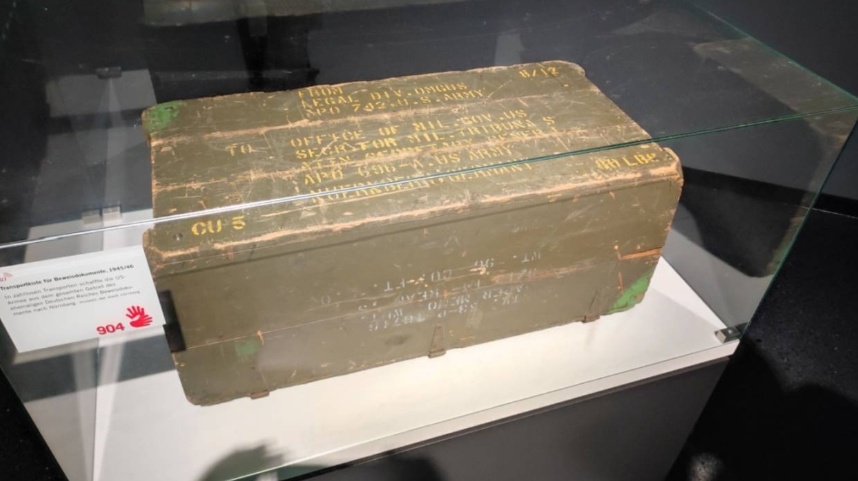
Core Viewpoint - The article explores the reflections of Germany and Japan, the defeated nations of World War II, through various museums that house artifacts from the war, questioning how these countries confront their past [1] Group 1: Nuremberg Trials and Artifacts - The Nuremberg Trials were held from November 1945 to October 1946, where major Nazi war criminals were prosecuted, marking a significant moment in international law [1][4] - A notable artifact is a green military evidence box used by the U.S. Army, which once contained Nazi wartime documents, highlighting the meticulous collection of evidence for the trials [2][4] - The trials were based on extensive documentation collected by Allied forces, which included Nazi laws, speeches, and official statements, establishing a precedent for future international legal proceedings [4] Group 2: Museums in Germany - The Berlin Karlshorst Museum, known for its collection of artifacts from battles between Nazis and Soviets, features a significant poster titled "Strangling Hitler," which inspired public resistance during the war [5][6] - The museum's history dates back to 1967, originally established to commemorate Soviet military achievements, and has undergone several name changes to reflect its evolving focus [7] Group 3: Japanese War Propaganda - The Ritsumeikan University International Peace Museum in Japan houses a deceptive political cartoon used by the Japanese military during the invasion of China, illustrating the propaganda tactics employed to mislead the Chinese populace [8][9] - The museum aims to confront Japan's wartime actions and educate visitors about the historical realities of Japanese aggression, despite facing challenges in visitor numbers compared to other museums that present a victim-centric narrative [10] Group 4: Economic Warfare - During the invasion of China, Japan orchestrated a large-scale economic war, including the counterfeiting of Chinese currency to destabilize the economy, which is documented at the Meiji University Peace Education Center [11][13] - The counterfeit currency was used to pay military personnel and to disrupt the Chinese economy, contributing to severe inflation and long-term economic consequences for China [14]