大容量储能

Search documents
5年120GWh!储能长单背后的新态势
行家说储能· 2025-12-08 12:06
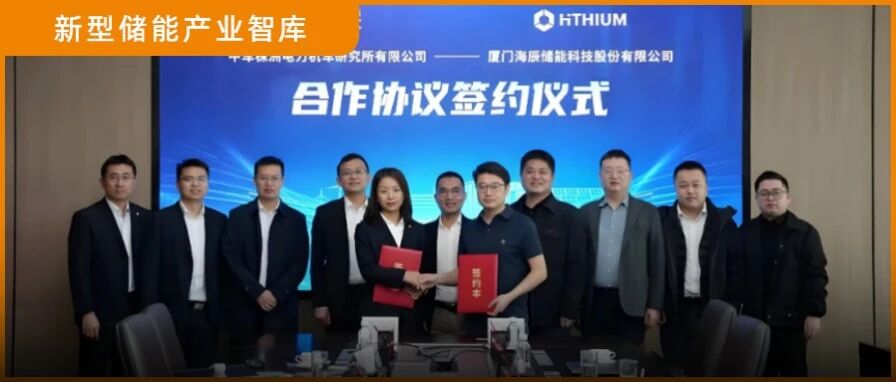
Core Viewpoint - The article discusses the strategic collaborations in the energy storage industry, highlighting the long-term partnerships between leading companies like Hai Chen Energy and CRRC Zhuzhou Institute, which are adapting to market reforms and digitalization opportunities in the power sector [2][3]. Group 1: Strategic Collaborations - Hai Chen Energy signed a 5-year agreement with CRRC Zhuzhou Institute for a total of 120 GWh of energy storage products, indicating a shift from simple supply agreements to strategic collaborations based on trust and technology integration [3][4]. - The partnership includes the supply of various large-capacity battery products, such as 314Ah, ∞Cell 587Ah, and ∞Cell 1175Ah, showcasing the focus on high-capacity energy storage solutions [4][7]. - This collaboration reflects the confidence of CRRC Zhuzhou Institute in the future of the energy storage market and their proactive strategy to secure core battery supply chains amid anticipated capacity constraints [7][9]. Group 2: Market Trends and Characteristics - The trend of long-term binding agreements between energy storage cell suppliers and system integrators is becoming more common, with contracts ranging from 2 to 10 years [10]. - Notable examples include CATL's 200 GWh rolling order with Haibo Si Chuang and strategic partnerships with other companies, indicating a broader industry shift towards long-term collaborations [11][12]. - The focus is on large-capacity battery collaborations, as leading manufacturers like CATL and Hai Chen Energy have achieved mass production of high-capacity cells, making them attractive partners for system integrators [12][13]. Group 3: Competitive Landscape - The deep binding between leading energy storage system integrators and battery manufacturers signifies a fundamental shift in the competitive landscape of the energy storage industry, potentially leading to a "Matthew Effect" where advantages accumulate for top players [14]. - This collaboration allows for the integration of technology, production capacity, and market channels, creating strong barriers to entry and enhancing market concentration [14]. - The industry is transitioning from short-term product supply to long-term, symbiotic system definitions, establishing a clear path for creating sustainable competitive advantages [14].

GWh级出货!两巨头领跑,大容量储能竞速
行家说储能· 2025-12-03 09:12
Core Viewpoint - The new energy storage industry is seizing opportunities from power market reforms and digitalization, with key players collaborating to compile the "2025 Power Market and Digital Energy Storage Research Report" to be released at the upcoming summit [2]. Group 1: Industry Developments - In 2025, the industry is transitioning from technology announcements to large-scale production and delivery of 500Ah+ high-capacity battery cells and 6MWh+ energy storage systems [3]. - CATL's 587Ah energy storage cell has surpassed 2GWh in shipments, with an expected total shipment of 3GWh for the year [4][6]. - The new generation 6.X energy storage platform from CRRC Zhuzhou Institute has achieved mass production and delivery, utilizing the self-developed ∞Cell 587Ah high-capacity energy storage battery [5][8]. Group 2: Technological Advancements - The 6.25MWh battery cabin from CRRC Zhuzhou Institute has been successfully produced, featuring a 25% increase in energy density compared to the previous generation [10]. - The system's efficiency has improved from 86% to 88%, and it supports various electricity trading decision-making processes, enhancing asset utilization by over 20% [10]. - The 587Ah energy storage cell from CATL has an energy density of 434Wh/L and a round-trip energy efficiency (RTE) of 96.5%, with a lifecycle RTE that maintains minimal degradation [6]. Group 3: Market Trends - The industry is entering a phase of accelerated competition in large-capacity battery cells and systems, with CATL leading with 2GWh shipments and CRRC Zhuzhou Institute completing GWh-level deliveries [11]. - A variety of companies, including Envision, EVE Energy, and others, are either in mass production or have set clear timelines for mass production of large-capacity battery cells, with many expected to achieve this within the next two years [12]. - The large-capacity energy storage system market is rapidly expanding, with several companies announcing mass production of 6MWh+ systems this year [14].


高工储能年会前瞻:锂电池抢夺全球长时储能“大蛋糕”
高工锂电· 2025-11-28 12:05
Core Viewpoint - The article highlights the normalization of negative electricity prices in various regions, including China, Europe, and Australia, driven by the imbalance between electricity supply and demand due to the rapid increase in wind and solar power installations. This situation is creating a new demand for medium to long-duration energy storage solutions, particularly in the 4-12 hour range [2][3]. Group 1: Market Trends and Developments - The phenomenon of negative electricity prices is becoming commonplace, prompting a shift towards medium to long-duration energy storage solutions [2][3]. - The global competition for energy storage systems with a capacity of 6MWh and above is intensifying, with a focus on long-duration storage solutions [3][4]. - By 2024, the penetration rate of 4-hour energy storage systems reached 15%, and this segment is becoming mainstream in 2025 [3][4]. Group 2: Technological Advancements - Major Chinese companies are rapidly increasing the production of large-capacity energy storage systems to seize market opportunities in the long-duration storage era [4][5]. - Companies like Ningde Times and Envision Energy are leading the charge with the mass production of high-capacity energy storage cells, such as the 587Ah cell [5][7]. - The competition is not limited to lithium batteries; flow battery technology is also gaining traction, with strategic partnerships being formed to develop large-scale storage projects [8][9]. Group 3: Competitive Landscape - The market is witnessing a split between companies focusing on large capacity cells using different manufacturing processes, namely the stacking and winding techniques [10][11]. - The stacking process is favored for its high space utilization and low-temperature performance, while the winding process benefits from established production efficiency [11][12]. - Companies are adopting differentiated strategies based on their technological capabilities, with some focusing on rapid deployment of 500+Ah cells and others on the long-term potential of 600+Ah cells [12][13]. Group 4: System Variability and Customization - The differences in cell technology are reflected in the energy storage systems, with various companies targeting different container sizes (10ft, 20ft, 30ft) to meet diverse application needs [14][15]. - Companies like Sungrow and BYD are launching multiple size versions of their energy storage systems to cater to specific market demands [15][16]. - The trend towards customized solutions is becoming more pronounced, as companies recognize the need for tailored energy storage solutions to address varying requirements in the market [17][19].