大数据+人工智能

Search documents
农民工血汗钱被推诿扯皮?驻村书记用“企查查”撕开欠薪黑幕!
Qi Cha Cha· 2026-02-11 06:36
Core Viewpoint - The article highlights the challenges faced by migrant workers in recovering unpaid wages and how data-driven solutions can facilitate the resolution of such disputes, exemplified by the case of a villager in Chongqing who successfully reclaimed his owed payment through the intervention of a village secretary and the use of data from Qichacha [1][2]. Group 1: Challenges in Wage Recovery - Migrant workers often encounter two main difficulties in wage recovery: information asymmetry and execution obstacles, leading to situations where legal victories do not result in actual payments [2]. - In the case of the villager, the lack of knowledge about the company's true identity and the responsible parties complicated the recovery process [2]. Group 2: Data-Driven Solutions - The village secretary utilized a "data-driven" approach to resolve the wage dispute by identifying the company's identity through Qichacha, confirming the authenticity of the debt and the company's registration details [3]. - The process involved analyzing the company's ownership structure and financial capabilities to ensure it could fulfill its payment obligations [4]. - The secretary guided the villager in filing a lawsuit online and provided support in tracking the execution of the court's decision, ultimately leading to the recovery of the owed wages [5]. Group 3: Role of Qichacha in Governance - Qichacha serves as a digital tool that integrates data from over 365 million market entities, covering various dimensions such as business registration, legal cases, and financial information, which aids in identifying responsible parties in wage disputes [7]. - The platform's features include verifying company credentials, preemptively screening for legal risks, and analyzing corporate networks to uncover hidden assets [8]. Group 4: Practical Tips for Wage Protection - Users are advised to check a company's credit profile on Qichacha to assess its risk level before engaging in business [10]. - Utilizing the platform's association mapping can help identify actual controllers of companies and track financial flows to secure recoverable assets [11]. - During litigation, it is recommended to submit relevant data from Qichacha as evidence, and in the execution phase, to leverage the platform to uncover potential assets for recovery [12]. - Setting up monitoring alerts for business partners can help mitigate risks associated with changes in their operational status [13].
浙江用AI抓出贪官
Zhong Guo Ji Jin Bao· 2026-01-14 16:09
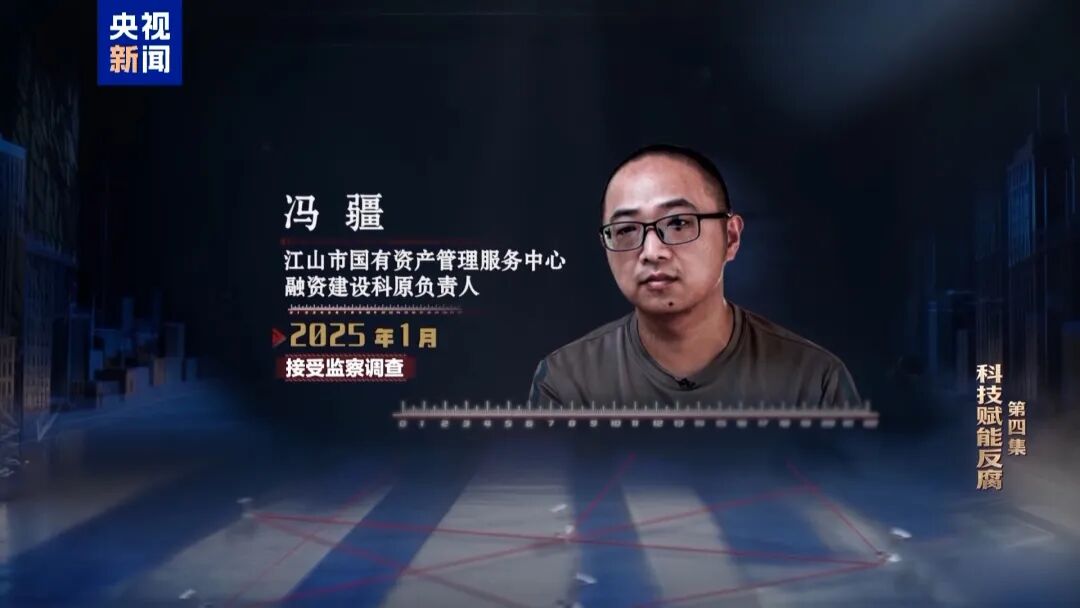
Core Viewpoint - The documentary highlights the use of intelligent supervision systems in combating corruption in public bidding processes, showcasing the case of Feng Jiang, a former official involved in corrupt practices, and how technology has enhanced the detection and prevention of such activities [1][2][4]. Group 1: Case Analysis - Feng Jiang, former head of the financing construction department at the Jiangshan State-owned Assets Management Service Center, was involved in corrupt practices related to public bidding [4]. - The intelligent supervision system identified anomalies in the bidding process for a city lighting project, leading to the discovery of collusion and bribery [6][10]. - The system's data analysis revealed that the winning bidder had no significant technical advantage, indicating potential manipulation in the bidding process [6][10]. Group 2: Technology and Corruption Prevention - The intelligent supervision system utilizes big data and AI to analyze past cases, identifying patterns of corruption and providing alerts for potential issues in current projects [17][19]. - The system acts as a filter, allowing for the rapid identification of irregularities in bidding processes, significantly improving the efficiency of corruption investigations [19][21]. - The integration of technology into regulatory frameworks enhances the ability to detect and address corruption, creating a more robust governance structure [26][29]. Group 3: Impact on Governance - The system has led to a significant increase in the detection of corruption cases, with improved accuracy in identifying issues [15][27]. - It promotes a culture of accountability by ensuring that any flagged issues are addressed and results are reported back to the system [25][26]. - The intelligent supervision system also includes features for proactive education and reminders for public officials, aiming to prevent corruption before it occurs [27][29].

浙江用AI抓出贪官
中国基金报· 2026-01-14 16:02
Core Viewpoint - The article discusses the implementation of a smart regulatory system in Zhejiang Province, which enhances the supervision of bidding processes and helps uncover corruption cases, exemplified by the case of Feng Jiang, a former official involved in corrupt practices [2][4][27]. Group 1: Case Analysis - The case of Feng Jiang illustrates how the smart regulatory system identified potential corruption through data analysis, revealing irregularities in the bidding process for a city lighting project [6][10]. - The system generated risk alerts based on data collisions, indicating possible collusion and unfair practices among bidders, which led to further investigations by the local disciplinary inspection and supervision authorities [12][14]. - The analysis of the bidding process showed that the winning company had no significant advantages but received disproportionately high scores, suggesting manipulation in the evaluation process [10][25]. Group 2: System Functionality - The smart regulatory system utilizes big data and AI to analyze past cases, identifying patterns of corruption and irregularities in bidding processes, thus improving the accuracy and efficiency of investigations [29][33]. - The system acts as a filter, processing data through various models to detect anomalies, which significantly enhances the ability to uncover corruption compared to traditional methods [31][35]. - Feedback from case investigations continuously improves the system, allowing it to adapt and refine its data models based on new findings and emerging corruption tactics [36][38]. Group 3: Impact on Governance - The integration of technology and regulatory frameworks has led to a more proactive approach in identifying and addressing corruption, thereby reducing the opportunities for misconduct [45][52]. - The system's ability to send automated integrity reminders to public officials at critical stages of the bidding process aims to foster a culture of compliance and ethical behavior [47][49]. - Overall, the initiative seeks to eliminate the conditions that allow corruption to thrive, thereby enhancing governance capabilities and promoting a more transparent public sector [51][52].

中国能建安徽电建二公司承建的安徽医科大学新医科中心项目移交投用
Zhong Guo Jin Rong Xin Xi Wang· 2025-09-15 12:37
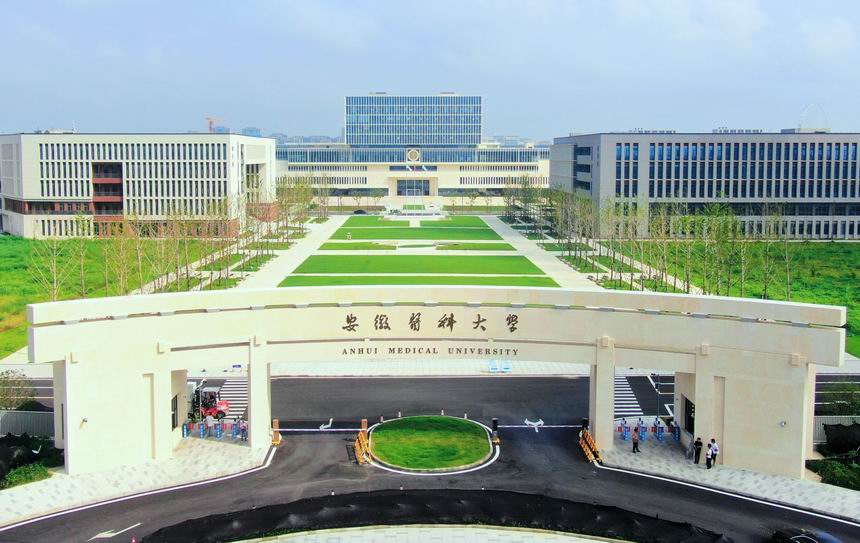
Core Insights - The new campus of Anhui Medical University, with a total investment of approximately 6.7 billion yuan, officially opened with nearly 15,000 faculty and students moving in, marking a significant expansion in both space and development philosophy [1][9] - The campus aims to become a national-level medical innovation hub, integrating "smart and green" concepts into its design and operations [1][6] Infrastructure and Facilities - The new campus covers over 2,000 acres with a total construction area of 970,000 square meters, featuring three core teaching buildings named "Zhiyuan," "Tanwei," and "Xunzhen," which symbolize the academic journey from knowledge acquisition to truth exploration [2][3] - The campus includes a comprehensive research building that houses six major departments, promoting interdisciplinary collaboration and the cultivation of compound talents in the "new medical" field [3][4] Technological Integration - The East District's "Tanwei Building" connects with the high-level public health college, enhancing interdisciplinary cooperation and resource sharing [4] - The campus is equipped with 162 smart classrooms and a library with nearly 10,000 volumes, designed to foster an engaging learning environment [6] Sustainability Initiatives - The campus emphasizes sustainability, featuring extensive photovoltaic panels on rooftops to provide clean energy and a "sponge city" system for rainwater collection and purification [8][9] - The landscaping includes a variety of trees and plants, contributing to a rich ecological environment that also serves to regulate the microclimate [8] Project Management and Recognition - The project, led by China Energy Construction Anhui Electric Power Construction Company, has been recognized as a model for high-quality public welfare projects in Anhui Province, integrating advanced management techniques such as AI and BIM for lifecycle management [9][11] - The project has received multiple accolades for safety and innovation, showcasing the company's commitment to quality and excellence in construction [9][11]