大数据与人工智能技术

Search documents
科策云政企网上超市采购项目
Sou Hu Cai Jing· 2026-01-05 07:12
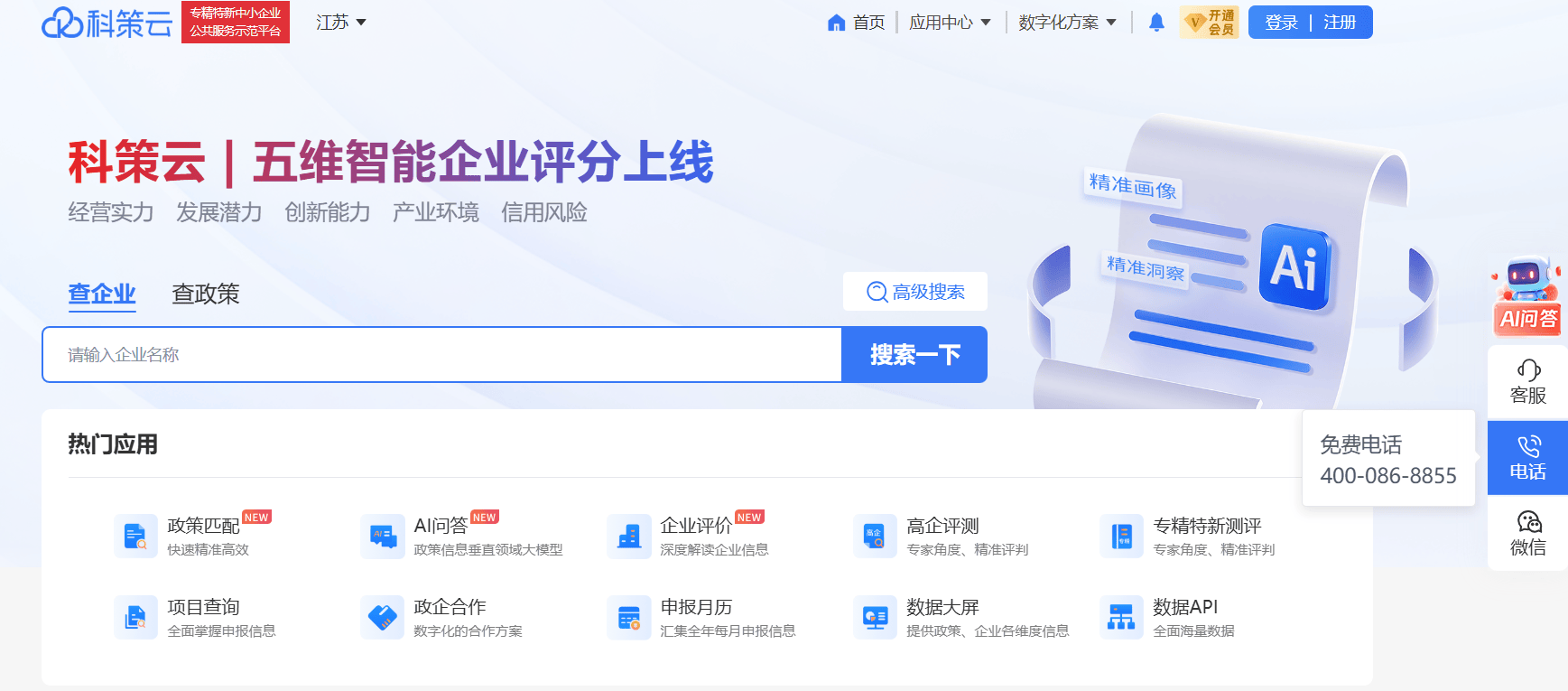
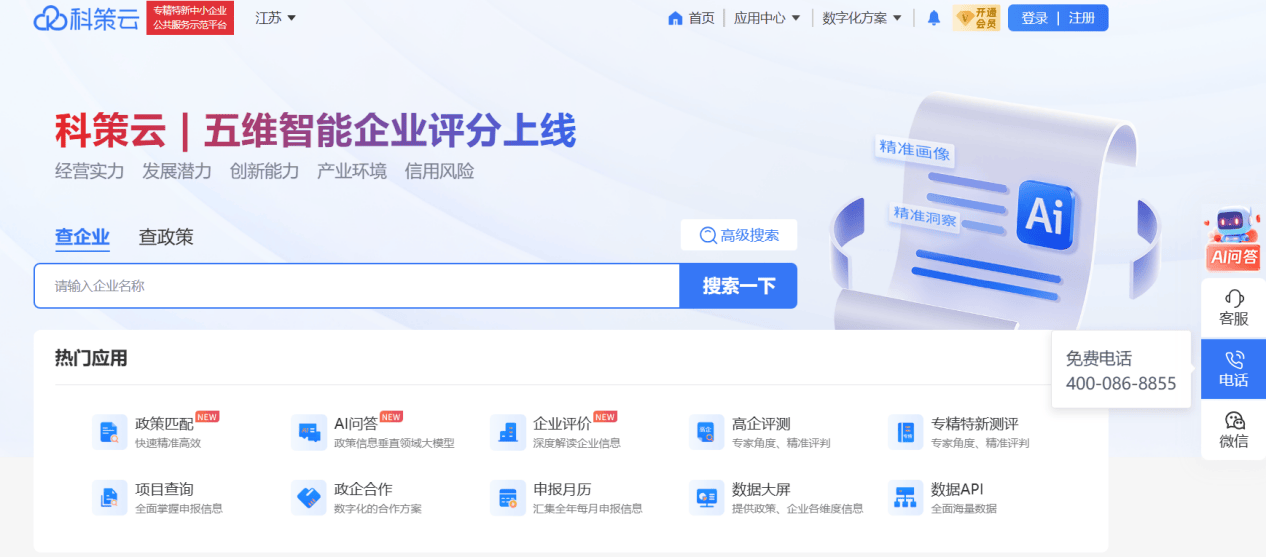
Core Insights - The article highlights the common challenges faced by enterprises in participating in government procurement, including information asymmetry and compliance risks, emphasizing the importance of policy adaptability as a core competitive advantage [1][6] Group 1: Government Procurement Challenges - Enterprises often miss out on benefits due to fragmented policy information channels, leading to data silos and the need for repetitive cross-platform searches [1] - The complexity and frequent updates of policy texts create barriers for companies, particularly small and medium-sized enterprises (SMEs), in understanding and acting on relevant policies [1][3] - Traditional methods of policy retrieval are slow and can result in missed opportunities, especially when policies change rapidly [4] Group 2: Technology Solutions - Kecai Cloud provides a comprehensive database that integrates information from over 3,000 data sites, covering more than 470 cities and 500 million pieces of industrial policy data, allowing precise filtering by various dimensions [3][5] - The platform updates its policy and enterprise data in real-time (T+0), ensuring that enterprises receive the latest information immediately, which is crucial for timely decision-making [4][5] - Kecai Cloud's advanced policy parsing capabilities utilize proprietary technology to simplify complex policy texts, improving matching accuracy by at least 130% compared to traditional methods [5] Group 3: Comprehensive Support Services - Kecai Cloud offers additional services such as industry competition analysis, procurement strategy optimization, and intellectual property assessments, creating a full-service support system for enterprises engaged in government procurement [5][6] - The platform's features enable enterprises to enhance their competitive edge in government procurement by effectively utilizing available policies and resources [6][8] - As the regulatory environment for government procurement evolves, the ability to adapt to policies will increasingly become a vital component of corporate competitiveness [6]

科策云惠企扶持资金管理平台
Sou Hu Cai Jing· 2026-01-05 06:15
Core Insights - The report highlights significant issues in the implementation of policies aimed at supporting small and medium-sized enterprises (SMEs) in China, including inefficiencies in information dissemination and policy matching [1] - The establishment of a digital support platform for enterprises is identified as a crucial tool to bridge the gap between policy formulation and execution, ensuring that benefits reach the intended businesses effectively [1] Group 1: Digital Support Platform - The enterprise support platform serves as a digital medium for government-business information exchange, focusing on integrating policy resources and optimizing service processes to create a comprehensive service system [1] - The platform aims to eliminate traditional barriers in policy dissemination and utilizes big data technology for precise alignment between policies and business needs, covering the entire lifecycle of enterprises [1][4] - The platform has already provided millions of policy matching services to tens of thousands of enterprises, becoming a vital support for governments to enhance service efficiency and improve the business environment [1] Group 2: Data and Technology Advantages - A quality enterprise service platform is essential for businesses to efficiently access policy benefits, with comprehensive data, timely updates, and precise analysis being key performance indicators [2] - 科策云 (Kecaiyun) has integrated over 5 million industrial policy data points, covering more than 470 cities and 30 policy dimensions, allowing for a unified query system that simplifies the search for relevant policies [4] - The platform employs a T+0 update mechanism to ensure real-time synchronization of policy information, addressing the issue of businesses missing application windows due to outdated information [4] Group 3: Enhanced User Experience - The platform's advanced secondary analysis capabilities significantly enhance user experience by breaking down complex policy texts into structured, easily understandable content [5] - By leveraging AI technology, the platform improves matching efficiency and accuracy, with reported enhancements of over 130% in algorithm accuracy and a sixfold increase in recall efficiency compared to traditional methods [5] - The platform also provides dynamic reminders for ongoing policy tracking, helping businesses avoid lapses in compliance due to missed deadlines [5] Group 4: Comprehensive Data Support - In addition to policy matching, the platform offers a wide range of data services, including access to 1.8 billion enterprise registration records, 100 million patent records, and 45.9 million trademark records, supporting various business needs [6] - The platform can assist in patent evaluations and qualification applications, providing essential data support for enterprises [6] Group 5: Future Outlook - The trend towards digitalization in policy implementation positions enterprise service platforms as critical links between government and businesses, facilitating a shift from businesses searching for policies to policies actively reaching businesses [8] - As technology continues to evolve, these platforms are expected to provide increasingly precise and efficient services, becoming essential for optimizing the business environment and supporting high-quality enterprise development [8]
186家单位联手,江苏难治复发白血病诊疗协作组在中大医院成立
Yang Zi Wan Bao Wang· 2025-12-23 07:29
Core Insights - The establishment of the Jiangsu Province Refractory Relapsed Leukemia Diagnosis and Treatment Collaboration Group aims to address the challenges faced by patients with difficult-to-treat leukemia, particularly in terms of access to effective medical resources and treatment options [2][3][7] - The collaboration involves 186 medical institutions, including top-tier hospitals and various healthcare facilities, to create a comprehensive platform for precise diagnosis, management, and the introduction of new drugs and technologies [2][3][6] Group 1: Medical Resource Distribution - Only 30% of local hospitals in China can provide standardized treatment for refractory relapsed leukemia, forcing approximately 80% of patients to seek care outside their regions [1] - The collaboration group is designed to improve the distribution of medical resources and enhance the treatment capabilities for severe and complex cases of leukemia [3][6] Group 2: Technological Innovation - The blood department at Southeast University Affiliated Zhongda Hospital has developed a key gene panel detection technology for acute leukemia, which has significant clinical value and has won awards for its innovation [4][5] - The team has created personalized treatment plans, particularly excelling in the integration of traditional Chinese and Western medicine for acute myeloid leukemia [4][5] Group 3: Collaborative Platforms - The collaboration group will establish eight platforms focusing on various aspects such as precise diagnosis, traditional and modern treatment integration, technological innovation, telemedicine, and training for medical personnel [6][7] - The initiative aims to leverage big data and artificial intelligence to support individualized treatment and plans to achieve comprehensive coverage of leukemia treatment services across the province within three years [7]
智者勇进 接续奋进新江苏|以高质量发展筑牢全民口腔健康根基持续创建国内一流高水平研究型口腔专科医院
Yang Zi Wan Bao Wang· 2025-12-20 13:35
Core Viewpoint - Nanjing Medical University Affiliated Stomatological Hospital (Jiangsu Provincial Stomatological Hospital) has made significant strides in high-quality development through a collaborative approach in medical services, education, and research, focusing on oral health and talent cultivation [1][3]. Group 1: Medical Service Enhancement - The hospital has seen steady growth in key medical indicators over the past five years, with outpatient and emergency visits, hospital admissions, and surgeries increasing by 18.28%, 48.32%, and 49.22% respectively [3]. - It has established a medical service network consisting of one main center, nine outpatient departments, and over 100 medical alliances across East China, Xinjiang, and Tibet, aiming to provide comprehensive care [3]. - The hospital has launched four specialized treatment platforms, including the "Oral Endoscopy Center" and "Oral Health Management Center," enhancing its capability to address complex oral health issues [3]. Group 2: Focus on Vulnerable Populations - The hospital prioritizes the health needs of the elderly and children, having set up a dedicated geriatric oral health department and a center for children's oral health education [4]. - It aims to provide comprehensive and comfortable services for the elderly, recognized as a "Civilized Unit for Respecting the Elderly" at the national level [4]. Group 3: Talent Development and Education - The hospital is committed to cultivating top-tier talent in oral medicine, being the only institution in Jiangsu with a doctoral program in this field and recognized for its high-quality undergraduate program [5]. - It has developed a comprehensive curriculum system and established advanced digital teaching facilities to enhance the training of oral health professionals [5]. - The hospital collaborates internationally with institutions like the University of Dundee to foster research and education in oral health [5]. Group 4: Social Responsibility and Community Engagement - The hospital actively participates in social responsibility initiatives, including medical aid programs and community health campaigns, enhancing its reputation and community trust [7]. - It has been involved in charitable projects like the "Smile Train" for cleft lip and palate patients, serving nearly 8,000 individuals since 2008 [7]. Group 5: Future Outlook - Looking ahead to 2025, the hospital plans to integrate big data and AI into oral medicine, aiming to establish itself as a leader in the treatment of complex oral conditions and to optimize its talent development ecosystem [8].

2025年中国水环境监测行业市场政策、产业链、发展现状、竞争格局及发展趋势研判:市场前景十分可观[图]
Chan Ye Xin Xi Wang· 2025-04-29 01:35
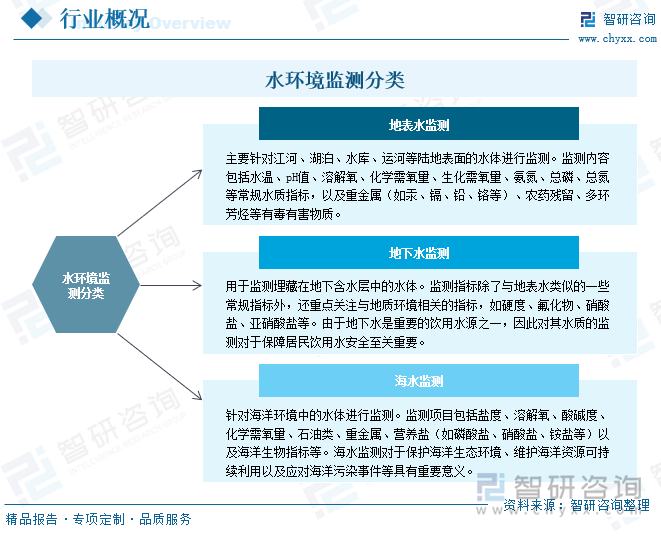
Overview - The water environment monitoring market in China is rapidly emerging, with a projected market size of 27.443 billion yuan in 2024, representing a year-on-year growth of 5.28%. Water environment monitoring services account for approximately 50.7% of the market, while monitoring equipment makes up about 49.3% [1][9]. Industry Chain - The water environment monitoring industry in China consists of monitoring equipment and services. The upstream includes suppliers of raw materials such as metals, plastics, and optical materials, as well as manufacturers of components like sensors and data analysis software. The downstream market includes government departments, water companies, and pollution source enterprises in sectors like power, chemicals, and pharmaceuticals [4]. Market Policies - The Chinese government has issued several policies to enhance water quality monitoring and protection, including the "National Water Network Construction Planning Outline" and various guidelines aimed at improving water quality and ecological restoration. These policies create a favorable environment for the development of the water environment monitoring industry [6][8]. Current Development - The water environment monitoring market is experiencing significant growth due to stringent environmental policies. The demand for monitoring services is expected to increase as downstream enterprises strive to meet emission standards and sustainable production requirements [9]. Competitive Landscape - The water environment monitoring industry features both equipment manufacturers and service providers. High-end monitoring equipment is primarily dominated by foreign companies and large domestic firms like Lihua Technology and Xuedilong, while the low-end market is highly competitive with many small domestic enterprises. In the service sector, large third-party monitoring institutions and state-owned entities provide comprehensive services and enjoy high market recognition [11]. Representative Companies - **Xuedilong Technology Co., Ltd.**: Founded in 2001 and listed in 2012, the company focuses on environmental monitoring and has achieved a revenue of 1.42 billion yuan in 2024, with 80.14% coming from ecological monitoring systems [13]. - **China National Inspection Testing Group**: Established from the inspection and certification sector, the company reported a revenue of 1.041 billion yuan in the first half of 2024, with 71.90% from inspection and testing services [15]. Development Trends - Future trends in the water environment monitoring industry include the widespread application of IoT technology for real-time data collection, integration of big data and AI for predictive analysis, and the establishment of standardized monitoring practices to ensure data accuracy and reliability [17].