
大气环流

Search documents
未来一周冷空气活跃 元旦出行需关注雨雪天气
Xin Lang Cai Jing· 2025-12-28 09:11
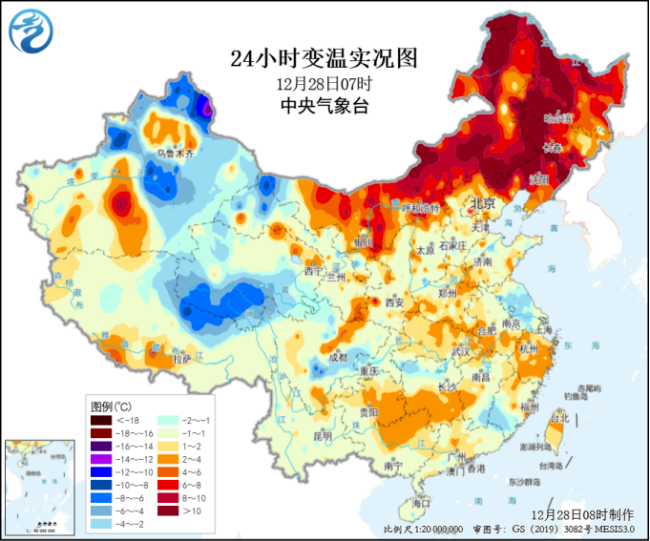
Core Viewpoint - The Central Meteorological Observatory predicts frequent cold air activity during the upcoming New Year holiday, with significant temperature fluctuations and potential heavy snowfall in parts of central and eastern China [1][4]. Group 1: Cold Air Impact - Two cold air masses will affect central and eastern China from December 28 to January 2, leading to temperature drops of 6°C to 8°C, with some areas experiencing drops over 10°C [4][5]. - The cold air will bring strong winds, with gusts reaching 6 to 8 levels in some regions, and up to 11 levels in southeastern coastal areas [4][5]. Group 2: Rain and Snow Forecast - Rain and snow will be concentrated from the night of December 30 to January 1, with heavy snowfall expected in parts of Gansu, Shaanxi, Shanxi, Henan, and Hubei [6][8]. - The rain-snow transition may occur in regions like southwestern Hubei and western Henan, leading to mixed precipitation types [8]. Group 3: Travel Advisory - Travelers are advised to monitor weather conditions closely, as popular tourist destinations in both northern and southern China will be affected by the cold air and precipitation [8]. - Precautions are recommended for those traveling to areas with snow or rain, including carrying rain gear and being cautious of slippery roads [8].

冬季气候展望:迎峰度冬将至,今年冷冬概率几何
2025-10-21 15:00
Summary of Key Points from the Conference Call Industry Overview - The conference call discusses the climate outlook for the winter of 2025 in China, focusing on temperature and precipitation patterns influenced by various climatic phenomena such as La Niña and the Indian Ocean Dipole. Core Insights and Arguments 1. **Temperature Trends**: The overall winter of 2025 is expected to be relatively warm, with average temperatures close to or slightly above the long-term average. However, certain regions, particularly in the northeast and southeast, may experience cooler conditions [5][19][22]. 2. **Precipitation Patterns**: There is a significant disparity in precipitation across regions, with northern areas like Shandong and Henan experiencing more than double the usual rainfall, while southern regions, particularly in Jiangnan and northern South China, are expected to see reduced rainfall [4][14]. 3. **La Niña Impact**: The likelihood of a La Niña event forming this winter is uncertain, but if it occurs, it could lead to increased cold air outbreaks and affect agricultural production and energy demand [5][7][20]. 4. **Cold Air Frequency**: The frequency of cold air outbreaks is expected to be higher in December and February, with January being relatively stable and warmer. The average winter temperature is projected to be close to the long-term average, but extreme cold events may still occur [15][22]. 5. **Regional Variability**: The western regions are predicted to be warmer, while the eastern and northeastern areas may experience slightly lower temperatures. The overall trend indicates that the northern regions will have more precipitation compared to the south [3][13][14]. 6. **Climate Change Effects**: The ongoing global warming trend is expected to lead to more frequent fluctuations between cold and warm periods, increasing uncertainty in weather patterns and energy consumption needs [20][21]. Other Important but Overlooked Content 1. **Agricultural Impact**: The persistent rainy weather has negatively affected crop production, particularly in regions like Shandong and Henan, where corn has been reported to rot due to excessive moisture [4]. 2. **Energy Supply Concerns**: While the energy supply pressure for the 2025-26 heating season is expected to be manageable, specific assessments of heating demand under varying weather conditions have not been conducted [21]. 3. **Historical Context**: The long-term trend shows an increase in average winter temperatures since 1961, with a warming rate of approximately 0.4 degrees Celsius per decade, indicating a shift towards warmer winters overall [5]. This summary encapsulates the key points discussed in the conference call regarding the climate outlook for winter 2025, highlighting the expected temperature and precipitation trends, the potential impact of La Niña, and the implications for agriculture and energy supply.